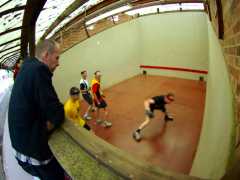
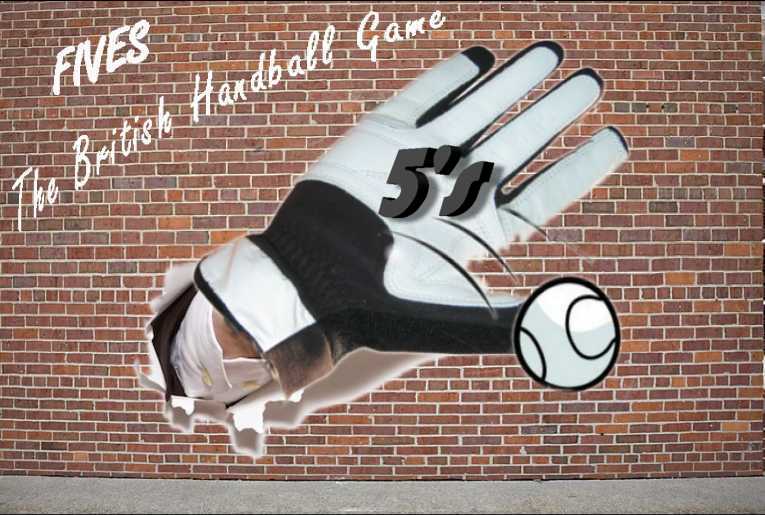
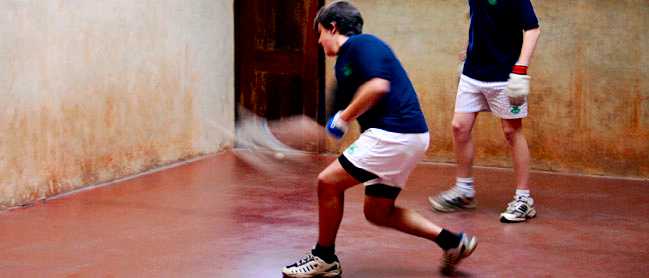
Fives
is a
British sport believed to derive from the same origins
as many racquet
sports. In fives, a ball is propelled against the walls
of a special
court using gloved or bare hands as though they were a
racquet.
The game has also been known as hand-tennis and
historically was often
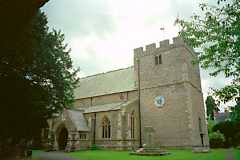
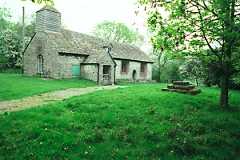
played between the buttresses of church buildings in
England.
Although the etymology of "fives" is still obscure,
players have come
to accept that the word means the fingers of the hand
acting in unison
as in a "bunch of fives". The word was not used before
the 17th
century, but long before that the game was being played.
Richard
Mulcaster the 16th century headmaster of Merchant
Taylor's School, had
this to say: "The little hand ball whether it be of some
softer stuffs,
and used by the hand alone, or of some harder, and used
with rackette
.... against a wall alone, to exercise the bodie with
both the handes
in everie kind of motion." Handball the Irish game, has
kept a softer
ball, fives has not.
By the 18th and early 19th centuries fives was
constantly recorded. Dr
Johnson was hazy about the matter - "a kind of play with
a bowl" the
Dictionary said - but Parson Woodforde played in the
churchyard at
Babcary - buttresses made for good angles and, in
prodigal fashion,
betted on the result. Hazlitt wrote ecstatically about
Jack Cavanagh's
play, and Lord Torrington, that matter-of-fact observer,
referred to
the fives playing men and boys of Oswestry who "batter
the church
walls".
There are links between Fives and the Irish and North
American handball
games and indeed, in recent years, British clubs have
begun to
establish ties with clubs in those countries.There are
two main types
of fives, Rugby Fives and Eton Fives. A precursor to
Rugby Fives is
Warminster (or Wessex) Fives; another variant of Wessex
fives is
Winchester Fives, although there are only 9 places in
the UK where this
is still played. Most schools where fives is played have
only one type
of court but three schools have historically had both
Eton and Rugby
courts - Cheltenham, Dover and Marlborough. Cheltenham
now only have
Rugby courts and Dover two unrestored Eton courts;
Marlborough have
four of each in good condition. As We researched
for this site it
became obvious that many fives courts were either in
disrepair or
hardly used. Many schools with fives facilities do not
even mention
them and even the lovely Bank of England Sports Ground
left it off it's
website- a telephone call had to be made to ascertain if
the Courts
were there and in use- thankfully they were.
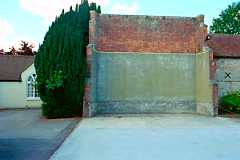
WALLS
IN WESSEX
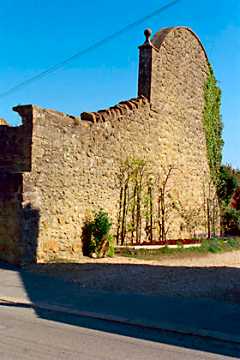
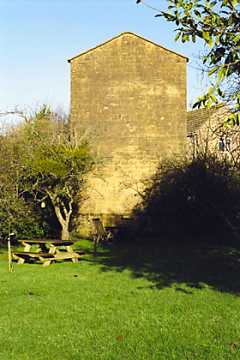
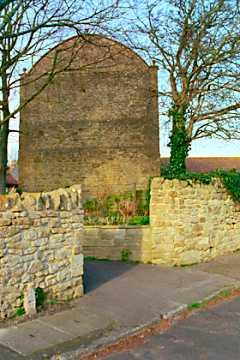
Warminster
Fives
is
likely to be the same game as Wessex Fives, which
originates some
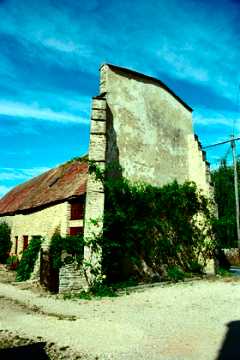
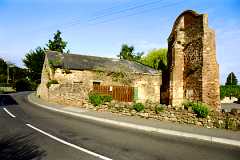
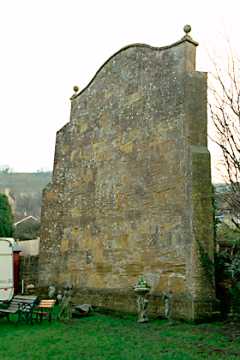
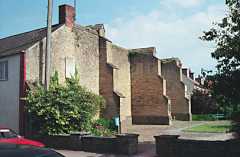
centuries ago, when men and boys used the buttresses and
walls of a
church and hit the ball with their hands against the
walls - the angles
of the buttresses and walls lending variety to the game.
It might then
have been a game played as singles or doubles. Wessex
Fives was played
in the West Country against the walls of
inns and more frequently, church towers, where the
glaziers were often
called in, it seems, to repair the stained glass
windows. In 1754, the
Bishop of Bath and Wells ordered the game of Fives
should cease to be
played against church towers as undoubtedly over one
hundred years
glaziers' bills were beginning to be felt with some pain
by the
exchequer. In Wessex only a small following remains,
mainly from
Winchester College who play what is now more commonly
known as Winchester Fives.
Below are some of the
older walls where Wessex Fives were played.
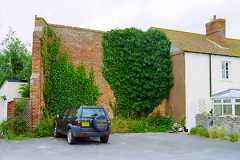
Shepton Beauchamp,Somerset
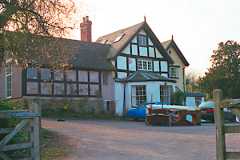
In the grounds of the former New Inn
Hinton St George,Somerset
Lord Poulett Arms in Hinton St
George
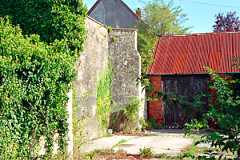
Milborne Port,Somerset
Home to a unique double Fives
court,
erected in 1847 by Sir William C. Medlycott, the
local MP, "for the
health and amusement of the town
Anchor Inn
Fives Wall
Fives Court, Otterhampton,Sedgemoor,Somerset
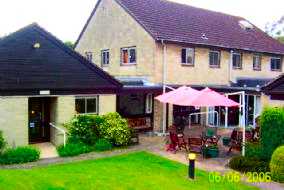
Fives Court, Wiltshire
A Care Home owned by the Orders of St John Care
Trust, whose address is
given as Fives Court, Angel Lane, Mere
Mere,Wiltshire
Site of a 19th-century Fives Wall.
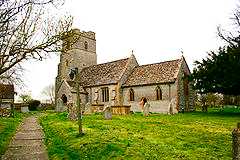
Montacute
church,Somerset Records
show that Fives was played against the tower
of this church
All Saints
Church, Wrington, Somerset
There
are many references to Fives being played
against the church tower
here.
St
Michael's Church, Milverton, Nr Taunton
It
is known that Fives was played up against the
North wall of this church
Stoke St
Mary, Somerset
There
are records of Fives
being played against this church
tower as early as 1634
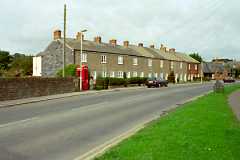
Fives Court
Row, Bridport, Dorset
A
row of cottages on West Bay Road, known (for
reasons unknown to the
RFA) as Fives Court Row.
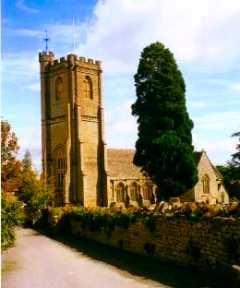
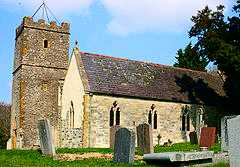
Babcary
Church, Nr Somerton, Somerset
References
exist to Fives
being played in the churchyard at
Babcary as long ago as 1765
Fives at
Shrewsbury School
VARIATIONS OF FIVES
There
are
two main types of fives, Rugby Fives and Eton Fives. A
precursor to
Rugby Fives is Warminster (or Wessex) Fives; another
variant of Wessex
fives is Winchester Fives, although there are only 9
places in the UK
where this is still played. Most schools where fives is
played have
only one type of court but three schools have
historically had both
Eton and Rugby courts - Cheltenham, Dover and
Marlborough. Cheltenham
now only have Rugby courts and Dover two unrestored Eton
courts;
Marlborough have four of each in good condition. The
Eton Fives
Association had forty affiliated schools, the Rugby
Fives Association,
fifty, the EFA besides the Jesters (who naturally figure
in both lists
since they were started as a Rugby Fives Club in 1928),
has numerous
Old Boys' clubs and the Universities of Oxford and
Cambridge. The RFA
has fewer Old Boys' clubs but more universities, ten in
fact, and three
or four other institutions of which the Bank of England
and Manchester
YMCA have long fives histories. Nevertheless new courts
are seldom
built, although Oxford University now has two new Eton
fives courts.
Such success as fives enjoys, and it really is
considerable among
players, is largely the result of fine records of the
two Associations.
No minor games have ever had more devoted attention or
better
organisation than have Rugby and Eton fives.
Eton
Fives
Eton Fives, one
derivative of the British
game of Fives, is a hand-ball game, similar to
Rugby Fives, played as
doubles in a three-sided court. The object is to
force the other team
to fail to hit the ball 'up' off the front wall,
using any variety of
wall or ledge combinations as long as the ball
is played 'up' before it
bounces twice. The compact nature of the court
and the speed at which
the ball can be hit leads to an entertaining
game, in which both a
quick mind and agile feet are needed if you are
to succeed. Eton Fives
is an uncommon sport, with only a few courts,
most of them as part of
the facilities of the Public Schools in the
United Kingdom (as well as
Wolverhampton Grammar School, St Olave's and St
Saviour's Grammar
School, the Royal Grammar School, High Wycombe,
King Edward's School,
Birmingham and Queen Elizabeth's School for
Boys)and Queen Elizabeth's
Grammar School Ashbourne; consequently, it is
primarily the preserve of
their students and alumni. The only known court
to be owned by a
private individual in the UK is on the Torry
Hill estate in Kent.
St Olaves Grammar School, Lancing College and
Summerfields Prep school
house the only indoor Eton Fives courts in
England, with four courts
being part of an Eton Fives and Squash Court
complex (consisting of
four top quality courts for both sports) at the
former[citation
needed].
However, the first real public courts have
recently opened in the
Westway sports centre in London's White City,
marking a possible change
in fortunes for Eton Fives as a minor sport.
Only a few courts exist
outside Britain, most notably at Geelong Grammar
School in Australia
(the school is often referred to as the 'Eton of
Australia'); there are
also courts in Geneva, Zurich, Lyceum Alpinum
Zuoz, Switzerland, St.
Paul's School, Darjeeling, India and Malay
College Kuala Kangsar,
Malaysia, and two brand new courts have recently
been completed in the
South of France, in the village of Grillon,
Provence.Eton Fives is
played competitively as a doubles game, as
opposed to Rugby Fives,
which is played as both a singles and a doubles
game. In Eton Fives the
ball is softer and lighter than in Rugby or
Winchester fives, and the
gloves are fairly thin.
The Eton Fives court is modelled on
part of Eton College's
Chapel and is enclosed on three sides and open
at the back. It has a
more complex variation and some specific court
features or "hazards". A
small step splits the court into upper and lower
sections, and sloping
ledges run horizontally across the walls, one of
which forms the
"line". There is a large obstruction, known as a
'buttress', or a
'pepper' to fives players, on the left-hand side
of the court in line
with the step. At the bottom of the buttress is
the 'box' or 'pepper
pot'. The step extends approximately 80 cm into
the court and is around
15 cm high. The first courts at Eton were built
in 1840 and the Laws
for Eton Fives were first published in 1931.
It is most commonly believed to be derived from
Wessex Fives, a game
played by Thomas Arnold, famous Headmaster of
Rugby School, who had
played Wessex Fives when a boy at Lord
Weymouth's Grammar, now
Warminster School. The open court of Wessex
Fives, built in 1787, is
still in existence at Warminster School although
has fallen out of
regular use.
An early mention of the game can be found in the
novel Tom Brown's
School Days(1857) by Thomas Hughes. The author
attended Rugby School
during the period when Dr. Arnold was
Headmaster.
The game is played between two players (singles)
or between two teams
of two players each (doubles), the aim being to
hit the ball above a
'bar' across the front wall in such a way that
the opposition cannot
return it before a second bounce. The ball is
slightly larger than a
golf ball, leather-coated and hard. Players wear
leather padded gloves
on both hands, with which they hit the ball.
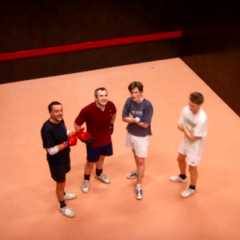
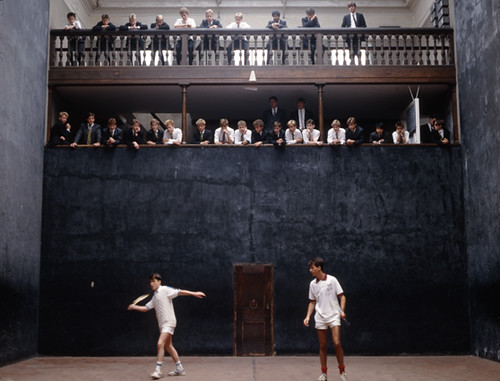
Rugby Fives, developed at Rugby School, is
played in a four wall court
(quite similar to a squash court). The four
walls and floor are uniform
and contain no hazards such as in Eton Fives.
The front wall has a
height of sixteen feet, sloping down about half
way along to six feet
at the back.
The balls used in Rugby and Winchester Fives are
fairly hard and hence
the gloves worn are thicker than those used in
Eton Fives. Rugby Fives
has had an official varsity match between Oxford
and Cambridge annually
since 1925.
The RFA is the governing body for the sport of
Rugby Fives. The
association aims to promote the playing and
coaching of Fives at
schools, universities and senior level, and
throughout the community in
general. It does this by organising matches and
tournaments throughout
the season and advising on – and wherever
possible supporting
financially – the regeneration of facilities and
provision of suitable
coaching and equipment to further the game's
development across the
country.
GENERAL
SECRETARY:
Andy Pringle
66 Brayburne Avenue
Clapham
London SW4 6AA
M: 07760 172904
Warminster
Fives
A less well known, but possibly much older
version of the game is
Warminster Fives, a game based on Wessex Fives
which is thought to have
been played at Lord Weymouth's School, now
Warminster School from as
early as 1787. It has even been claimed that
Rugby Fives owes its
creation to the famous Headmaster Thomas Arnold
who had first played
Fives when a pupil at Lord Weymouth's.
Whilst an 1860 Warminster Fives Court still
exists at Warminster
School, the game is rarely played in the area
any more and the fine
details of the game are probably lost. The
Warminster Fives Rules are
recorded in many locations including the Eton
Fives Website.
Winchester Fives
A further variation is Winchester Fives. This
variation differs by the
addition of a buttress which is a thin layer of
concrete reaching to
the top of the court on the left-hand wall,
although much smaller than
the one used in Eton Fives. The courts at
Winchester and Radley
("proper" Winchester courts) have an
11-foot-high (3.4 m) back wall
which further differentiates the courts from the
Rugby variety.
Clifton
Fives - and other variants
Some public schools have their own variation on
the standard Rugby
Fives court - at Clifton College for instance,
the court has a
half-height back wall. In Clifton Fives if the
ball bounces out of the
back of the court, a 'let' is played.
Church
of St John the Baptist, Bishops Castle. Fives
used to be played against
the wall of the tower, and the red line that
acted as the 'bar' still
exists to this day.
Whitcliffe,
near Ludlow, Herefords
Bowling
Green House - the former Ludlow Arms Inn,
which has a 17/18th-century
Fives court in the garden.
Fives
Court
A street in London,SE11
called 'Fives Court'
(Former)
Musley School, Ware, Herts
One
19th century Fives court (apparently
three-walled) on the site of the
former Musley School.
Shalford,
Essex
A
stable block, part of which has apparently
been converted into a Fives
court
St
Mary's Church, Craswall.Herefords
To the north of the church is a shallow
rectangular depression said to have been a
Fives Court.
Westway, London
The 21st Century brings Fives back
Malvern College, Malvern,
Worcestershire
Where the compilor of this page enjoyed many
hours in the fives courts
in the 1950s
The
EFA Northern Tournament 2012
4th/5th February 2012 at
Shrewsbury School
11:00am start
There will be a Main
Tournament
and a separate Festival, both played over the
whole weekend
If we have leftyou
out we are sorry but
just call us on
0207 183 4978 or Contact
us
Click &
we will be pleased to
include you.
Real
Tennis Clubs in the UK
Real
tennis – one of several games sometimes
called "the sport of kings" –
is the original indoor racquet sport from
which the modern game of lawn
tennis (usually simply called tennis), is
descended. It is also known
as court tennis in the United States,
formerly royal tennis in
Australia,now real tennis, and courte-paume
in France (a reference to
the older, raquetless game of jeu de paume,
the ancestor of modern
handball and raquet games; many French real
tennis courts are at jeu de
paume clubs).
The term "real" was first used by
journalists in the middle of the 20th
century to distinguish the ancient game from
modern "lawn" tennis (even
though that sport is seldom contested on
lawns these days outside the
few social-club-managed estates such as
Wimbledon). Real tennis players
often call the game "tennis", while
continuing to refer to its more
widely played offshoot as "lawn tennis".
There are many theories as to
the origins of tennis but many believe that
the early form of tennis
can be dated back to the 11th century when
monks used to play hand ball
around the cloisters of monasteries. The
game gradually evolved to the
game of Real Tennis, and became very popular
with the French and
British nobility. Henry VIII was a keen
player and had the original
Real Tennis court built at his Palace at
Hampton Court but Charles II
later re-modelled the court in the 17th
century to the court that
exists today which is the oldest in Britain.
Real tennis is still played by enthusiasts
or "realists" on 47 or some
say 49 existing courts in the United
Kingdom, Australia, the United
States, and France. Despite a documented
history of courts existing in
the German states from the 17th century, the
sport evidently died out
there during or after the World War II
reconstruction. The sport is
supported and governed by various
organizations around the world. The
British Body is :
If we have left you out we are
sorry but
just call us on
0207 183 4978 or Contact
us
Click &
we will be pleased to
include you Racket Courts
and Evening clubs
Rackets
(British English) or Racquets
(American English) is an indoor racquet sport
played in the United
Kingdom, United States, and Canada. The sport
is infrequently called
"hard rackets," possibly to distinguish it
from the related sport of
squash (formerly called "squash rackets").
Rackets
began as an
18th century pastime in London's King's Bench
and
Fleet debtors prisons. The prisoners modified
the game of fives by
using tennis rackets to speed up the action.
They played against the
prison wall, sometimes at a corner to add a
sidewall to the game.
Rackets then became popular outside the
prison, played in alleys behind
pubs. It spread to schools, first using school
walls, and later with
proper four-wall courts being specially
constructed for the game. Some
historians assert that the game was codified
through its popularity at
the Harrow School in London, where it was
played as early as the second
half of the 18th century. The central Body for
Rackets is:
If
we have leftyou
out we are
sorry but
just call us on
0207 183 4978 or Contact
us
Click & we will
be pleased to
include you
THE
COURTS CIRCULAR
If you are a little
tired of the
more traditional racquet sports such as
tennis and squash. You might be
interested in give a new racquet game a go
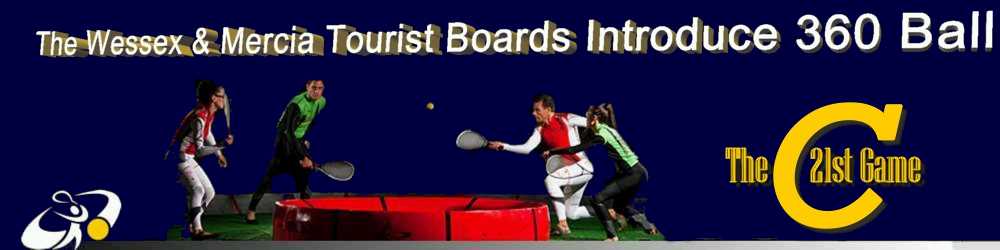
called 360ball.
360ball
is played
in a circular court where players use a
racquet to strike a ball onto a
centrally placed concave disc. The court has
no separate sides and
players pivot 360 degrees around the disc as
directed by play. t’s kind
of like table tennis, kind of like squash,
and looks like it would
definitely be a good workout – it’s 360ball,
a new racquet sport out of
South Africa. Games are played on a circular
court by two players, or
two teams of two players, who are situated
around a central concave
deflecting disc. Players hit the ball into
the disc, trying to do so in
such a way that when it bounces out, their
opponent(s) won’t be able to
reach it. Unlike tennis, say, there are no
designated sides on which
players have to remain. Instead, everyone is
allowed to move 360
degrees around the disc as play dictates ...
hence the name.
To make things a little trickier, each
player or team must hit the ball
twice before it returns to the disc. In the
case of a single player,
this means that they have to hit the ball up
into the air upon
receiving it, then follow through with a
second stroke to send it back
to the disc. In a doubles game, the team
member who receives the ball
must pass it to their partner, who then
shoots it into the disc.
There are two versions of 360ball, court and
pitch. The court game sees
the disc and hard-topped playing area
enclosed by a tall circular wall,
which can be utilized by the players for
rebound shots. To play the
pitch game, players simply plop the disc
down on the grass, beach or
gym floor, and have to chase after the ball
if they miss it.
The game sets are not yet available for
purchase, as the creators of
360ball are still looking for investors to
grow their business.
Hopefully it will hit the shelves soon, as
it appears to be a lot of
fun – it also looks like it might involve a
lot of collisions between
players, but then again, that could be part
of the fun.




 Eton Fives, one
derivative of the British
game of Fives, is a hand-ball game, similar to
Rugby Fives, played as
doubles in a three-sided court. The object is to
force the other team
to fail to hit the ball 'up' off the front wall,
using any variety of
wall or ledge combinations as long as the ball
is played 'up' before it
bounces twice. The compact nature of the court
and the speed at which
the ball can be hit leads to an entertaining
game, in which both a
quick mind and agile feet are needed if you are
to succeed. Eton Fives
is an uncommon sport, with only a few courts,
most of them as part of
the facilities of the Public Schools in the
United Kingdom (as well as
Wolverhampton Grammar School, St Olave's and St
Saviour's Grammar
School, the Royal Grammar School, High Wycombe,
King Edward's School,
Birmingham and Queen Elizabeth's School for
Boys)and Queen Elizabeth's
Grammar School Ashbourne; consequently, it is
primarily the preserve of
their students and alumni. The only known court
to be owned by a
private individual in the UK is on the Torry
Hill estate in Kent.
Eton Fives, one
derivative of the British
game of Fives, is a hand-ball game, similar to
Rugby Fives, played as
doubles in a three-sided court. The object is to
force the other team
to fail to hit the ball 'up' off the front wall,
using any variety of
wall or ledge combinations as long as the ball
is played 'up' before it
bounces twice. The compact nature of the court
and the speed at which
the ball can be hit leads to an entertaining
game, in which both a
quick mind and agile feet are needed if you are
to succeed. Eton Fives
is an uncommon sport, with only a few courts,
most of them as part of
the facilities of the Public Schools in the
United Kingdom (as well as
Wolverhampton Grammar School, St Olave's and St
Saviour's Grammar
School, the Royal Grammar School, High Wycombe,
King Edward's School,
Birmingham and Queen Elizabeth's School for
Boys)and Queen Elizabeth's
Grammar School Ashbourne; consequently, it is
primarily the preserve of
their students and alumni. The only known court
to be owned by a
private individual in the UK is on the Torry
Hill estate in Kent.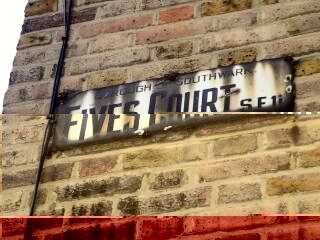 The Eton Fives court is modelled on
part of Eton College's
Chapel and is enclosed on three sides and open
at the back. It has a
more complex variation and some specific court
features or "hazards". A
small step splits the court into upper and lower
sections, and sloping
ledges run horizontally across the walls, one of
which forms the
"line". There is a large obstruction, known as a
'buttress', or a
'pepper' to fives players, on the left-hand side
of the court in line
with the step. At the bottom of the buttress is
the 'box' or 'pepper
pot'. The step extends approximately 80 cm into
the court and is around
15 cm high. The first courts at Eton were built
in 1840 and the Laws
for Eton Fives were first published in 1931.
The Eton Fives court is modelled on
part of Eton College's
Chapel and is enclosed on three sides and open
at the back. It has a
more complex variation and some specific court
features or "hazards". A
small step splits the court into upper and lower
sections, and sloping
ledges run horizontally across the walls, one of
which forms the
"line". There is a large obstruction, known as a
'buttress', or a
'pepper' to fives players, on the left-hand side
of the court in line
with the step. At the bottom of the buttress is
the 'box' or 'pepper
pot'. The step extends approximately 80 cm into
the court and is around
15 cm high. The first courts at Eton were built
in 1840 and the Laws
for Eton Fives were first published in 1931.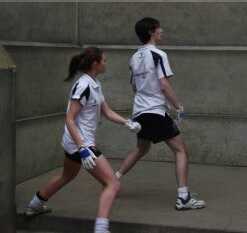
 GENERAL
SECRETARY:
GENERAL
SECRETARY:

















 Fives
is a
British sport believed to derive from the same origins
as many racquet
sports. In fives, a ball is propelled against the walls
of a special
court using gloved or bare hands as though they were a
racquet.
The game has also been known as hand-tennis and
historically was often
played between the buttresses of church buildings in
England.
Fives
is a
British sport believed to derive from the same origins
as many racquet
sports. In fives, a ball is propelled against the walls
of a special
court using gloved or bare hands as though they were a
racquet.
The game has also been known as hand-tennis and
historically was often
played between the buttresses of church buildings in
England. 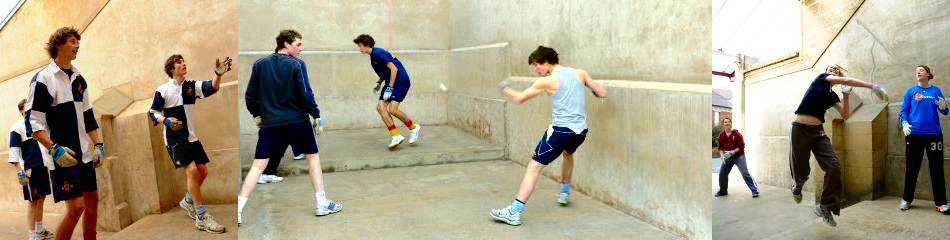
 Eton
Fives
Schools
Eton
Fives
Schools