THE
COASTAL RESORTS
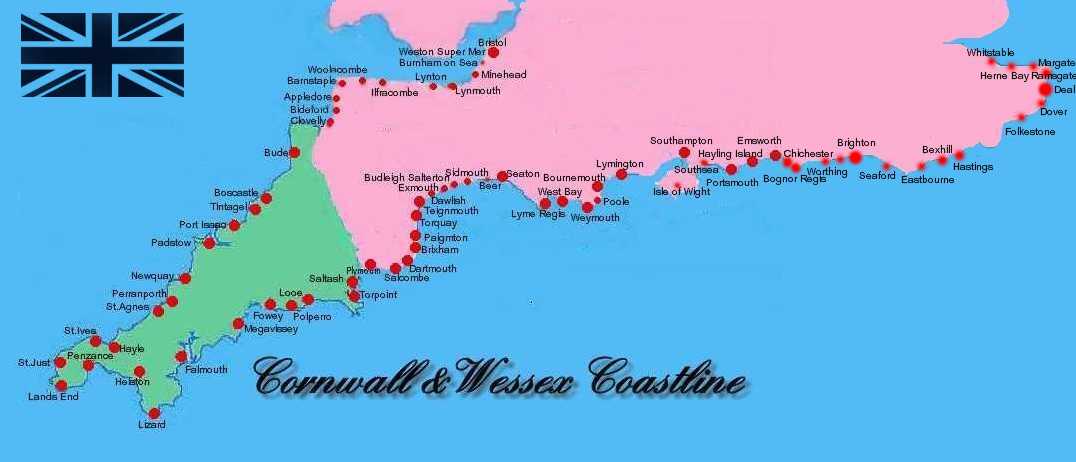
Clevedon & Portishead
are between Weston Super Mare and
Burnham on Sea in
the diagram map above.
Hove is next to Brighton.
Birchington is between Margate and
Ramsgate. Sandwich is next to Deal.
Location
&
Tourist
Offices
For
details
about the attractions in and around
these resorts look in our county
sections. Below there are details
about the costal resorts.

THE SEASIDE
IN WESSEX
|
|
Appledore,
North
Devon
www.bbc.co.uk/devon
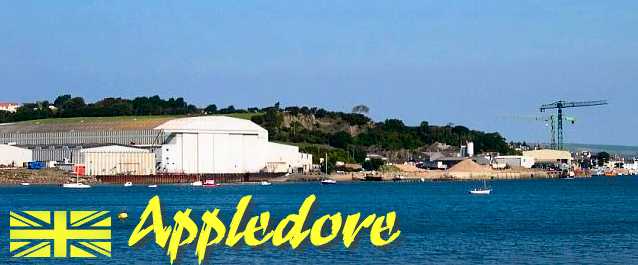
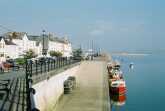
At the mouth of the
River Torridge, where it meets the River
Taw, lies Appledore which is a quaint
fishing village and anchorage.
Surprisingly there is also a large
shipyard here which has been in
continuous production for around 400
years producing small naval and merchant
vessels. There are excellent beaches at
nearby Westward Ho which is a holiday
resort with many caravan parks and
affordable accommodation. The beach is 3
miles long and very wide at low tide -
it is also flat and sandy with a large
pebble ridge at the back of it which
protects the nearby burrows area. There
are a lot of watersports in the area
with surfing on the main beach and along
the coast. For more details about
the attractions click on to our Devon
section
|
|
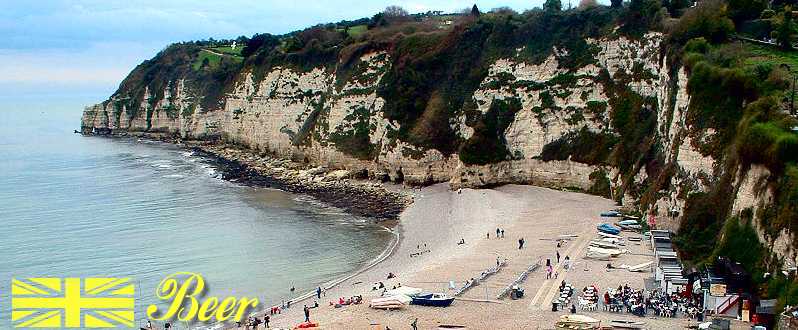
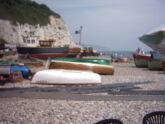
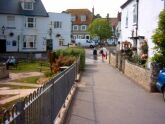
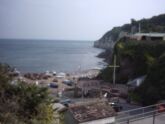
Beer is one of those picture postcards you
can send home. Forget Portofino this is
idyllic.
The town of Beer is in south east Devon,
England, UK. The name is not from the
drink but from the English word for
Woodland, due to the original forestation
that surrounded the town. Close to Exeter,
it is a picturesque coastal village that
built up around a smuggler’s cove and the
caves that allowed storage of the
contraband goods. These are now part of
the tourist attraction.
Historically, fishing, smuggling, and lace
production was said to be the main form of
income to the town. Today, it’s tourism
and fishing.The geology of the coast line
allowed the seafarers of Beer to operate
in weather conditions when other towns
could not. Beer Bay is just down the road
from Seaton and about 20 miles from Chard.
Although the beach is pebbles it is
secluded and surrounded by high
cliffs.here are rows of deck chairs laid
out and three beach eating cafes. Here you
can taste the wonderful crab being caught
in the Bay or many other gastromic
delights.The bay is famous for both Crabs
and Lobster. On the slope leading down to
the beach is a wonderful Wet Fish Shop
where you can purchase the locally caught
fish at very reasonable prices. The
Fishing vessels are on the beach and you
can go out on the boats there.Deep sea
fishing trips can be arranged from Beer
beach. Contact the following boatmen:Cyril
Newton 01297 21460 Kim Aplin 01297 21955.
The Village is small but there are some
interesting art shops there and pubs and
restaurants.Stone has been quarried in
Beer since Roman times and, although now
closed, guided tours are still given
around the old workings. For more details
about the attractions click on to our Devon
section |
|
Barnstaple,
North
Devon
www.devon-online.com
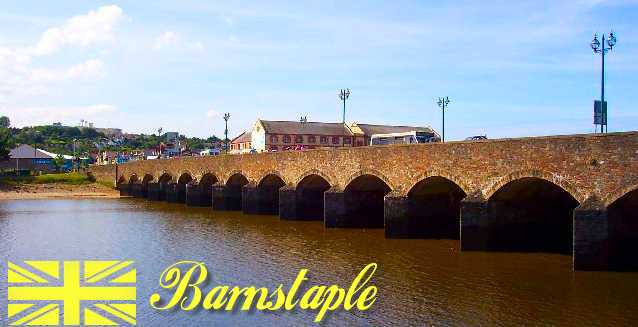
North Devon is an area renown for its
wild, natural beauty; it includes the
towns of Bideford and Barnstaple,
Ilfracombe and Lynton and Exmoor
National Park. The area can be reached
via the A39 from the east or the A361,
the North Devon link road which spurs
off from the M5 at junction
27.Barnstaple is a market town set on
the banks of the River Taw which meets
the River Torridge downstream.
Barnstaple is the administrative
centre for the area and is an
attractive town in its own
right.
Barnstaple is an ideal place to visit
the surrounding area which has much to
offer in the form of natural
attractions. The beach area at
Braunton Burrows is even larger than
at Westward Ho and is sandy, wide and
flat. Part of the area is a designated
nature reserve. the beach is good for
swimming and surfing although you need
to check the local information as to
which part of this huge beach to
use. For more details about the
attractions click on to our Devon
section
 36 Boutport Street,
Barnstaple , EX31 1RX Tel:01271
375000 36 Boutport Street,
Barnstaple , EX31 1RX Tel:01271
375000
Fax 01271 374037 Email:barnstapletic@visit.org.uk
|
|
Bideford,
North Devon
www.devon-online.com
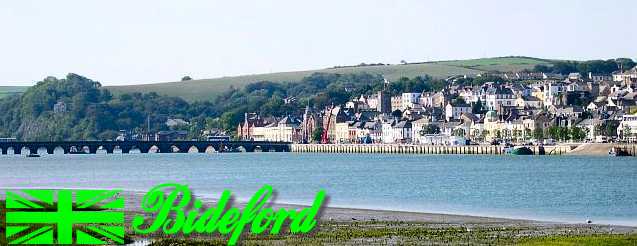
Bideford is a small
town and port lying on the River
Torridge which flows to the sea at
Appledore, two miles downstream.
Bideford of the past
was a thriving port which traded in
agricultural goods and china clay. It is
now more of a tourist resort but still
has some activity at the port. The main
quay is the focus of the town with small
twisting streets running up from this
area in to the town. Bideford has two
picturesque bridges - the one from
the past is built of stone with arches
that are all different widths and links
the main town to East-the-Water, the new
bridge is constructed of concrete and
spans the River Torridge downstream and
carries the A39 the main linking road
for North Devon. For more details about
the attractions click on to our Devon
section
|
|
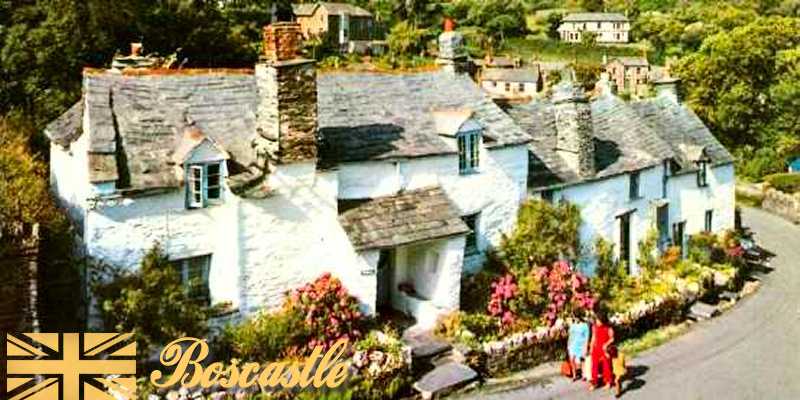
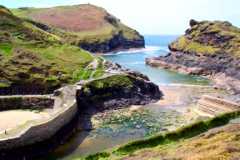
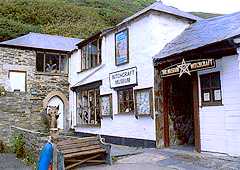
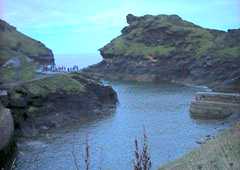
Boscastle
is an idyllic village on the north
Cornish coast, with it’s unspoilt
Medieval harbour, ancient woods, and
white washed cottages dating back to the
15th Century. Take a walk along the
harbour or village with it’s jumble of
cottages, and, if you listen at low tide
the ‘Blow Hole’ can be heard. There are
a choice of boat trips on offer that
depart from the harbour to Long Island
or perhaps sea fishing may tempt you.
The quaint shops have much to offer, or
why not visit the Museum of Witchcraft
which houses the largest collection of
witch items in the world. St Juliot
church has links with the great novelist
Thomas Hardy when he worked on the
restoration of it, and is where he met
his wife. The old Castle Mound dates
back to 1100 AD and is all that remains
of Bottreaux Castle, or perhaps follow
the coastal footpath along the cliffs to
King Arthur’s Castle perched high above
the sea at Tintagel, the mystical scenes
beguile the visitor, surrounded by
legend of King Arthur, and Merlin’s
Cave. Three rivers, three churches,
three inns, and Boscastle’s magic weaves
it’s spell on many a visitor, again and
again. For more details about the
attractions click on to our Cornwall section
Manager RebeccaDavid
|
|
Bridport
-
West
Bay,
Dorset
www.westbaydorset.com
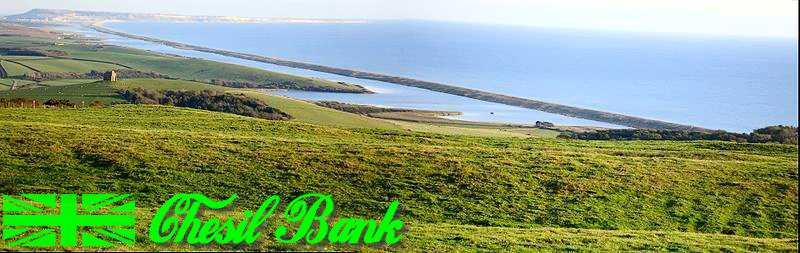
Bridport describes
itself as 'a delightful West Dorset
town' which seems fair enough. It is
primarily a market town, situated a mile
from the coast. West Bay is a part of
the town and is a harbour area
overlooking Lyme Bay.
The town can trace its
history back to Elizabethan times when
it was first granted the right to hold
markets. since then its history has been
entwined with Britain's maritime
industries in the shape of rope and
cable making for the Royal Navy. It now
combines its rural market traditions
with tourism to give an interesting
experience for the visitor. For more
details about the attractions click on
to our Dorset section
32 South St,
Bridport, DT6 3NQ
Tel: 01308 424901 Fax: 01308 421060
Website: www.westdorset.com
|
|
Bristol
visitbristol.co.uk

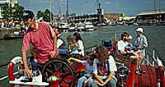
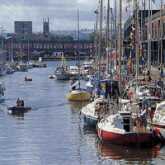
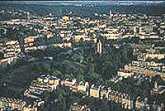
Bristol may be regarded
as the gateway to the Westcountry which
is more or less right if you are
travelling from the north of the
country. However there are people in the
far west who regard Bristol as being in
the Midlands! Which ever view you take
Bristol is a fascinating area in its own
right and is well worth a visit.
Bristol's early history
was as a flourishing port, although
situated seven miles upstream from the
Seven estuary most ships of that time
could navigate the river. In early times
this trade consisted of cocoa, sugar
tobacco and slaves. With manufactured
goods and cloth going in the opposite
direction. The dock area of Bristol were
constructed at this time but have now
been put to other uses. As the size of
ships grew the river became to narrow to
navigate and maritime trade shifted to
Avonmouth and Bristol turned to other
trades. At the present time Bristol is a
busy city with a wide variety of
economic activity and lively nightlife
with plenty of clubs and bars. Within
Bristol itself there are many things to
see and do, stroll along the river front
and visit the cafes and restaurants, or
head for one of the major attractions
that are available within the
city.
The Clifton
Suspension Bridge spans the Avon gorge
and is a prime example of Britain's
industrial heritage. Designed by
Isambard Brunel the bridge is 75m above
the river and was completed in 1864,
having taken 28 years to finish. Bristol
Zoo is quite large and has gorillas and
a rainforest section among many other
features . SS Great Britain is moored in
the dock area and was the first large
ship to be built of iron and driven by a
propeller. This is another of Brunel's
stunning achievements and Bristol is
justifiably proud of this Victorian
engineer who was a resident of the city.
For more details about the attractions
click on to our
Somerset section
Centre Harbourside,
Anchor Road, WildWalk At Bristol,
Bristol. BS1 5DB
Tel: 0906 711 2191
|
|
Brixham,Devon
www.theenglishriviera.co.uk
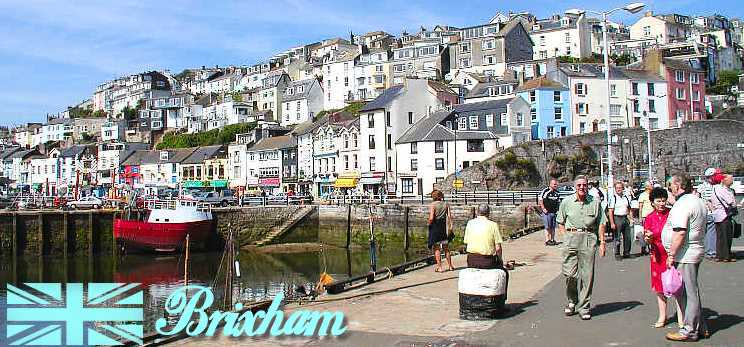
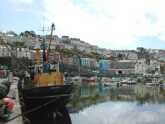
Brixham is a
working port and fishing village on
the west side of the bay. There is
still a large fleet of fishing
trawlers based at Brixham and these
can be seen unloading at the quay in
the town centre. Around the harbour a
maze of narrow, twisting streets to
explore and plenty of cafes and
restaurants where you can sample the
locally caught seafood. Nearby is the
towering cliffs of Berry Head where
you can get some of the best views of
the bay. For more details about the
attractions click on to our Devon
section The Old Market House,
The Quay, Brixham, TQ5 8TB Tel:
01803 852861
Fax: 01803 852939 Email: brixham.tic@torbay.gov.uk
|
|
Bournemouth,
Dorset
www.bournemouth.co.uk
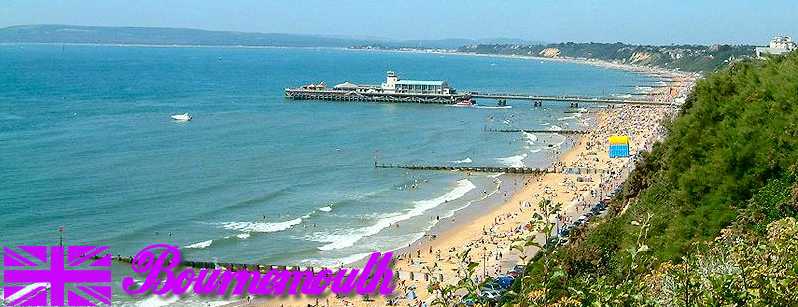
Bournemouth lies
directly to the east of Poole but they
are conjoined - one and the same to all
intents and purposes. However there are
distinct differences between the two
towns. Bournemouth is older than its
neighbour, having been established
around 1810 as a seaside resort. The
buildings in the centre and some of the
larger, more established hotels
reflect this foundation in the Victorian
era.
The Victorians were
also responsible for the towns
magnificent twin piers which are the
trademark of the town. The beach in
front of the town is excellent and
stretches for seven miles, west towards
Poole and east towards Christchurch -
there is always room somewhere. The
seafront area is the epitome of the
English seaside resort with plenty of
entertainment and refreshments along its
length.Bournemouth is well served with
transport links. From the east and
London take the M3 and then theA31. From
the west the A35 via Dorchester leads to
Poole and then Bournemouth. Bournemouth
has an international airport to the
north of the town.Gardens are a major
attraction in the Bournemouth area. The
Victorian Pleasure Gardens are located
in the town. While there is a tropical
garden at Alum Chine and an Italian
garden at Boscombe. For more details
about the attractions click on to our Dorset section
Westover Rd,
Bournemouth, BH1 2BU
Tel: 0906 802 0234 Fax: 01202
451743
|
|
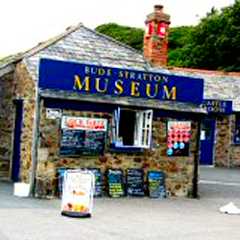
|
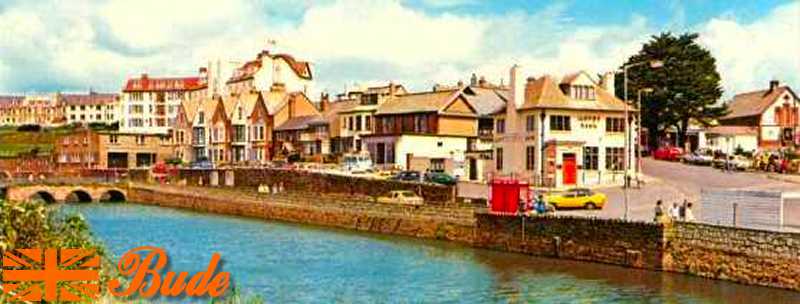
A
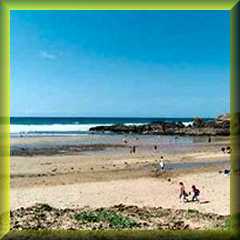
friendly seaside resort being the most
northern town in Cornwall, with Atlantic
waves a perfect base for surfers, the
sandy and pebble beaches such as Sandy
Mouth with plenty of rock pools for
explorers, Summerleaze overlooked by
Bude Castle built in 1830, was once home
to Sir Goldsworthy Gurney an inventor.
Crooklets beach was where the first ever
‘Surf Life Saving Club‘ opened, gives
weekly demonstrations. Or if a gentle
pause is required then the stunning
cliff and Valley walks beckons walkers,
cyclists and birdwatchers. Near the
beach there is trampolines, mini golf,
an indoor sea water pool, and even a
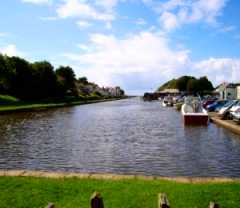
Laser Dome. The Canal originally dug in
1823 carried the mineral rich sand to
Launceston for fertilizer and returned
with produce, now only travels a few
miles inland, but the pleasure boats or
fishing on offer is a delightful way to
spend some time. If you fancy a round or
two at an 18 hole golf course then why
not try Bude Golf Club, the 19th hole is
also available for a tipple. Although
there are many indoor activities on
offer with pubs restaurants and Leisure
Centre, the outdoor fun is endless, one
is ‘Atlantic Pursuits’ where anyone can
enjoy the exhilarating feeling of
Canoeing, Sea Kayaking, or Boogie
Boarding, have a go if you dare. A mile
away is the village of Poughill the
Church of St Olaf is home to the unusual
collection of bench ends with intricate
carvings depicting the ‘Passion‘, and
two 15th Century paintings which will
definitely please. Bude Museum houses
many interesting wonders, or travel just
over a mile to the historical village of
Stratton where a Civil Battle took place
in 1643. Whatever the reason walking
fishing sightseeing surfing or painting,
Budes’ exceptional beauty entices her
visitor to stay. For more details about
the attractions click on to our Cornwall section
The Crescent Bude
Cornwall EX23 8LE
Tel; 01288 354240 fax 01288 355769
e-mail
bude-tic@visitbude.info
Manager
JackiStephens |
|
Budleigh
Salterton,
Devon
www.visitbudleigh.com
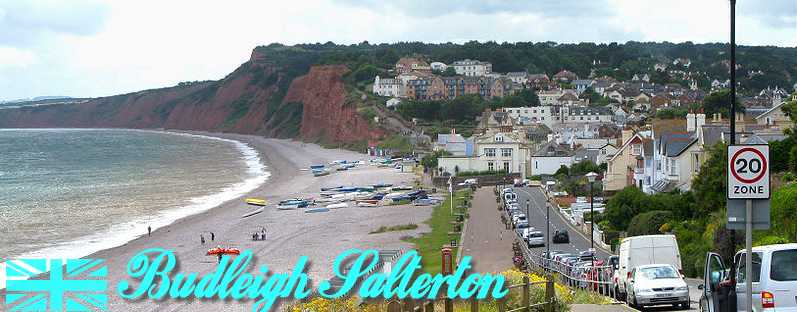
Budleigh Salterton
lies to the west of Sidmouth towards
Exeter. Although small and peaceful, the
town attracts a lot of visitors who are
drawn by the unspoilt nature of the area
and the beautiful setting. The town is
literally a stones throw from the beach
with many houses jostling for space
along the small beachside area. The
beach is made up of pebbles and is
quite steep, it stretches away from the
town to the east for a distance of
around 2 miles. The beach is
overlooked by towering red sandstone
cliffs which are part of the Jurassic
Coast Heritage Site. There is a
sandy, gently sloping beach
at Lttleham Cove a short walk
away. Budleigh Salterton derives
its name from the ancient trade of salt
panning which used to take place in the
area. A further claim to fame arises
from the fact that Sir Walter Raleigh
was born nearby at Hayes Barton. The
foreshore was the setting for the famous
painting 'The Boyhood of Raleigh' which
hangs in the Tate Gallery.
The South West Coast Path runs
along here and there is a very good
cliff top walk to Exmouth, which is
around four miles to the west. A small
fishing fleet is based on the beach -
see above.
Worth a visit are the small beachside
cafe and an excellent ice cream shop
in the town just off of the sea front
at Budleigh. Also there is a good path
up the cliff towards Exmouth which is
part of the South West coast path
route. For more details about the
attractions click on to our Devon
section
Fore Street, Budleigh
Salterton , EX9 6NG
Tel 01395 445275 Fax 01395
442208 |
|
Burnham,
Somerset
www.burnham-on-sea.com

Burnham-on-Sea has a
fine esplanade and seafront overlooking
Bridgwater Bay and the distant Welsh
coast. It is situated in the rolling
countryside of Somerset with its
charming villages and busy resorts. It
is also very accessible as it is close
to the M5. Burnham-on-sea is blessed
with one of the largest beaches in the
Westcountry. It stretches for seven
miles past the town and on to the
villages of Berrow and Brean Sands. At
low tide the beach is wide and is often
used for sand yachting and kite
flying.The tidal range is one of the
largest in the world and the tide moves
very fast as a consequence of this - it
is advisable to check on the tide times
before venturing too far. There is
a wide range of accommodation available
in the town and plenty of cafes and
restaurants. Nearby and well
worth a visit are Wells, Glastonbury and
Cheddar Gorge. For more details about
the attractions click on to our Somerset
section
|
|
Clevedon,
Somerset
http://www.clevedon.org/
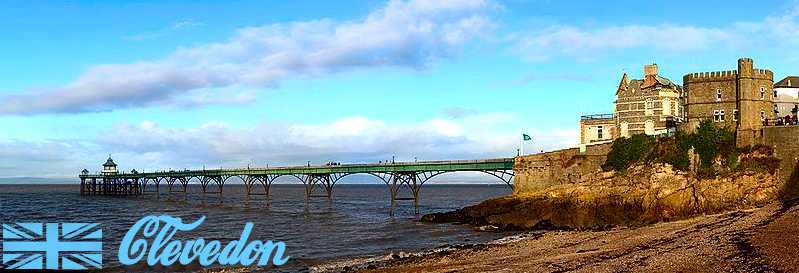
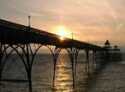
Clevedon is a seaside
town full of Victorian and Geirgian
heritage and is well worth a visit.
Tennyson and Coleridge were inspired to
write poetry while spending time here.
Clevedon's treasures include the
restored Grade 1 listed pier, perfect
for a walk or catch the majestic
Waverley and Balmoral pleasure steamers
for a trip along the coast. Clevedon
offers streets full of small boutique
shops and restaurants. Visit the
seafront Salthouse Fields where you can
watch the bowls, ride the miniature
railway, or just enjoy an ice cream and
a pleasant walk. For more details about
the attractions click on to our Somerset
section
37 Old Church Road, Clevedon, Somerset
BS21 6NN Tel: 01275 873498
email: clevedon.library@n-somerset.gov.uk
|
]
|
Clovelly,
North Devon
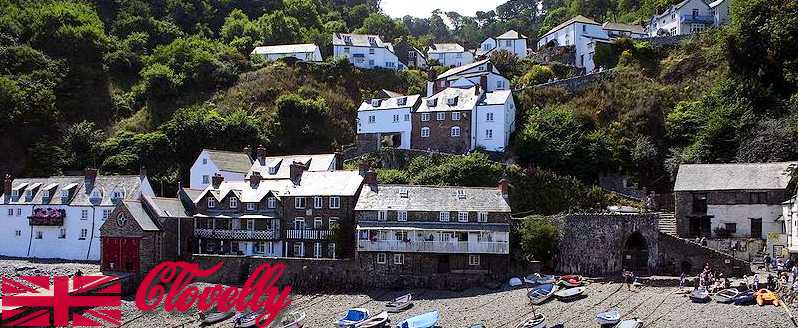
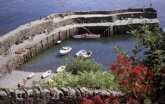
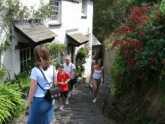
Set into a steep hillside, Clovelly
is one of the most famous villages in
the world. The single cobbled high
street winds its way down the hillside
through traditional whitewashed
cottages festooned with fuchsias and
geraniums. The high street drops 122m
(400ft) in 0.8km (half a mile) through
the 16th century cottages to a small
harbour. The policy of the Clovelly
estate has maintained - against all
the odds - this picture postcard
village as a living village. There are
no Holiday cottages allowed in the
main village, and the mode of
transport is either sledges for the
Friday deliveries, or donkeys for the
visiting tourists. The sledges can be
seen at the side of the cottages as
you walk down through the village to
the Harbour.
Clovelly has been a place of
settlement for many years, but it was
a 16th century lawyer, George Cary,
who really established the village as
a viable community. George Cary, built
the stone harbour quay - establishing
Clovelly a the only safe harbour
between Boscastle in Cornwall and
Appledore. The small harbour was
sheltered up to 60 fishing boats, but
due to the decline of the herring
fishery this has now dwindled to a
handful of small boats. For more
details about the attractions click on
to our Devon
section
|
|
Dartmouth,
Devon
www.dartmouth.org.uk
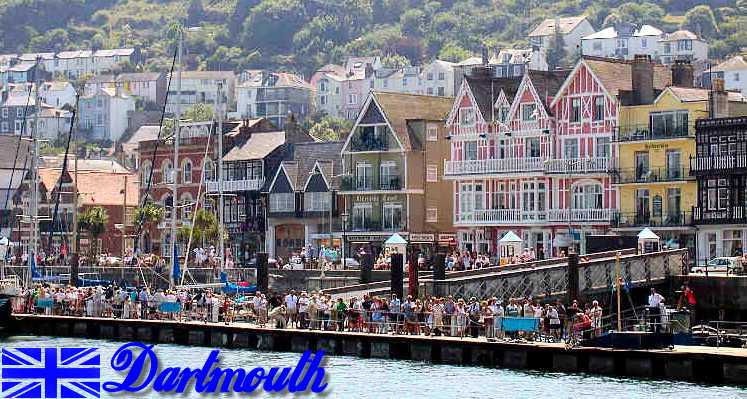
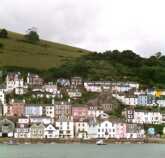
Dartmouth is situated
in South Devon on the western bank of
the River Dart, opposite, on the eastern
shore is Kingswear. Both towns are
historic ports which used to trade cloth
and wine with France; today they are a
mixture of tourist resort, fishing port
and yacht haven.
Dartmouth lies around five miles from
Torbay and can be reached by car via a
toll ferry or by the Paignton and
Dartmouth Steam Railway. Renown as a
centre for sailors Dartmouth has been on
the seafarer's map for around 900 years.
It has a deep water harbour and is
enclosed by steep wooded hills on either
side. For many years Dartmouth was a
thriving port that traded in cloth and
wine from France. It is now a busy
holiday resort and port of call for many
yachtsmen including many from Atlantic
journeys.The Dartmouth of the past was
heavily defended from the French and
Spanish with an artillery emplacement,
which was built in the reign of Henry
VIII, at Bearscove Castle. Further down
the river is Dartmouth Castle which was
the first line of defence for the port.
Although the castle is quite small it
had several gun emplacements and
controlled a chain running across the
river which could be raised if there was
an attack by the dastardly French.
Overlooking the town is Britannia Royal
Naval College where Officers are trained
for today's Royal Navy. Officer training
has been carried out at Dartmouth since
1863 when the training was conducted
aboard HMS Britannia, an old wooden wall
warship. The present buildings date from
1905, the architect was Sir George Aston
Webb, one of the more distinguished of
his day, whose previous commissions
included Admiralty Arch and the East
Front of Buckingham Palace. Prince
Phillip trained here just before the
outbreak of World War II and met
Elizabeth Windsor, the future Queen,
while receiving an award. For more
details about the attractions click on
to our Devon
section
The Engine House, Mayor's Avenue,
Dartmouth , TQ6 9YY
Tel: 01803 834224/01803 834959 Fax:
01803 835631
Email: Holidays@DiscoverDartmouth.com
Web: www.discoverdartmouth.com/ |
|
Dawlish,
Devon
www.devon-online.com
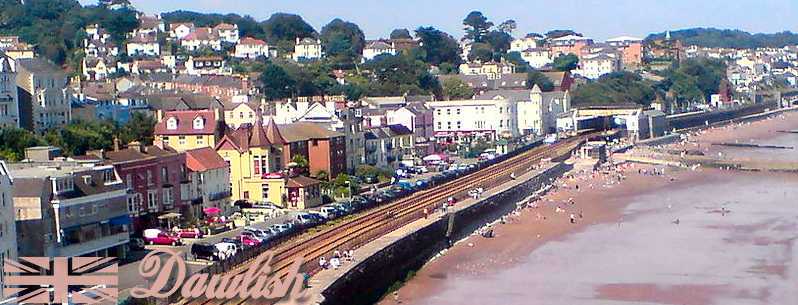
Dawlish in South Devon
is a small seaside resort with a great
reputation for family holidays. The main
reasons for this popularity is the
magnificent sandy beach at Dawlish
Warren and general charm of the town.The
town of Dawlish itself is well situated,
with gentle rolling hills behind and
magnificent sea views to the front. At
the centre of the town is an attractive
park with a small stream running through
it. The town itself is made up of many
Georgian and Victorian buildings which
add to the general charm of the resort.
This is an ideal place to relax and
forget the rat race and the traffic on
the M5! There are many shops, pubs and
cafes and attractions in the
area. Look out for the famous black
swans of Dawlish.There is a pleasant sea
front area of the town overlooking a
good beach but the main beach area is
Dawlish Warren. , which is nearby. This
is a beach and nature reserve that
stretches for two miles to the east of
the town up to the estuary of the River
Exe. This is a fine sandy beach that
slopes gently to the sea and is ideal
for swimming. The beach has Blue Flag
and Clean Beach status. Part of the
beach is designated a nature
conservation area for the protection of
birds insects and plants. It is an ideal
area for walking as the South West Coast
Path runs through it with waymarked
paths and also for field studies and
photography. For more details about the
attractions click on to our Devon
section
The Lawn, Dawlish , EX7 9PW
Tel: 01626 215665 Fax: 01626 865985
Email: dawtic@Teignbridge.gov.uk
Web: www.southdevon.org.uk
|

|
Emsworth,
Hampshire
CLICK
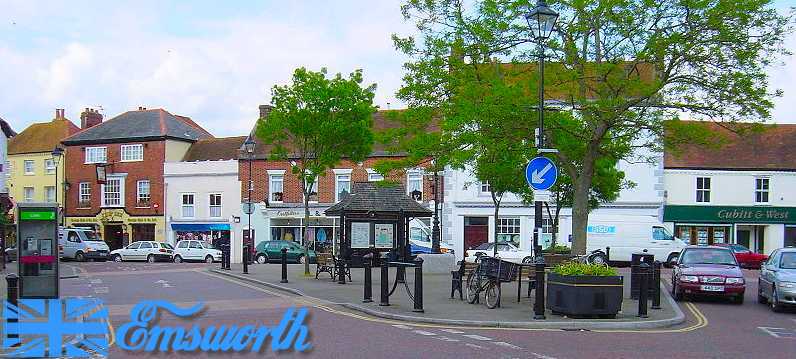
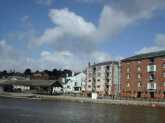
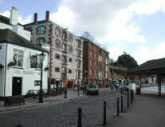
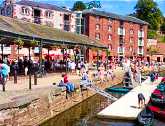
Emsworth is a
delightful village with narrow streets
and a busy harbourside with charming pubs
and restaurants and a host of small
specialist shops. It is situated
on the edge of Chichester Harbour, an
area of outstanding natural beauty, and
is popular port of call with sailors,
artists, naturalists and walkers, as
well as tourists and those who live
nearby. There are several picturesque short walks around
the village, which is the starting
point for coastal and cross country
walks all over Hampshire.
Emsworth's long history has given the
town distinct characteristics. It was a
thriving centre for oyster fishing and
boat building which continue today,
though on a much smaller scale. Two
tidal mill ponds to the east and west of
the town centre play host to a variety
of birdlife, and the mills, one on each
pond, still remain though now converted
to a variety of uses - gallery, sailing
club, businesses and
housing. The gradual growth
of the town has resulted in many
attractive streets which are lined by a
mixture of brick and rendered Georgian
houses with tiled or slate roofs which,
combined with the high walled gardens,
give Emsworth a genuine feel of the
past. A former Coaching Inn still
operates as a public
house and there are many fine old
houses along Tower
Street, South
Street, King
Street and Queen
Street most built in
characteristic Hampshire brick except
for former boat builder John King's
house which is, unsurprisingly, timber
throughout. Emsworth is closely
connected to the novelist P.G. Wodehouse
- try and spot the place names in
Emsworth and its locality which he used
for characters in his novels - the first
of which were written while he was
living at a prep school in
Emsworth. For more details about
the attractions click on to our Hampshire
section
|
|
Exeter,
Devon
www.exeter.gov.uk
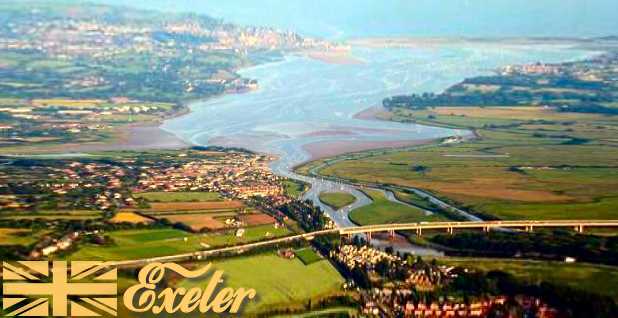
Exeter is situated in
east Devon around five miles from the
coast. This thriving city lies on the
river Exe which runs through the city
and joins the coast at Exmouth. Exeter
is a modern city that now styles itself
as the regional capital of the
Westcountry - however its roots go back
a long time to Roman times and beyond.
Situated on a small hill on a bend in
the River Exe, the site of the modern
day city has been occupied for over two
thousand years. The Romans built a
permanent settlement here around 50 AD
to form the administrative centre of the
region. The shape of the modern city is
derived from this settlement and there
are still significant parts of the old
roman wall on display around the city.
A thousand years later,
in 1068, the walls protected the city
from the invading Normans led by William
the Conqueror. The city resisted the
attackers for 18 days until the walls
were breached and the city surrendered.
The Normans then constructed Rougemont
Castle from which to administer the
region. The remaining part of this
development now serve as the Court
buildings for Exeter.The Normans were
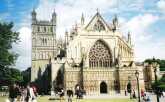
also responsible for building Exeter's
magnificent cathedral- St Peters. Built
on the site of an existing church, St
Peters was constructed between 1112 and
1133. The design was unusual for that
time and is based on twin transept
towers which support the north and south
walls. The entrance is via the Great
West Front which is decorated with many
sculptures which were originally painted
in bright colours. Inside there are many
examples of medieval craftsmanship with
the highlight being the stained glass of
the East Window.Exeter has a long
maritime history stretching back to
Roman times. When the rivers of Britain
were the main highways Exeter became a
port with ships travelling up the river
from Exmouth to offload produce in the
city. The results of this trade can be
seen at the quay area of the city where
there is the Customs House and several
old warehouses to be seen, mostly now
converted to houses, shops and cafes.
Sir Walter Raleigh who was born near
Exmouth often frequented the city and
Sir Francis Drake was a patron of The
Ship Inn and Mols Coffee House both in
Cathedral Close.
Exeter also has a fine
University, set in landscaped grounds
over looking the city. The city has
around 12,000 students at various
institutions and as a result the bars
and cafes and bookshops do a good trade
and there is an energetic
nightlife. For more details about
the attractions click on to our Devon
section
Exeter Services,
Sandygate, M5 Junction 30, Exeter
& Civic Centre, Dix's
Field, Exeter ,EX1 1RQ
Tel 01392 265700
Fax 01392 265260
Email:
tic@exeter.gov.uk
|
|
Exmouth,
Devon
www.exmouth-guide.co.uk
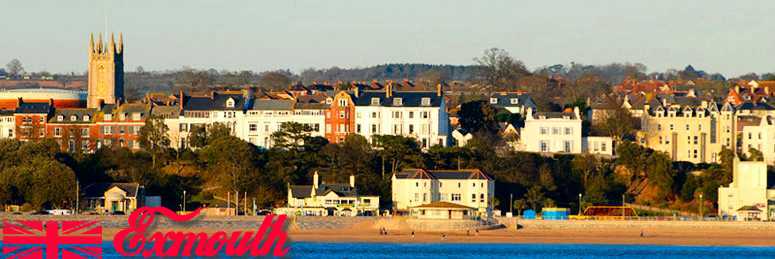
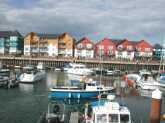
Exmouth lies at the
mouth of the River Exe around five miles
south of the regional capital, Exeter.
It can be reached by the A376 which
spurs off of the M5 at Exeter.Exmouth is
a traditional family holiday resort with
a long seafront, a wide sandy beach and
lots of seafront cafes, restaurants and
pubs. There is also plenty of seafront
parking. All of these factors make it a
popular destination for locals and
visitors alike and as a consequence it
can become crowded at weekends.
Nevertheless visitors
will not be disappointed. The beach is
wide, flat and sandy and is ideal
for swimming, sunbathing or sandcastle
building. There are good walks also
along the South West coast path towards
the eastern end of the Jurassic Coast
and also inland. This is also a good
location for water sports such as
windsurfing, surf kiting and
sailing. At the eastern end of the
town is a small harbour, known as
Exmouth Dock, overlooked by colourful
modern apartments. There are several
cafes and pubs in the area and boat
trips leave from the harbour to Dawlish
Warren and Starcross. The estuary of the
River Exe is wide at this point and
forms a natural anchorage for fishing
boats and yachts. The river is
navigable up to Topsham where there is a
quay - and a good pub - The Steam
Packet. Exeter can be reached via
the canal but this involves two or three
lock gates which are only open at
certain times. The start of the
Jurassic Coast World Heritage Site which
stretches from Exmouth to Swanage in
Dorset. This section of coast is rugged
and undeveloped with huge red sandstone
cliffs interspersed with small compact
coves and harbours. The South West Coast
Path runs along this site. For more
details about the attractions click on
to our Devon
section
Alexandra Terrace, Exmouth , EX8 1NZ
Tel: 01395 222299 Fax: 01395 269911
|
|
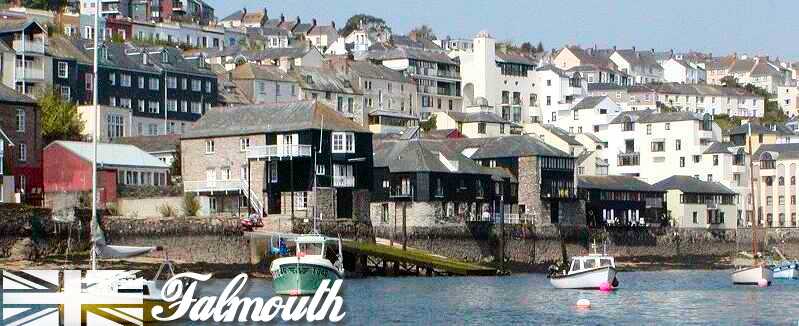
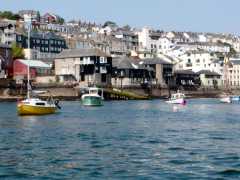
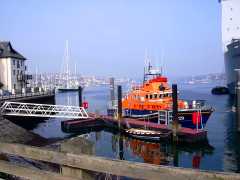
Falmouth’s
natural harbour is the third largest
deep-water harbour in the world, the
traditional gateway to the Atlantic
and one of the world’s great sailing
harbours. The world-class National
Maritime Museum Cornwall houses the
small boat collection and offers
unique and interactive displays of
boats and their place in people’s
lives. The clear water, sheltered
creeks and mild temperatures of the
Fal estuary provide fine natural
oyster beds, sustaining the last
remaining oyster fisheries still
dredging under sail and oar in Europe.
Falmouth’s maritime tradition is
regularly celebrated through regattas
and festivals. The town’s shopping
streets lie just off the waterfront
and are connected by small opeways
offering tantalising glimpses of the
water and link the harbour with a
charming mix of shops and art
galleries. Cafés and restaurants offer
a selection of both world and local
cuisine. Within walking distance you
will find beaches offering safe,
crystal clear waters, sandy stretches
and secluded coves ideal for family
bathing and watersports. Sightseeing
in the Falmouth area could not be
easier. Climb aboard one of the many
trip boats that ply the local waters,
or hop-on and off the road train that
in summer links the town, beaches and
Pendennis Castle. Population 22,000.
For more details about the attractions
click on to our Cornwall
section
11 Market Strand, Prince of Wales
Pier, Falmouth Cornwall TR11
3DR
Tel: [01326]
312300 Fax: [01326]
313457
E-Mail: info@falmouthtic.co.uk
|
|
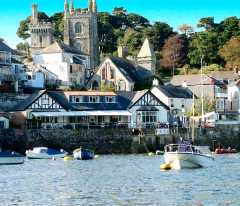
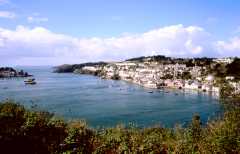
A bustling seaport and historic town on
the mystic South Coast of Cornwall. Was
the centre from which the ‘D’ Day landings
launched. Today the natural deep water
harbour is a haven for yachtsmen, together
with the large ships and cruise liners
makes this harbour a bustling port. This
is an ideal place for painters and
photographers with the colourful yachts
and sparkling sea. Stroll along the
esplanade and drink in the scenery or walk
over the cliffs where the path hugs the
coast, with sandy beaches to swim, fish or
explore the rock pools. Or head inland and
climb the narrow lanes and winding cobbled
walkways with Medieval cottages, where in
the 18th Century was the preferred haunts
of the smuggling fraternity. An
interesting place to see is St Catherine’s
Point at the harbour entrance, during
Medieval times St Catherine’s Chapel stood
on top of the cliff acting as a
lighthouse. The Fort below was built in
the reign of Henry V111 to protect Fowey
from French invasion, and can be reached
by a pretty woodland walk. There is much
to see and do in Fowey such as the
Lifeboat Station which has been operating
some 150 years. Headland gardens, one and
half acres of cliff top gardens with the
most astounding sea and river views.
Historical guided walks that operate from
the Town Quay, to an enjoyable fishing
trip or river cruise. One of the most
famous inhabitants of Fowey was probably
Daphne du Maurier and a visit to the
Literary Centre next door to the church is
a lovely way to spend some time. Or why
not indulge in a trip on the passenger
ferry that travels across the mouth of the
River Fowey to the neighbouring village of
Polruan. Drake, Raleigh and Frobisher all
sailed from here, now it’s your turn. For
more details about the attractions click
on to our Cornwall
section
5 South Street Fowey
Cornwall PL23 1AR
Tel:
[01726] 833616 Fax:
[01726]
834939
E-Mail: info@fowey.co.uk
|

|
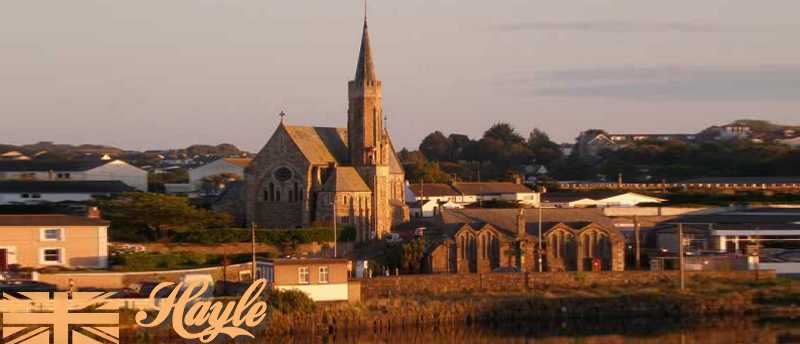
Hayle, Cornwall
|

|
Hayling
Island, Hampshire
www.hayling.co.uk
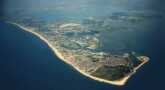
Hayling Island is an
unusual and interesting feature of the
south coast. It is an inland island in
effect surrounded by the waters of
Langstone Harbour to the west and
Chichester harbour to the east and it is
reached by a road bridge from the A27.
Hayling Island is only a small
island, but it has much to offer to
resident or visitor alike.Hayling's
combination of rural and marine
environments has left us a legacy of
unique natural history and a
bio-diversity with walking
distances of anywhere on the Island.
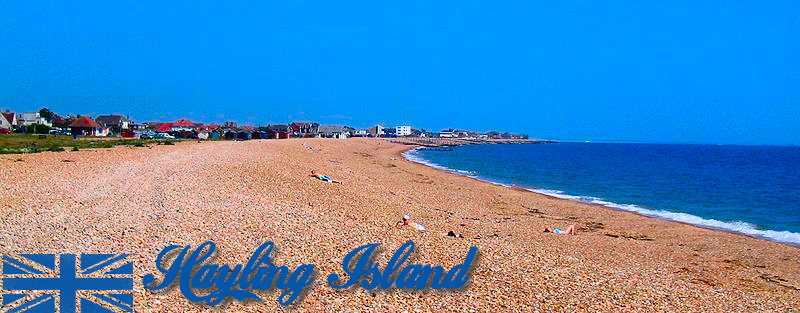
Hayling Island also
has over 3 miles of beaches
right on the doorstep of the Solent as
well as the Harbours of Langstone and
Chichester. With its safe open spaces,
fresh air and sheltered waters, Hayling
Island has much to offer those that
enjoy sports
of all kinds, whether on land or at
sea. The Hayling Billy Trail is a
footpath which runs from Havant town
centre (New Lane level crossing)
southwards through Langstone and onto
Hayling Island where it becomes the
Hayling Billy Coastal Path. The route of
the Trail mostly follows the old
'Hayling Billy' Railway which closed in
1963.The current upgrade to the Hayling
Billy Trail is being carried out to
provide part of the National Cycle
Network being developed by Sustrans,
the civil
engineering charity.
For more details about the attractions
click on to our Hampshire
section
Beachlands, Seafront , Hayling
Island, PO11 OAG
Tel:023 9246 7111
Fax: 023 9246 5626
|
|
Ilfracombe,
North
Devon
www.ilfracombe-tourism.co.uk

Ilfracombe is a small
seaside resort and harbour in north
Devon, that is also not far from the
upland region of Exmoor. There are a
number of small coves near to the town
but the main tourist beach is
Woolacombe, which is large and flat and
suitable for swimming and surfing.
Ilfracombe is the largest harbour on
the North Devon Coast - this natural
harbour has a character and beauty
unmatched in the Bristol Channel. The
town has been in existence as a port
for more than two hundred years and is
today an ideal holiday centre from
which to explore the many attractions
in the surrounding area. For more
details about the attractions click on
to our Devon
section
The
Promenade , Ilfracombe .EX34 9BX
Tel: 01271 863001
Email: ilfracombetic@visit.org.uk
|
|
Isle Of
Wight
www.iwight.com
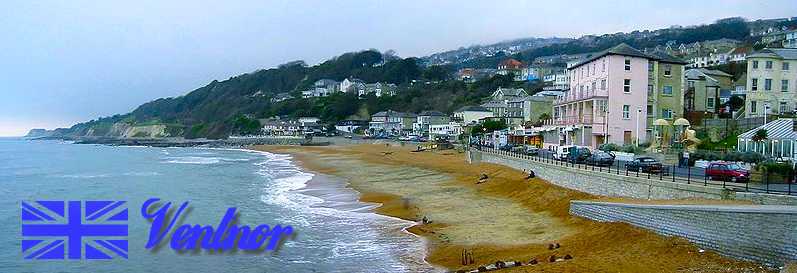
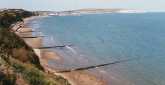
The Isle of Wight is a
complete tourist attraction in its own
right and deserves more than a fleeting
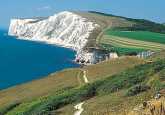
visit. The wonderfully varied and
unspoilt coastline scenery is probably
the Island’s finest natural asset, from
glistening chalk cliffs overlooking
clear waters to the tranquil estuaries
which meander inland. Whatever attracts
you to the seashore, whether it is
beachcombing, bird watching, rock
pooling, bathing or just watching the
world go by, the Island’s coast will
certainly provide inspiration as well as
contentment.
Here you will find over
25 miles of beaches, many of them are
excellent for families and swimming; the
unspoilt rural landscapes of the inland
area; world renown sailing venues and
some first class resorts and tourist
attractions. Two of the main resorts are
Sandown and Shanklin on the south east
coast of the island. The resorts are at
opposite ends of the 6 mile long Sandown
Bay and both are suitable for families
with good, safe beaches. Perhaps
the most famous town on the island is
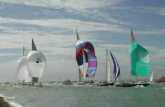
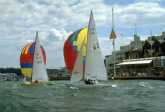
Cowes, which is famous the world over as
a major sailing venue and home of the
eponymous sailing week in mid-summer.
Cowes which is separated by the river
Medina, - is split into two
attractive towns, named East Cowes and
West Cowes. The two are linked together
by a unique chain-driven floating bridge
which transports car and foot passengers
between the two. Cowes is famous of
course from being the home of the world
renowned sailing regatta, Cowes Week
which is an annual event held every
August. Cowes is also the home of the
Royal Yacht Squadron which oversees
sailing in the UK. In 2005 the dates for
the sailing week are 30 July - 6 August.
Better hurry to get your entries in! The
town of Cowes itself is very pleasant
with plenty to see and do and lots of
interesting places to stop for a
meal.
Another well known town
on the island is Ryde which is one of
the main entry points for visitors. This
Victoria town has a pier and esplanade
in the best traditions of English
seaside resorts from this era. For more
details about the attractions click on
to our Hampshire
section
|
|
Langstone Harbour
www.langstoneharbour.org.uk
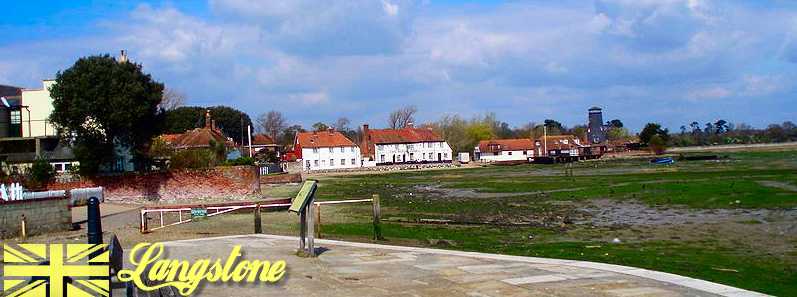
Langstone Harbour is
the centre of three linked harbours on
Hampshire's southeast coast, with
Portsmouth Harbour to the west and
Chichester Harbour to the east.
The harbour is important for its
environmental designations, and
commercial shipping, fishing and
recreational boating have been supported
in the harbour for many years. For
more details about the attractions click
on to our Hampshire
section
|

|
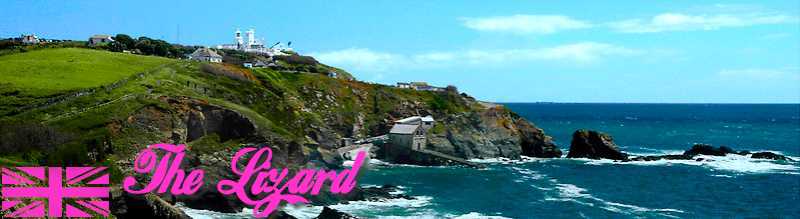
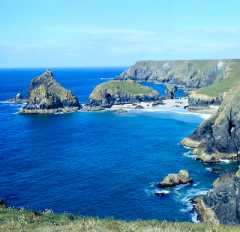
The Lizard peninsular is an interesting
area that is well worth a detour to
visit. The most famous site on the
peninsular is Lizard Point which is the
most southerly point in mainland Britain.
Here you will find a lifeboat station and
details of the many ships that have got
into difficulties in these tricky waters
over the years. There is also a shop and
cafe from which to admire the view.A steep
path leads down from Lizard Point to a
small cove and the lifeboat station. The
area has been the site of several ship
wrecks in the past and there are details
of rescues on a board at the top of the
path. Nearby there is also a fine
lighthouse and walks along the cliffs
towards Coverack in the east and Vellan
Head to the west. Also on the
peninsular are RNAS Culdrose, from which
rescue helicopters fly and Goonhilly Downs
which is the World's largest satellite
earth station. In the area nearby are
Mullion Cove, a tiny fishing village and
very picturesque too and Kynance Cove
where they collect the serpentine rock,
that can be seen in many local gift
shops.The Lizard peninsula is almost cut
in half by the River Helford and the
various creeks and tributaries feeding it.
It is totally different to the rest of the
Lizard, being a quiet, tree-lined haven of
quiet where yachts can anchor at leisure.
One of the headwaters, Frenchman’s Creek
has been immortalised in the novel of the
same name by Daphne du Maurier and on the
upper reaches of the river lies the
National Seal Sanctuary at Gweek. For more
details about the attractions click on to
our Cornwall
section
|
|
Looe, Cornwall
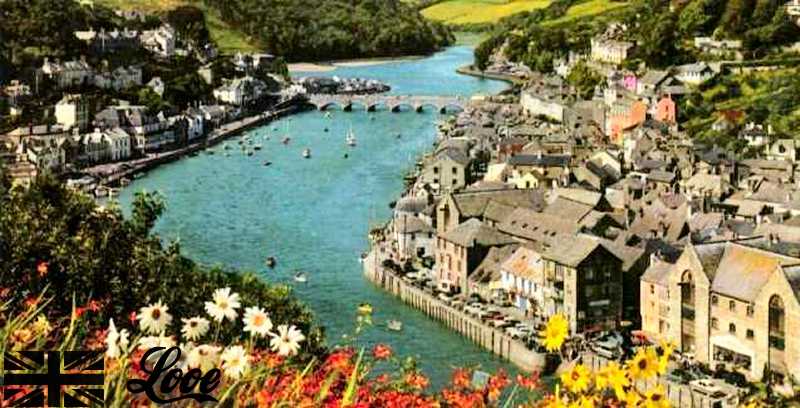
Looe
is an old seafaring town with a long
history of fishing and smuggling. Just
17 miles west of Plymouth. East and
West Looe are split by the river
running out to sea with a landmark
seven arched stone bridge linking the
two sides. The town 'centre' is at
East Looe, with its cobbled streets,
quaint cottages, shops and the busy
fishing harbour.
St.
George’s Island
is a small Cornish island. Better
known as Looe
Island,
it lies just a mile off the southern
Cornish coast, near the small
fishing village
of Looe.
The island is 22½ acres in extent,
one mile in circumference, and rises
up to 150 feet.From the early 1960s
until 2003 the island was owned by
the indomitable Atkins sisters. The
story of how Evelyn and Babs Atkins
came to find themselves on the
island was told in the bestselling We
Bought an Island and Tales
From Our Cornish Island by
Evelyn, who died in 1997. When Babs died in
2004, she left the island to the
care of the Cornwall Wildlife
Trust.The island has been a popular
tourist attraction for decades, as
it enjoys magnificent coastal views
from Prawle
Point in Devon
to the Lizard
Peninsula.
With snow and frost virtually
unknown it has an exceptionally mild
climate. Daffodils bloom at
Christmas, and unlike most small
islands it is wooded. A natural
sanctuary for sea and woodland birds
and one time haunt of smugglers, its
known history includes a Benedictine
chapel built in 1139 of which only a
few stones remain visible. Legend
has it that Joseph of Arimathea
landed here with the child Christ.
For more details about the
attractions click on to our Cornwall section
The Guildhall Fore Street
East Looe Cornwall PL13 1AA
Tel: [01503] 262072
Fax: [01503] 265426
E-Mail:
looetic@btconnect.com
|
|
Lynton
and
Lynmouth, North Devon
www.lynton-lynmouth-tourism.co.uk
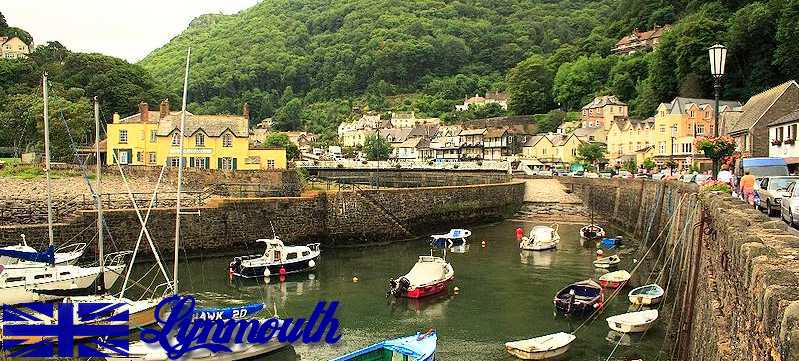
are situated further
along the coast from Ilfracombe and are
within the Exmoor National Park. Lynton
has most of the accommodation while
Lynmouth has the harbour and
seafront.
A unique feature of
these two towns is that they are linked
by a water powered cliff railway so it
is relatively easy to travel between the
two towns. For more details about the
attractions click on to our Devon
section
E-mail:
info@lynton-lynmouth-tourism.co.uk
|
|
Lyme
Regis,Dorset
www.lymeregis.com
Do you remember
that film " The French Lieu tents
Woman" ? It Was filmed in Lyme
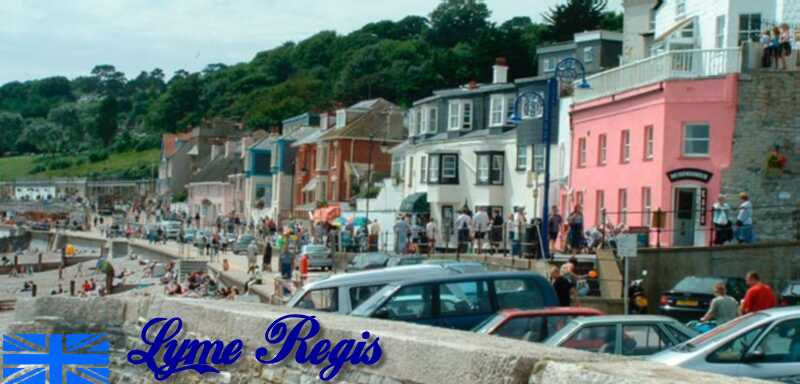
Regis. This is a bustling town with
large Sandy Beaches where the
smugglers used to come into. It was
also where the Duke of Monmouth
landed when he tried to take the
British throne from James II. Known
as the Jurassic close there are many
fossils in the area and they date
from the Jurassic period. You can
either buy the fossils or search for
them yourself. Also there is the
famous Cob, which stretches out into
the sea. There are some lovely
little narrow street walks with
interesting art and curio shops.
Restaurants abound and you can also
enjoy much of the local sea food.
There is also a fine theatre and
very interesting shopping.As you
stroll through the streets of Lyme
you will feel that you are in a
timeless zone. A delight for
the kids and so much of interest.
For more details about the
attractions click on to our Dorset section
There are many boat
trips that you can take.
|
|
Lymington,
Hampshire
www.lymington.org
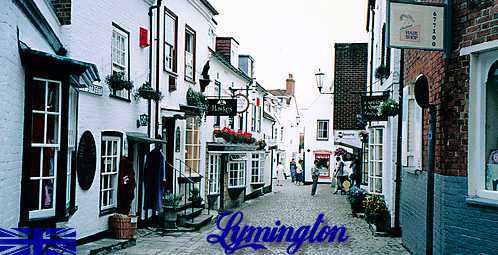
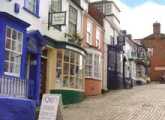
Lymington is a small,
bustling market town with an idyllic
location between the New Forest to the
north and the Hampshire coast to the
south. It is also important as a
marina and mooring, located on the
Solent which is always busy with yachts
and other vessels. The town itself is a
pleasant mixture of Georgian and
Victorian architecture but its
beginnings go back much farther, to the
medieval period when it was a centre for
salt production. There are
several castles in the area which formed
part of Britain's coastal defences
against the French and
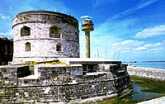
Spanish. Hurst Castle, built by
Henry VIII as one of a chain of coastal
fortresses, is located at the end of a
shingle spit which extends 1 ½ miles
from Milford-on-Sea and overlooking the
Solent. The castle was completed in
1544. In 1648, Charles I was imprisoned
here before being taken to London for
his trial and execution. During the
Napoleonic wars and again in the 1860s,
the castle was modernised and enormous
armoured wings were added to house huge
new guns. Nearby and well worth a
visit are Beaulieu Abbey and Beaulieu
Motor Museum. For more details about the
attractions click on to our Hampshire
section
St Barbe Museum & Visitor Centre,
New Street, Lymington, SO41
9BH
Tel:01590 689000 Fax: 01590 673990
|
|
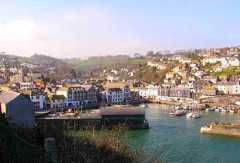
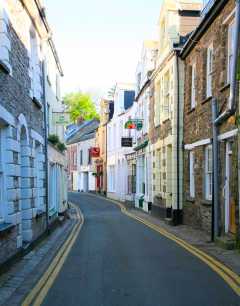
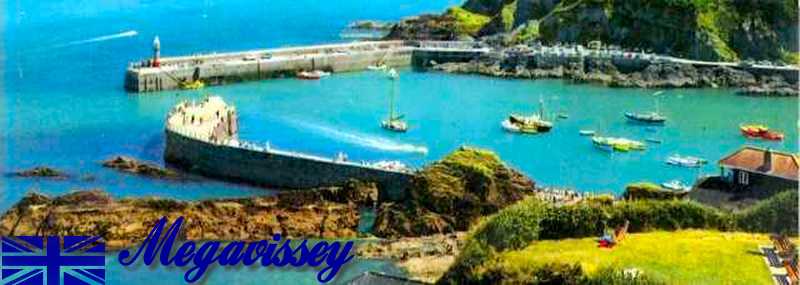
www.mevagissey-cornwall.co.uk/
Mevagissey
is an unspoilt fishing village on the
South Coast of Cornwall. This pretty
village whose history stretches back
to 1313, famed for it’s smuggling and
boat building. The paint pallet of
cottages perch on the slopes
overlooking the harbours, and whether
you linger to photograph, paint or
simply enjoy it, will be hard to
leave, perhaps one of the many boat
trips on offer will be one temptation
too many, from sea fishing, shark
fishing, or a pleasant ferry trip to
nearby Fowey. The village with narrow
twisting labyrinth of streets whisk
you back in time, and are a real
pleasure to explore with many
treasures to discover.. The Aquarium
is housed in the old RNLI Life Boat
House, and proudly displays many
interesting exhibits. As does the
Museum which was previously used for
the repair and building of smuggling
vessels. The World of Model Railways
is an amazing place to visit with over
thirty trains, as is The Lost Gardens
of Heligan or Caerhays Castle and 60
acres of woodland all are close by .
With stunning sandy beaches, harbour
and winding streets, not to mention
it’s smuggling history and pilchard
cellars, Mevagissey weaves it’s spell
every time. For more details about the
attractions click on to our Cornwall section
St Georges Square Mevagissey
Cornwall PL26 6UB
|
|
Minehead,
Somerset
www.minehead.net
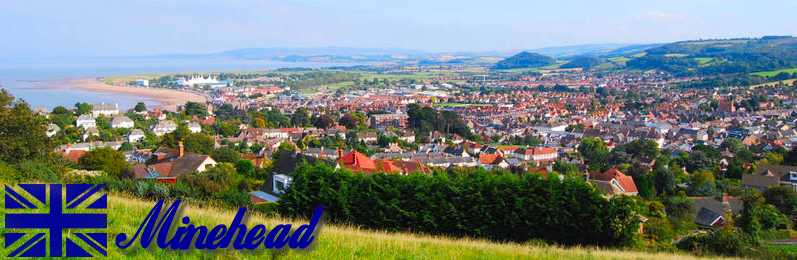
Minehead is a small
seaside resort situated on the western
edge of Exmoor. It is a traditional
resort with a wide sandy beach which
makes it ideal for families.Minehead can
trace its history back to the Domesday
Book when it was described as a market
town. At a later stage it became a
fishing village but there is not much
remaining to suggest this past due to a
huge fire in which most of the town was
destroyed. Today Minehead is a friendly
town with a good reputation for family
holidays.
Much of the town is
from the Victorian era when the railway
arrived and the town first became a
resort. In more recent times Butlins
continued in this tradition and built a
large holiday camp here in the 1960. The
town still provides traditional family
holidays and is keen to promote short
break holidays. It is a good location
from which to explore nearby Exmoor. For
more details about the attractions click
on to our
Somerset section
17 Friday Street, Minehead, TA24 5UB
Tel: 01643 702624 Fax: 01643 707166
Email: info@mineheadtic.co.uk
|
|
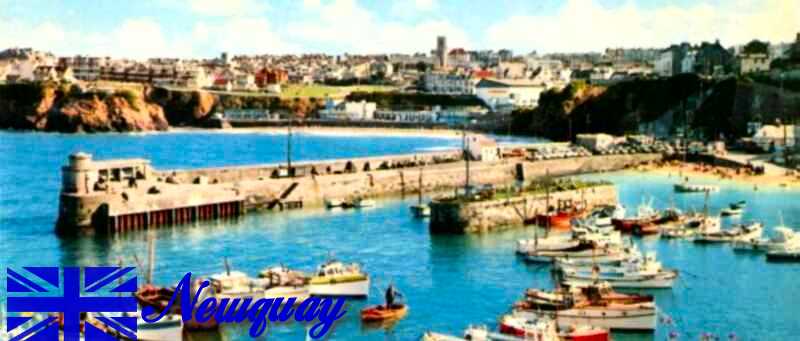
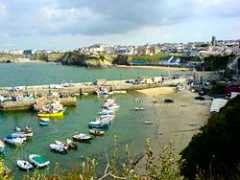
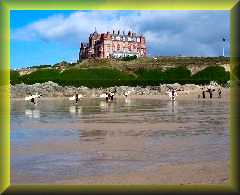
Newquay
is a lively resort on the north Cornish
coast spread over dramatic cliffs, with
the curved headland of the harbour and
varied nightlife, together with eleven
beaches and range of water sports, makes
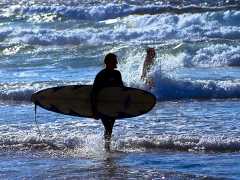
this a fun place to be. With diverse
claims to fame such as an Iron Age Hill
Fort and the surfing capital of Britain
Fistral Beach hosts major international
competitions, to the Beatles having
filmed part of ‘The Magical Mystery Tour
here’. For a busy day with lots to see
and do, why not try the Zoo with
hundreds of animals, and lush sub
tropical lakeside gardens, Tarzan trail
and face painting, or perhaps
Springfield’s Fun Park and Pony Centre
with it’s giant indoor barn, train rides
and wet woodland trail. Or how about
Dairy Land Farm World, with it’s Animal
Ark, bottle feeding and pony rides, mini
tractors and trampolines. If all this is
not enough then there is always The Owl
Sanctuary, or terrific historical Mine,
all capped off with unforgettable steam
trains on the Lappa Valley which
originally opened in 1849. For a more
relaxed day the visit to Tunnels Through
Time is a true insight into scenes of
history and is well worth the visit, as
is the impressive Trerice House built in
1573, an Elizabethan Manor House with
ornate clocks, needlework and Great
Chamber with it’s Barrel Ceiling, and
enchanting orchards home to old
varieties of fruit. Why not walk the
Discovery Trail and learn of Newquay
history, myths and legends as you go or
the 138 seats on offer at the Lane
Theatre, started in 1931and home to a
variety of live entertainment, to many
Art galleries and specialist Surfing
shops and large shopping centre.
Whatever the reason for your visit the
only problem will be what to do first.
For more details about the attractions
click on to our Cornwall
section
Municipal Offices Marcus
Hill Newquay Cornwall
TR7 1BD
Tel: [01637]
854020
Fax: [01637]
854030
E-Mail:
info@newquay.co.uk
|
|
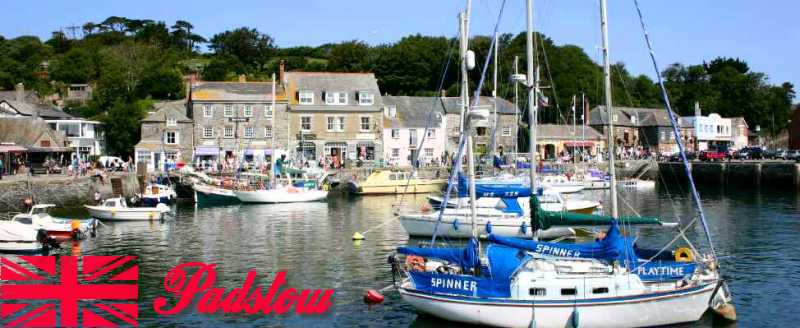
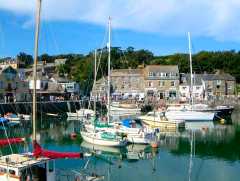
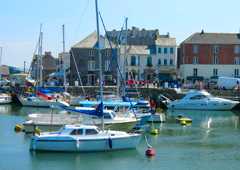
Padstow,
with its fleet of trawlers, netters and
crabbers, and colourful harbour
surrounded by pastel-washed medieval
houses, is an example of what Cornwall
does best - it's a working port which
wears a holiday hat.Watching the
everyday ebb and flow of harbour life is
a perfect way to spend a day in Padstow.
And when this gets too hectic, then
spread your towel on the nearby beach at
Harbour Cove, and watch the sails of the
passing river traffic. Or get a sailor's
view of the Camel Estuary on a boat
trip, sailboard or ferry ride. Take time
away from the quayside to explore the
port's rich heritage - the hidden
curiosities of the Town Trail, the
maritime displays in Padstow Museum, and
the grounds and lavish interiors of
Prideaux Place, home of the
Prideaux-Brune family for 400 years and
film location for Twelfth Night. On
balmy summer evenings there are quayside
concerts, where the brass band plays as
the sun goes down. And once a year on
May Day, Padstow dances to a different
tune, when the pagan 'Obby 'Oss is
unleashed and the narrow streets throb
to the ceaseless drumbeat and wild
cavortings of this age-old fertility
celebration.
Hotels, guest houses and holiday
cottages are never more than a seagull's
cry from the water's edge. If Padstow
had a visitors' book, it would make for
interesting reading. You'd find entries
from the prehistoric Beaker folk, from
Romans, Celtic Saints and even Viking
marauders. Later inhabitants include Sir
Walter Raleigh, whose Court House stands
on Riverside and the internationally
acclaimed Chef Rick Stein. Population
4,000. For more details about the
attractions click on to our Cornwall section
Red Brick Building North Quay Padstow
Cornwall PL28 8AF
Tel 01841 533449
fax 01841 532356
e-mail
padstowtic@btconnect.com
Manager
Tara Mcburnie.
|
|
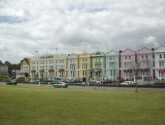
Paignton,
Devon
www.torbay-online.co.uk/paignton

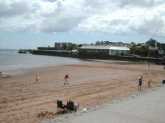
Paignton is renown for
its great family holidays with its pier,
wide lawns and miles of sandy beaches.
This is the territory of the traditional
family fun seaside holiday with all the
essential ingredients - sandy beach,
paddler- friendly water, ice cream and
candy floss and of course Punch and
Judy. In addition to the main beach at
Paignton there is an excellent beach at
Goodrington. There are great family
attractions to see as well - Paignton
Zoo, Quaywest Waterpark and the Steam
Railway that goes to nearby Dartmouth.
For more details about the attractions
click on to our Devon
section
The Esplanade, Paignton,
Devon ,TQ4 6BN
Tel: 01803 558383 Fax: 01803 551959
Email: paignton.tic@torbay.gov.uk
Web:www.theenglishriviera.co.uk
|
|
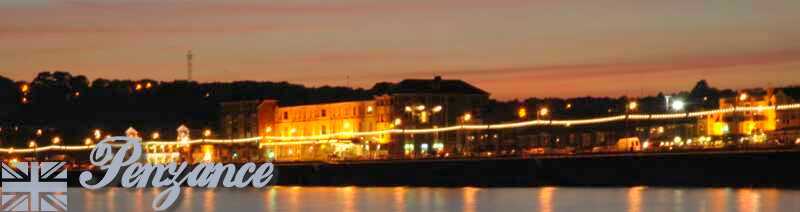
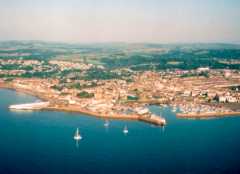
Penzance
is an historic town set in the far
west of Cornwall and is home to 22,000
people. Positioned on the edge of the
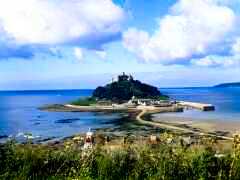
beautiful, evocative Mounts Bay, where
the view of St Michaels Mount raising
some 230’ above the sparkling sea has
beckoned Pilgrims since Medieval
times, whether you arrive by small
boat or walk across the causeway at
low tide, the stunning view is perhaps
only surpassed by the Church or the
castle perched at the very top. The
working harbour is busy with colourful
yachts, boats and a ferry in Summer
that journeys to the Isles of Scilly,
or there is always the thrill of a
deep sea fishing trip or a gentle
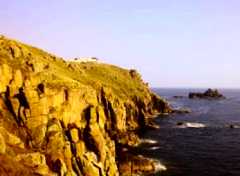
saunter along the Cornish coast where
cliffs, secret coves, and sandy
beaches edge the sea. The town is
peppered with a patchwork of
architecture left by Georgian‘s,
Victorian’s, and old Cornish
Fishermen’s cottages. A walk through
the labyrinth of streets will lead you
on a trail of discovery, from a Canon
from the Spanish Armada outside of the
Library, to the Hotel where Nelson’s
victory was announced. Or how about a
dip in the Art Deco Open Air Bathing
Pool, which is set into the rocks and
filled by the sea. For all things
Maritime a visit to Trinity House
Lighthouse Centre tells a fascinating
story of Lighthouses where visitors
can sound a foghorn or see what life
was like for the Lighthouse keepers.
Why not take a stroll along the
promenade, or enjoy the wide sandy
beach, or perhaps the Maritime Museum
is more for you as it proudly displays
the reconstructed interior of an 18th
Century Man Of War ship. The chapters
of time are reversed as far back as
Neolithic Lanyon Quoit or how about
Chysauster Ancient Village which dates
back 2,000 years, or there is always
Prussia Cove where infamous smugglers
roamed. Penzance has been visited by
Smugglers, the Spanish Armada, and
Medieval Pilgrims now it’s your
turn………………. For more details about the
attractions click on to our Cornwall section
Station Road Penzance
Cornwall TR18 2NF
Tel: [01736] 362207
Fax:
[01736] 363600
E-Mail: pztic@penwith.gov.uk
|
|
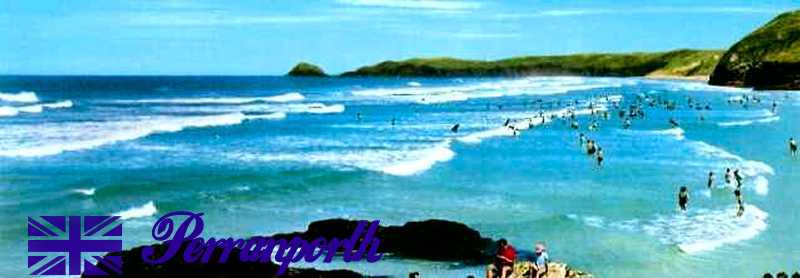
The
popular resort of Perranporth lies at
the southern end of a three-mile beach
of golden sand, popular for surfing and
land yachting, as well as being a good
family beach with lifeguards in the
season. The beach is framed by the
rugged cliffs of Cligga Head and Penhale
Point. These heather clad promontories
are complemented by an impressive
sand-dune system, which lies immediately
inland from the beach and is nationally
important for its wildlife. Within the
dunes is the site of St Piran’s Oratory,
the lost church of ‘St Piran in the
sand’. The site is buried again, but a
model can be found in the Perranzabuloe
Folk Museum, which also exhibits
artefacts from the parish’s mining and
fishing past. Perranporth Golf Club has
a fine 18 hole golf course. The village
has a boating lake and the local
airfield is used for gliding.
Perranporth has many shops, cafes and
restaurants, whilst the town’s hotels
and guesthouses take in the magnificent
views of the coast. Population 6,000.
For more details about the attractions
click on to our Cornwall
section
8 Tywarnhayle Square,
Perranporth, Cornwall, TR60ER
Opening Times: 09:00 - 17:30,
Monday to Saturday
Email
Perranporth
|
|
Polperro Harbour
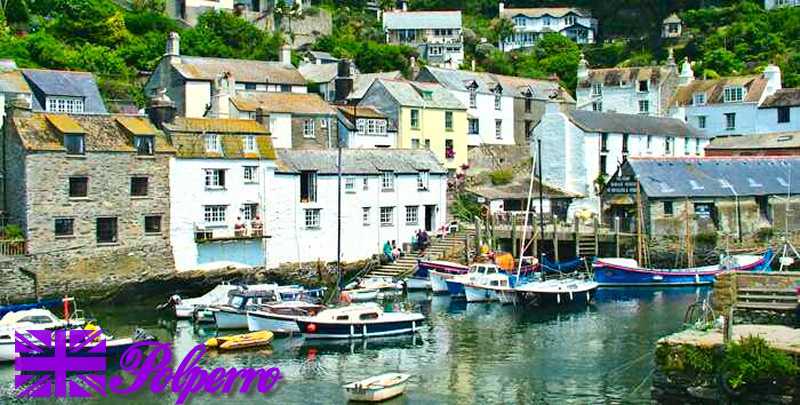
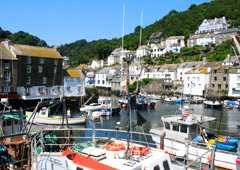
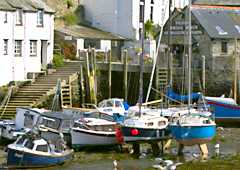
Of all
the little fishing villages of southern
Cornwall, Polperro is probably the most
photographed – thanks to its superb
setting at the mouth of a steep-sided
valley. The harbour is still a working
port for fishing boats, and visitors can
see fish landed at the market on the
quay on most days. One of the many
attractive features of the harbour and
the picturesque surrounding streets and
lanes is the virtual absence of traffic
– the only means of access for most
visitors is a horse-drawn bus from the
main car park on the outskirts of the
village. For more details about the
attractions click on to our Cornwall section
Cornwall PL13
Map
|
|
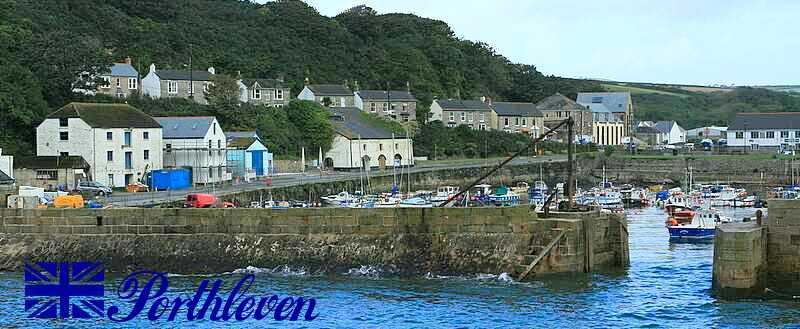 Porthleven
is a village, civil parish and fishing
port in the KerrierCornwall, near
Helston. It is the most southerly port
on the island of Great Britain and was
originally developed as a harbour of
refuge, when this part of the Cornish
coastline was recognised as a black spot
for wrecks in days of sail. Nearby Loe Bar was
particularly infamous. Due to the
prevailing westerly winds it was very
easy for a ship under sail to become
entrapped within the bay and be cast up
on the rocks which made up the small
fishing coves of Mullion, Kynance and
the Lizard.Historically and for
local-government purposes, Porthleven
was included within the town boundaries
of nearby Helston. After years of
growth, it now has its own town council.
Its population in 2001 recorded by the
UK census was 3,190 ]Including
tourists and surfers would swell that
number considerably. Porthleven has
exploited its location and exposure to
powerful swells to become one of the
best-known and highly-regarded surfing
spots in Britain.
Waves
regularly exceeding 2 metres break on
the shallow reef that was shaped by
blasting the harbour. For more details
about the attractions click on to our
Cornwall
section
|
|
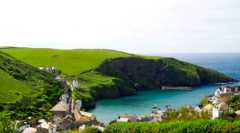
Port Isaac
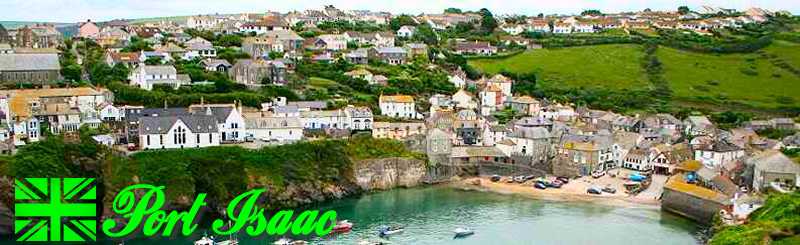
has been an attractive fishing village
since the early fourteenth century. Its
narrow, winding streets are lined with old
white-washed cottages and traditional
granite, slate-fronted Cornish houses,
many of which are listed as of
architectural or historic importance. It
was the location for the television series
of Poldark & the
lovely setting for the Doc Martin
Television series. From the Middle
Ages until the middle of the 19th century,
Port Isaac was a busy port handling
various imports and exports, including
stone, coal, timber and pottery. After the
advent of the railways, it became
principally a fishing port. A stream runs
through the village, finding its way into
the sea over the harbour wall. For more
details about the attractions click on to
our Cornwall
section
Port Isaac, North Cornwall, PL29
|
|
Portishead,
Somerset
www.portishead.gov.uk
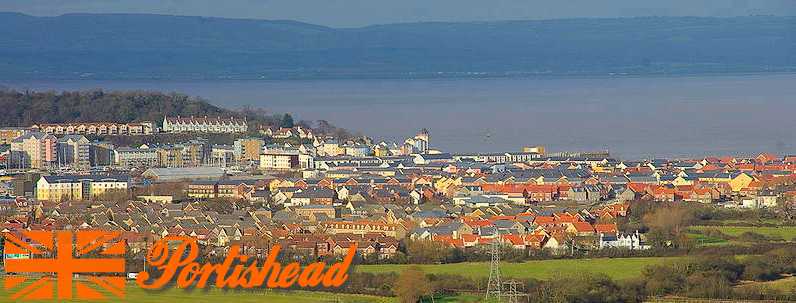
Portishead has an
impressive quayside development with 159
berth marina and some exciting unusual
architecture and Public art. Portishead
Lake Grounds stretch along the coast
with activities and play areas for
children, a cafe and a very popular open
air pool.For more details about the
attractions click on to our Somerset
section
|
|
Portsmouth
www.portsmouth-guide.co.uk

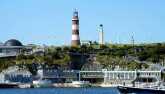
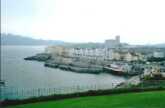
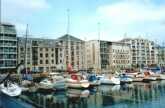
Portsmouth is the
home of the Royal Navy and has been
since Henry VII established the first
dockyard in the town. The city occupies
the Portsea Island peninsula, which
overlooks a naturally defensible harbour
and these advantages were not lost on
the Romans, or Saxons, who both used the
harbour here.
It was Henry VIII who
really established the town as the home
of the Navy. During his reign he
increased the size of the fleet by ten
times so that at the end of his reign
the fleet consisted of 60 ships.
Many great navy ships were built here
among them the Mary Rose and HMS Victory
which Nelson commanded during his great
battle at Trafalgar. Having served her
country well, she is now one of the
country’s top heritage attractions as
over 350,000 people visit her in No. 2
Dry Dock, Portsmouth Naval Base.As a
major naval base Portsmouth became a
target during World War II and much of
the town was flattened. The modern town
is unremarkable and tourists usually
concentrate on the waterfront area which
has much to offer. The town is currently
in the process of building a landmark
tower that will be 170 metres high and
in the shape of a sail. The £25m project
will be the highest viewing platform in
the UK when opened in
mid-2005. Numerous ferries operate
from Portsmouth to France and the
Channel Islands. For more details about
the attractions click on to our Hampshire
section
Continental Ferry Port TIC ,
Terminal Building, Portsmouth, PO2 8QN
Tel: 023 9283 8635
& The Hard, Portsmouth, PO1 3QJ
Tel: 023 9282 6722
Fax: 023 9282 2693
Website:
www.visitportsmouth.co.uk
|
|
Plymouth,
Devon
www.visitplymouth.co.uk
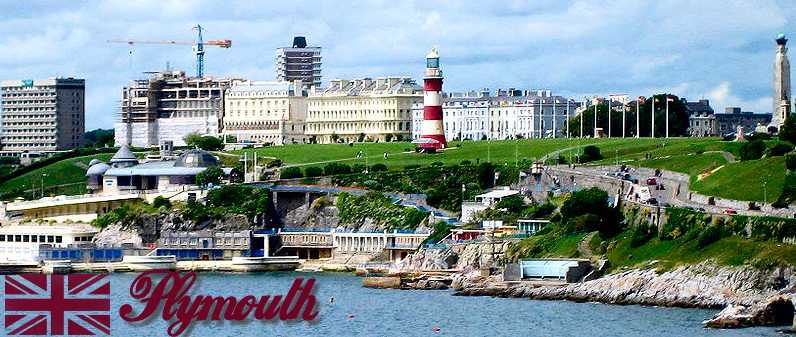
Plymouth is the largest
of the Westcountry cities after Bristol
which may be regarded as the gateway to
the area. Lying on the banks of two
rivers, the Plym and the Tamar and
facing Plymouth Sound it is perhaps not
surprising that Plymouth has a strong
maritime tradition that includes both
merchant and navy shipping. Plymouth has
been a working port for a long time. The
Sound has been used as and anchorage and
harbour since very early times. The
expansion that resulted in Plymouth
becoming a major UK port started in 15th
century, when larger ships were being
built for the Royal Navy which needed a
deeper anchorage. Plymouth has since
become one of the Royal Navy's main
bases with warship often to be seen at
anchor in the Sound.
Many epic voyages of
discovery and conquest have stared
form Plymouth. The most famous of these
is the defeat of the Spanish Armada by
Sir Francis Drake and the English fleet.
History has it that Drake was engaged in
a game of bowls on Plymouth Hoe when the
Spanish fleet was first sighted in the
English Channel. Drake was not alarmed
by this and insisted on finishing his
game before setting sail form the port.
The English fleet chased the Armada up
the Channel to Calais where Drake used
fire ships to disrupt the Spanish fleet
before launching a devastating attack.
The Spanish ships took heavy casualties
and scattered further losses occurred
off the coast of Scotland when the
surviving ships were caught in a fierce
storm. The Spanish fleet was devastated
and were never again a threat to
Britain. Prior to this epic battle Sir
Francis Drake had made a name for
himself after he had sailed around the
world in the Golden Hind. In 1620 the
Pilgrim Fathers set sail for America
from Plymouth in the Mayflower. Another
adventurous voyage was undertaken when
Captain James Cook set sail in 1768 in
search of new lands. Modern day Plymouth
is a lively city with a wide mix of
commercial activities and plenty for the
visitor to see and do. Plymouth Hoe is
the wide expanse of grass overlooking
the Sound, this area is also where the
military hold parades and the Queen has
visited recently to present new colours
to the Navy. There is also a lighthouse
on the Hoe called Smeaton's Tower that
is brightly painted in red and white
strips. Also see the Royal Citadel a
large defensive camp built at the east
end of the Hoe by Charles II in 1670.
The powerboat Grand Prix takes place
each year off of Plymouth Hoe in
July.Also see the National Marine
Aquarium which is billed as the UK's
largest with huge tanks containing
sharks.
Nearby is Whitsand Bay with its long
sandy beach. Also a visit to Looe is
worthwhile, a quaint but bustling
fishing port with the opportunity to go
fishing for sharks . The naval frigate
HMS Scylla - below - was recently sunk
in the bay to form a reef for scuba
divers to visit . For more details about
the attractions click on to our Devon
section
Island House, 9 The
Barbican, Plymouth , PL1 2LS
Tel 01752 304849 Fax 01752 257955
Email: plymouthbarbicantic@visit.org.uk
& Plymouth Discovery Centre,
Crabtree, Plymouth , PL3 6RN
Tel 01752 266030 Fax 01752 266033
Email: plymouthtic@visit.org.uk
|
|
Poole,
Dorset
www.poole.gov.uk
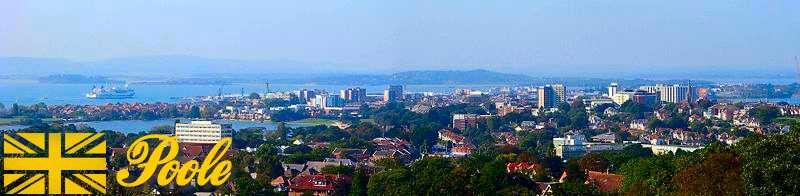
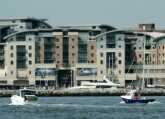
Poole and its sister
town, Bournemouth combine to form a
large urban area on the south coast with
a population of around 300,000. In spite
of this size and the container port and
docks at Poole this is still a seaside
resort and life is centred on the
beaches and seafront area. Poole
used to be a medieval port situated on
the huge shallow anchorage of Poole
harbour. The old town still has the old
custom house and many old inns to remind
the visitor of this past. The modern
town is unremarkable and similar to many
other High Street areas but the main
attraction of Poole is the long sandy
beach area which stretches all the way
to Bournemouth. The Sandbanks area is
the centre of all watersports activities
which include sailing, windsurfing,
jet-skiing and water skiing. Fishing is
also very popular in the area and trips
can be booked from the quay.
Another major attraction for the area
are the beaches and nature reserves at
Studland Bay which are reached via the
Sandbanks ferry. This whole area which
is National Trust property must rank as
one of the best beachside areas in the
country. There is very little
development and the beaches are clean
and the water quality is very good. A
great area for families, watersports and
nature. The visitor should note that
part of the beach is set aside for
Naturists. Road access is
generally good - from the east the A31
via Southampton is a good route. From
the west use the A35 via Dorchester.
From the north the best route is to use
the A350 via Shaftesbury.
There is an airport at Bournemouth
serving international routes. There are
ferry connections to France, Spain and
the Channel Islands form Poole quay
operated by Brittany and Condor ferry
companies.
Also in the area and
worth a visit are Brownsea Island in
Poole harbour. Poole Pottery on Poole
quay. Wareham is a pleasant market town
that lies on the quaintly named River
Piddle located at the western end of
Poole harbour. For more details about
the attractions click on to our Dorset section
|

|
St.Austell,
Cornwall
www.cornishriviera.co.uk
St
Austell is one of Cornwall’s bustling
towns famed for it’s mining past, and
in the 18th Century for the discovery
of China Clay, which changed the town
forever. A visit to the Wheal Martyn
China Clay Museum is a true insight
into the history of this industry,
housed in a Clay Works with
interesting exhibits and even a
working water wheel. Of course no
visit would be complete without seeing
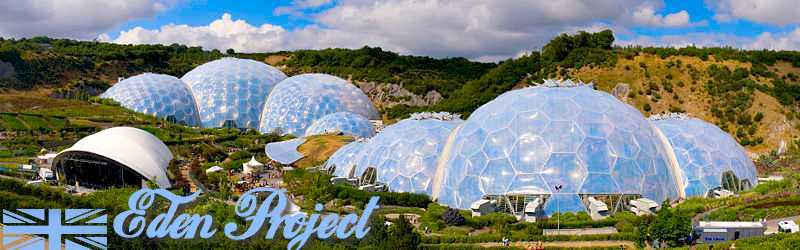
the ‘Eden Project’ with it’s unusual
landscape of the Biomes. St Austell
Brewery originally founded in 1851, is
the biggest brewery in Cornwall, why
not take a tour and see the production
of ales, made to a Medieval recipe and
of course tasting… St Austell’s Port
is an enchanting harbour built in
1791, the Georgian architecture and
old fishermen’s cottages is an
absolute painters delight, the
haunting sight of tall ships with
their masts and rigging turns back the
pages of time, or perhaps a visit to
the Shipwreck and Heritage Centre
which has over 200 years of Fishing
and Mining on Offer. With The Lost
Gardens of Heligan, the curved sandy
bay, and coves ,shops, bars and
restaurants St Austell is like a wide
smile, it pleases everyone
Charlestown (Cornish: Porthmeur)
is a working port near St Austell, .
Charlestown developed from what was in
the late 18th century the fishing
village of West Polmear.Charlestown
harbour is used by several local
fisherman. The harbour itself and two
(pebble) beaches (one on either side
of the harbour entrance) are owned by
Square Sail, a company which owns and
sails a small fleet of tall ships,
including Kaskelot. One or two
of these can often be found at anchor
in the harbour, and are frequently
open for tours during the summer
months. The best-known tall ship to
regularly visit the port was the Maria
Asumpta - first launched in 1858
and was the world's oldest working
square rigger. The Maria Asumpta
was very popular with tourists and
locals alike. In May 1995 she ran
aground and broke up on the north
Cornish coast, like so many before
her, with the loss of three of her
sixteen crew. For more details about
the attractions click on to our Cornwall section
By Pass Service Station
Southbourne Road St
Austell Cornwall PL25 4RS
Tel: [0870] 445 0
244
Fax: [01726] 874168
E-Mail: tic@cornish-riviera.co.uk
|
|
West
Cornwall offers a holiday venue that is
like nowhere else in the UK. The whole
peninsular is a haven for walkers,
photographers, artists and writers
giving inspiration through spectacular
scenery, unspoilt beauty and antiquities
which are dramatic reminders of our rich
heritage.Famous for its wealth of
ancient monuments and mining heritage
sites, its artistic traditions and
working fishing communities, it is a
living landscape marked by signs of its
Celtic past. There is a captivating
atmosphere of mystery and romance
throughout West Cornwall that is hard to
find anywhere else in Britain. It is
generated by the areas stunning natural
beauty and by the sense of timelessness
that clings to the rugged moorland and
to the awesome Atlantic coastline.The
beaches of West Cornwall deserve the
accolade of being the 'Best and most
beautiful in the West'. The choice of
beaches suits everyone’s needs, you can
simply sunbath on silky soft sand and
swim in crystal clear seas that match
the best the Mediterranean offers. If
you are looking for water sports then
you can ride the Atlantic swell with
surfboard and bodyboard. West Cornwall
has the only two UK members of the 'Most
Beautiful Bays in the World Club', St
Ives Bay and Mounts Bay. St Ives has
also been voted 'Best Seaside Resort in
the UK' by the prestigious US published
'British Heritage' Magazine.Home of St
Michaels Mount and the Tate Gallery at
St Ives, the Lands End peninsular offers
a variety of experiences for every
season - from the flowers of early
Spring, through lively summer festivals
to the dazzling lights of Christmas and
New Year. Beyond all of this lies the
untouched wilderness of the Atlantic
coast and the granite moorlands with
their wealth of wildlife. Explore it and
discover... The West Cornwall
Experience. Population 12,000. For more
details about the attractions click on
to our Cornwall
section
The Guildhall Street an
Pol St Ives Cornwall
TR26 2DS
Tel: [01736]
796297
Fax: [01736] 798309
E-Mail: ivtic@penwith.gov.uk
|
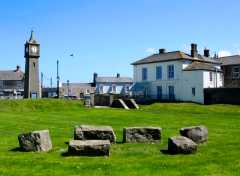
|
St Just is a small town perched on a
cliff, is the nearest town to Lands End,
and situated on the edge of the moors.
The old mining town has rows of granite
cottages that glint in the sunlight, the
past links to the mining industry and is
peppered with mining reminders. With an
open air Medieval Amphitheatre, a church
although restored was built in 15th
Century, houses wall paintings of St
George and The Dragon. Cape Cornwall is
the most westerly point of Cornwall and
with it’s large hump and old mining
chimney that’s been there for 138 years
makes an impressive site, there is even
an 18 hole golf course, although the
stunning scenery is guaranteed to take
your eye off the ball. All along the
coast and around St Just are standing
stones and other Prehistoric sites. The
Levant Mine and Geevor Mine &
Museum, has tours underground and
exhibits explain this fascinating
industry and shows the Beam Engine. The
South West Coastal Path is a joy for
walkers, and historians not to mention
painters, the colourful scenery and
vibrant Atlantic Coast is undoubtedly
spectacular, and you may even be lucky
enough to see Dolphins or Seals. For
more details about the attractions click
on to our Cornwall
section
The Library Market Street
St Just Penzance
Cornwall TR19 7HX
|
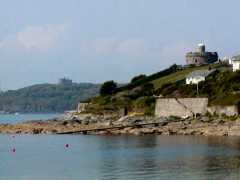
|
St Mawes,
Cornwall
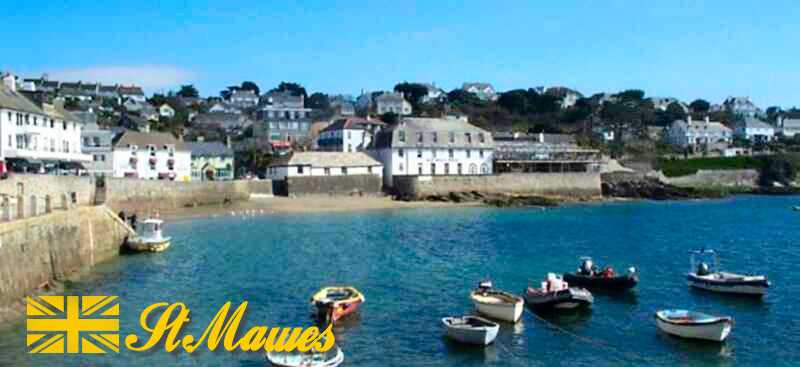
St Mawes
is beautifully situated at the southern
end of the Roseland Peninsula, and from
medieval times was a busy port and
fishing harbour. Today it remains a
major centre of marine activity of all
sorts. St Mawes Castle, the twin to
Pendennis Castle across the Carrick
Roads, was built by Henry XIII in the
middle of the 16th century. It is an
easy 2-mile coastal walk from the castle
to St Just in Roseland church, described
by John Betjeman as “to many people the
most beautiful churchyard on earth” A
pedestrian ferry runs to Falmouth. The
trip takes about 25 minutes, and is a
good way to get afloat for a short
scenic trip. In the summer months a
small ferry runs to St Anthony headland
across St Mawes outer harbour. Here
there are many stunning walks, a
lighthouse and fantastic coastal views.
A little further afield on the Roseland
Peninsula you’ll find attractive
villages such as Portscatho, Tregony,
Portloe and Veryan, the latter best
known for the five white roundhouses
which guard its entrance. There are two
beaches in St Mawes, and more beaches
further along the coast. They are quiet
without the amenities of the larger
resorts. Population 1,000. For more
details about the attractions click on
to our Cornwall
section
The Roseland Visitor Centre The
Millennium Rooms The
Square St Mawes TR2 5AG
Tel: [01326]
270440
E-Mail: manager@roselandinfo.com
|
|
Salcombe,
Devon
www.salcombeinformation.co.uk
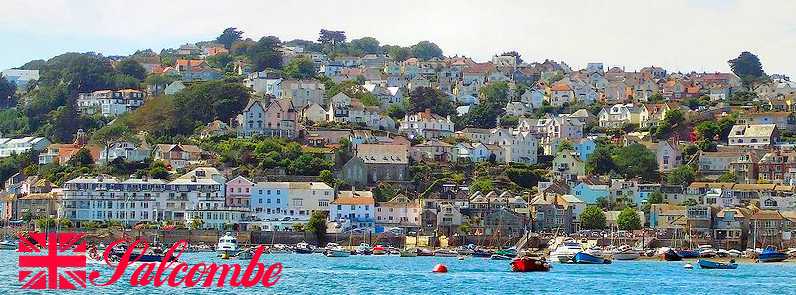
Salcombe is famous as a
seaside resort and sailing centre. There
are several excellent beaches and
stunning scenery. It may be reached via
the A381 from Totnes or the A379 from
the Plymouth direction.
The town is tiny and
hugs the steep hillside that surrounds
it - a passenger ferry crosses to the
beaches on the far side of the river at
East Portlemouth. Salcombe lies on the
west bank of Kingsbridge estuary which
is a large area of sheltered water that
attracts both wildlife and sailors. This
area is designated as a Site of Special
Scientific Interest and is also a nature
reserve. This is the most southerly of
Devon towns and orange and lemons can be
grown as well as palm trees. This gives
the town a rather exotic feel as if you
had be transported to hotter climes. For
more details about the attractions click
on to our Devon
section
|
|
Seaton,
Devon
www.seaton.gov.uk
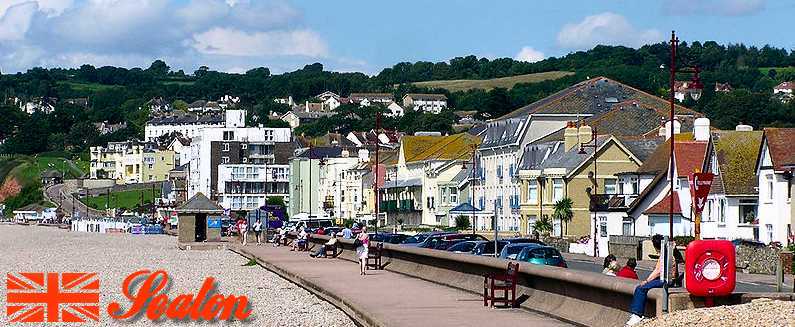
Seaton is around six miles east of
Sidmouth and is tucked into the Devon
hillsides with Beer its close
neighbour. Seaton is a small resort
town.Seaton is often referred to as
"the friendly town by the sea".
Sitting alongside the mouth of the
River Axe, Seaton has a long and
interesting history, a proud
present and an exciting future.
The history of Seaton is closely
linked to the sea. Stone Age man
fished the waters, used the flint from
the cliffs to make his tools, and used
the readily available salt to preserve
his food. Certainly the Romans settled
here. Fosse Way passed close to
Honeyditches and they quarried stone
at Beer. The Saxons followed the
Romans in the 7th century when they
occupied both sides of the river. The
village, then Fleote (the Saxon word
for creek) developed over the
following centuries, (the parish
church of St. Gregory dates from the
12th century), as the salt water
marshes became a permanent part of the
landscape. At about the time of Edward
III, Fleote was replaced by Sea Tun
(sea farm).
Henry VIII sold the area to John Frye
of Yarty and may have visited in 1544.
For the subsequent two centuries, salt
made Seaton an important area. When
this industry declined rapidly, the
town became a fishing village until,
in the early 19th century, a quay was
built at the river mouth and then the
railway came in 1868. Seaton then
flourished as a modest resort but it
did not witness the growth experienced
by other East Devon seaside towns
serviced by the railway. However,
Seaton has now seen a spectacular rise
in its population (from 2500 in 1970
to the current 6500) and it is still
rising as more residential housing is
built to meet the demand for people
eager to live in "a friendly town by
the sea". In 2005 Seaton celebrated
the one thousandth anniverary of the
granting of its Charter. For more
details about the attractions click on
to our Devon
section
The Underfleet, Seaton
, EX12 2TB
Tel 01297 21660 Fax 01297 21689
Email:
inf@seatontic.freeserve.co.uk
Website: www.eastdevon.net/tourism/seaton
|
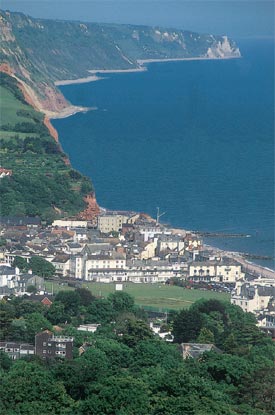
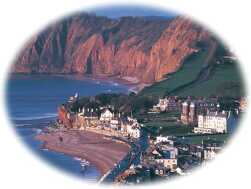
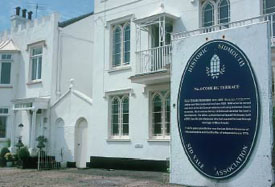
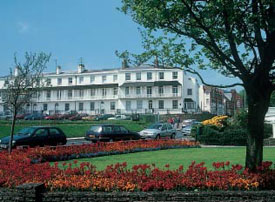
|
Fine buildings, gentle walks, stunning
views – with so much to nurture,
conservation is Sidmouth’s watchword.
Its time warp ambience is the perfect
prescription to relax and browse, be it a
seafront deckchair for a quiet read or a
bracing walk on Peak Hill to wonder at the
magnificent panorama of sea and coast with
Sidmouth spread below.For the less
energetic there is many a gentler stroll
around town, park and garden and along the
seafront linked by a walkway to the
western beach at Jacob’s Ladder.
The ford takes traffic across the River
Sid and this you will find on the popular
guided walks from the Heritage Centre that
feature the historic landmarks of the
town.
As for the greenery of Sidmouth’s famous
park, The Byes, it is a delightful
riverside walk and yet another sanctuary
for peace and quiet.Much of Sidmouth’s
history is gleaned from the Blue Plaques
on the buildings which mirror the era when
the Nobility and members of London Society
built fine houses here. Many still exist,
while others have become hotels without
losing their Regency charm. The cob-walled
Old ShipInn, originally thought to be a
monastery, dates back to 1350 and it was
certainly a smugglers’ rendezvous in the
days of brandy for the parson and baccy
for the clerk.
Fortfield Terrace is
another example of the style of the day.
Here, a double-headed eagle commemorates
the stay of the Grand Duchess of Russia
in 1831. She brought a retinue of 100
gentlemen, ladies and servants and among
the guests at a reception she gave was
the Sidmouth artist and historian, Peter
Orlando Hutchinson, whose diaries and
sketches are a vivid picture of 19th
century life in Sidmouth. Copies are
among the treasures at the Museum next
to the ancient parish church of St.
Giles and St. Nicholas. For more details
about the attractions click on to our Devon
section
Ham Lane, Sidmouth , EX10 8XR
Tel 01395 516441 Fax 01395 519333
|
|
Southampton
www.southampton.gov.uk
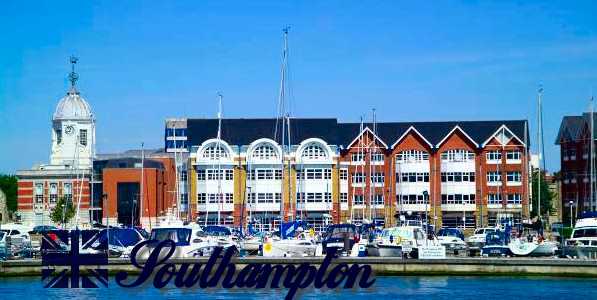
Southampton is the
largest city on the south coast with a
population of 221,000. The city dates
back to Norman times when it was an
important port. The maritime aspect of
the city came to the fore during the
19th century when Southampton became the
major port for liners on the Atlantic
route. The most famous of these great
ships was the Titanic which sailed from
here on her maiden voyage in 1912. The
city was heavily bombed during World War
2 and the modern city is a reflection of
these events. Not much remains of the
old city but there are a few corners
where the city's past may be
glimpsed.
In 1936 nearly 50% of
sea passengers arrived at Southampton
and this aspect of the port still
flourishes today, with many new luxury
liners using the port as a base for
trans-Atlantic voyages. The most recent
new liner to be launched in Southampton
was the Queen Mary 2 in January
2004.Another claim to fame for the city
is with regard to flying boats which
were developed and built in the city
during the war years. Sadly these
evocative craft are no longer seen
in the waters around the city. In
2006 Southampton is fast becoming one of
the most popular leisure and cultural
destinations in the south. Its appeal
lies in its diverse nightlife, wide
retail opportunities, excellent leisure
facilities, superb heritage attractions
and the charm of a bustling waterfront
location.There is no doubt that
Southampton is a city and the urban
landscape prevails however you do not
have to travel far to find open coast
and good beaches. To the south east is
the old ship building village of
Bucklers Hard lying on the picturesque
River Beaulieu. To the south west of the
city is the Hamble estuary which is a
major centre for sailing, with many
marinas and moorings and several yacht
clubs. The River Hamble area is known as
the 'Home of British yachting.' Yachtie
heaven! For more details about the
attractions click on to our Hampshire
section
9 Civic Centre Road , Southampton,
SO14 7FJ
Tel: 023 8083 3333 Fax: 023 8083 3381
& SOUTHAMPTON INTERNATIONAL
AIRPORT ,
Wide Lane, Southampton SO18 2HG
|
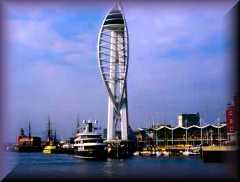
|
Southsea
www.insouthsea.co.uk
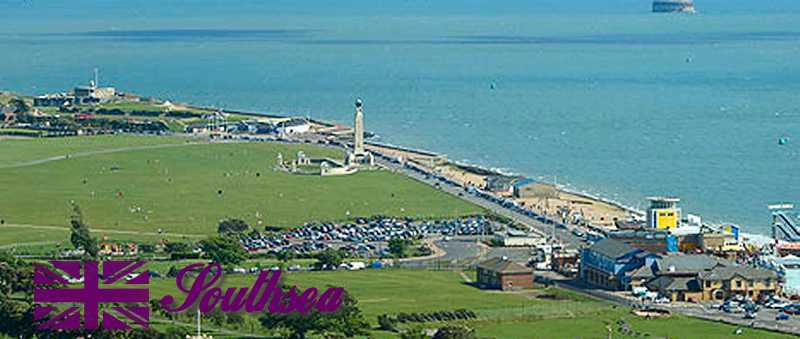
Southsea is the
traditional seaside part of Portsmouth
and has a four mile long promenade and
plenty of beach space. There's fun and
fascination at some of the resort's
leading attractions and the chance to
relax on the beaches. There are also two
piers which offer even more
entertainment and wonderful sea views.
For more details about the attractions
click on to our Hampshire
section
|
|
Swanage,
Dorset
www.swanage.gov.uk
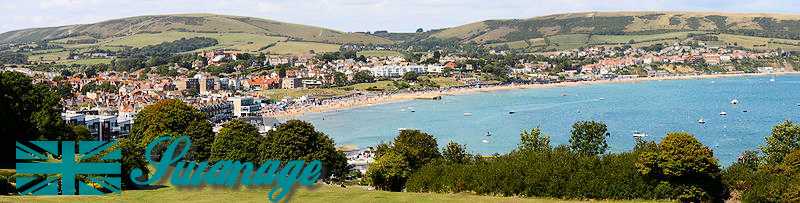
Swanage is a small
port and tourist resort that lies to
the west of Poole harbour. It maybe
reached via the A351 from Wareham
which is a spur off of the A35 that
links Poole and Dorchester. Swanage
lies on an attractive sweep of
coastline that is backed by the
Purbeck hills, with cliffs to the west
and long flat beaches to the east.
There is a very nice beach at Swanage
itself but the most spectacular beach
in the area is at Studland bay which
is a long crescent of sand with
heathland behind it. a part from the
small village of Studland there is no
development along this site as most of
the land is owned by the National
Trust. The beach is idea for swimming
and water sports, there is a launching
slip in the middle of the bay.
Although much of this area forms the
east side to Poole harbour there is
not much access to the harbour from
this side as much of the land is a
nature reserve. Swanage itself
is an attractive small town with a
good range of accommodation. There are
amusements on the seafront and plenty
of resautrants and pubs to provide
food and drink. There are not a great
deal of attractions in the immediate
area these are situated more in the
Poole/ Bournemouth area, which is only
around half an hour by car. There are
plenty of natural attractions in the
area however.
Just up the road is Corfe Castle with
its spectacular ruined castle. The
castle was besieged by Oliver
Cromwell's forces in 1646 and it
just hasn't been the same since. The
surrounding village is built of
Purbeck stone which is quarried just a
few miles from the village. Look out
for the Greyhound pub.
Further west along the coast are
Lulworth Cove and Durdle Door, which
must be two of the most photographed
landmarks on the English coast.
Lulworth is a small fishing village
which sits in a cleft in the hillside
above the picturesque cove. Durdle
Door is a natural arch carved in the
limestone cliffs which juts out to
sea. You can swim through it but
beware of the strong tidal
current.
The South West Coast Path runs along
the coast here and provides access to
many miles of spectacular scenery. The
path goes right past the deserted
village of Tyneham, which is a bit
eerie even on a summer's day. The
reason for its desertion......well
that's another story! If you travel
along past the main beach at Studland
there is a chain ferry that connects
to Poole. For more details about the
attractions click on to our Dorset section
The White House, Shore
Road, Swanage, BH19 1LB
Tel: 01929 422885
|
|
Teignmouth,
Devon
www.teignmouth-town.co.uk
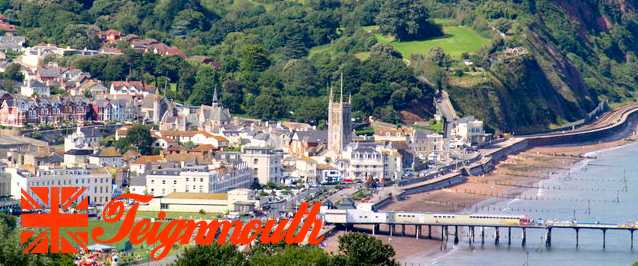
Teignmouth lies at the
mouth of the River Teign, from where its
name is derived and is part old port and
part modern resort. It is a very popular
destination for visitors as it has all
of the attributes needed for an
excellent seaside holiday - clean water,
good beaches and a pleasant lively town.
As with the town of
Dawlish just up the coast, Teignmouth is
part Georgian and part Victorian in
origin. There is a sweeping Georgian
crescent on the seafront and the pier
was built in the Victorian era. The
focus of the town is on the port which
is the base for many vessels including
freighters and fishing boats as well as
recreational yachts and sailing boats.
there are also magnificent lawns and
flower beds along the sea
front. The beach area is sandy with
some shingle and is good for swimming
and other beach activities. On either
side of the town red sandstone cliffs
rise out of the sea making for
spectacular views. the headland in the
photo above marks the entrance to the
mouth of the River Teign and the harbour
area. On the opposite bank lies Shaldon
which may be reached by a road bridge.
For more details about the attractions
click on to our Devon
section
The Den, Sea Front,
Teignmouth , TQ14 8BE
Tel 01626 215666 Fax 01626 778333
Email: teigntic@Teignbridge.gov.uk
Web:
www.southdevon.org.uk
|
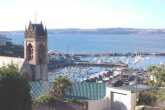
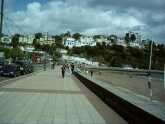
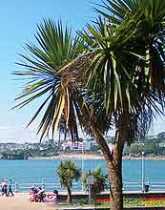
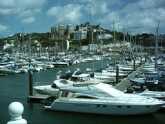
|
Torquay,
Devon
www.torbay-online.co.uk/torquay
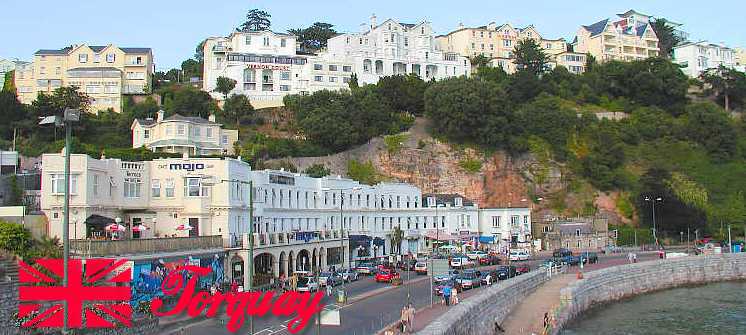
Torbay is made up of
three towns, Torquay, Paignton and
Brixham which all have their own
character and charm and overlook Torbay
itself. The Torbay area is also known as
'The English Riviera' as it resembles
the original Riviera to some extent with
its sweeping boulevards, inner harbour
and palm trees. Dartmouth is famous
as a sailing centre and as the home of
the Britannia Royal Navy college.
Torquay is built on
several long hills that drop down to the
sea and the long crescent shaped beach
front that runs around most of the bay.
The focus of the town is the marina area
which is both old and new - part faded
glory from Torquay's Victorian roots and
part new development with swish hotels
and racy yachts in the marina. Like many
British resorts Torquay is constantly
having to re-inventing itself as trends
and tastes change. The old harbour
area has been re-developed into the
modern marina and new walkways
constructed around the area. There is a
splendid new attraction
overlooking the marina - this is called
Living Coast which contains many birds
from around the world including
penguins.
Torquay has access to
several excellent beaches with good
swimming opportunities. Torre Abbey is
the beach closest to the town and a
short bus ride away are the cliff
fringed beaches of Babbacombe and
Oddicombe. Look out for the cliff
railway at Babbacombe which provides
easy access to the beach from the cliff
top gardens. For more details about the
attractions click on to our Devon
section.
Vaughan Parade, Torquay
, TQ2 5JG
Tel 0870 7070 010 Fax 01803 214885
Email torquay.tic@torbay.gov.uk
Web: www.theenglishriviera.co.uk
|
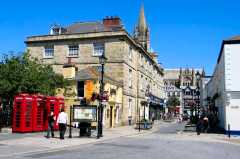
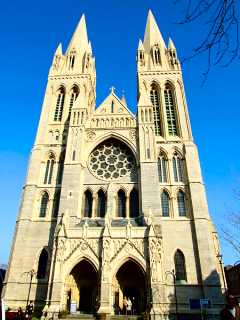
|
The historic city of Truro nestles in the
valley of three rivers - the Kenwyn, Allen
and Truro - just a short distance from the
rugged north coast of Cornwall or the
gentle beauty of the Roseland Peninsula.
The three spires of the imposing turn of
the century cathedral provide a familiar
landmark for locals and an impressive
focus for visitors.A celebrated Georgian
street graces the southern entrance of
Truro and further elegant architecture is
to be found within the cobbled streets of
the city's excellent shopping centre.
Beautiful parks and gardens, river walks
and boat trips allow the visitor to
appreciate the tranquility of Truro's
quieter corners and surrounding
countryside; guided walks reveal the
intriguiging history of the city's past.
Truro boasts a first-class theatre and
modern multi-plex cinema - both
sympathetically restored period building
in keeping with the city's character.
Other rainy-day attractions include the
Royal Cornwall Museum, ten-pin bowling,
swimming pool and indoor and farmers
markets. All tastes are catered for in the
city's many pubs and restaurants -
continental cafe bars, international
cuisine, vegetarian,fast food, Cornish
cream teas and, of course, pasties - and
in the evening the entertainment continues
in the local pubs, wine bars and
nightclubs. An abundance of warm and
welcoming accommodation is available
within the city and surrounding areas,
should your requirements be hotel, guest
house, B&B or holiday park. Easy
accessible by road or rail, Truro makes an
ideal base for a family holiday or a quiet
getaway. Population 21,000. For more
details about the attractions click on to
our Cornwall
section
Municipal Buildings Boscawen
Street Truro Cornwall
TR1 2NE
Tel: [01872]
274555
Fax: [01872] 263031
Email
Truro
|
|
Weston-super-mare,
Somerset
www.weston-super-mare.com
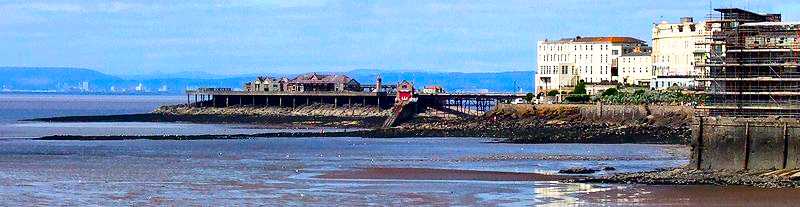
Weston-super-Mare is
another resort that can traces its roots
back to the Victorian era. Today it is a
popular resort with families with good
beaches and other useful facilities. The
town itself is at the north end of the
long beach and is situated on a
hillside, which makes a dramatic
backdrop for this attractive Somerset
resort.
The town has a long
promenade with two piers built by the
Victorians and plenty to occupy the
family. There is a wide sandy beach with
plenty of room for all. There are
numerous cafes and shops along the
promenade providing tea and coffee,
sandwiches and of course fish and chips.
There are also several attractions along
the beach area including a Sea Life
Centre.The resort is located on the
Bristol channel, so don't expect crystal
clear water but it is safe for bathing.
Cardiff can be seen across the channel
and also the twin islands of Flat Holm
and Steep Holm.
The town has been
involved with aircraft production for
many years and there is an excellent
museum with a large display of
helicopters nearby.Nearby are Cheddar
Gorge, Glastonbury and Wells, which are
all worth a visit. For more details
about the attractions click on to our Somerset
section
Beach Lawns, Weston-Super-Mare, BS23 1AT
Tel: 01934 888800 Fax: 01934 64174
Email: touristinfo@n-somerset.gov.uk |
|
Weymouth lies not far
from the border of Devon and Dorset.
The main route into the town is along
the A354 which leaves the A35 at
Dorchester. Weymouth is a major
holiday destination on the south coast
that attracts thousands of visitors
each year. It is also a working port
with ferries to France and the Channel
Islands and a fleet of fishing boats.
Weymouth is also the gateway to the
rocky peninsular known as
Portland Bill that juts out 6 miles
into the English channel. The resort
of Weymouth is an attractive town that
is spread along the coast overlooking
a beach of golden sand. Much of the
town was built in the reign of George
III when the town played host to the
monarch on many occasions. There are
still numerous Georgian style
buildings within the town. The inner
harbour is home to the local fishing
fleet and is an interesting area to
visit.
Weymouth will the
base for many sailing events in the
2012 Olympics. The coast at Weymouth
is protected by the Bill of Portland
and this makes it ideal for many water
sports including swimming. In addition
there is also sailing, diving,
windsurfing in the
area...............Chesil Beach - is
one of the longest in the
country stretching 16 miles to the
north west of Portland. However it is
a pebble ridge and is quiet steep in
some places and it is not recommended
for swimming. For more details about
the attractions click on to our Dorset section
The King's Statue, The Esplanade,
Weymouth, DT4 7AN
Tel: 01305 785747
Fax: 01305 788092
|
|
Woolacombe,
North
Devon
www.devon-online.com
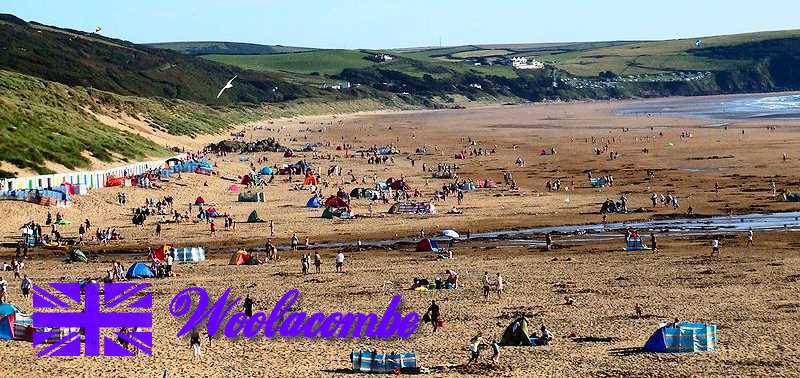
Mortehoe and
Putsborough -Blue
Flag beach, nominated as one of the
top six beaches in Britain.
Woolacombe
sits
at the end of a long steep valley
(combe) that winds down to the coast,
opening up into a three mile long,
southwest facing sandy bay, sandwiched
between two dramatic peninsulas - Baggy
and Morte Points - makes this a truly
spectacular and unique holiday
destination.
Woolacombe
is
a lively village with plenty of
atmosphere, a fantastic beach, great
pubs, restaurants and places to stay.
Visitors of all ages will find plenty to
do away from the beach. There's a
friendly, laid-back atmosphere here
which visitors enjoy, bringing them back
year after year. For more details about
the attractions click on to our Devon
section
Red Barn Cafe , Barton Road ,
Woolacombe EX34 7BT
Tel: 01271 870553
Email: woolacombetic@visit.org.uk
Web: www.woolacombetourism.com
|
SOUTH SAXON
SEASIDE RESORTS
|
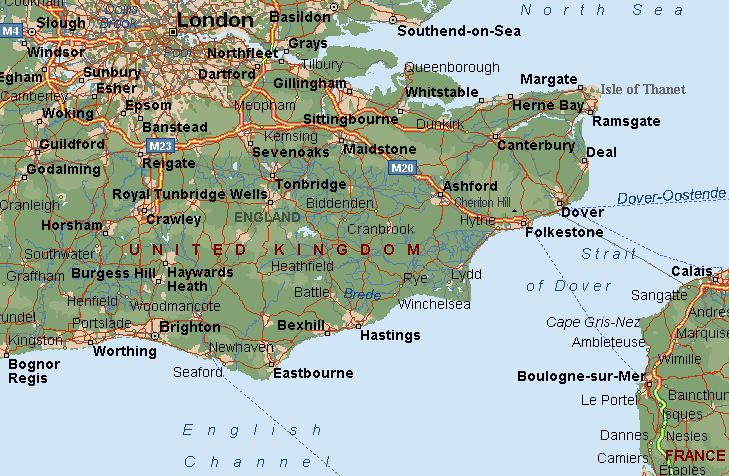
|
From
Emsworth In The West To
Whitstable in the East
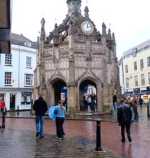
|
Chichester is the inland market town
that lies at the far end of Chichester
Harbour. The harbour itself is a
designated Area Of Outstanding Natural
Beauty and Chichester is a picturesque
town. Founded by the Romans around AD 50
the town has been an important
settlement and anchorage for over 2000
years. For more details about the
attractions click on to our Sussex
section
29a South Street , Chichester ,
PO19 1AH
Tel:01243775888 Fax: 01243 539449
Email: Chitic@chichester.gov.uk
web: CHICHESTER
CLICK
|
|
EAST
&
WEST WITTERING
The two towns are
typical English seaside resorts with
the usual facilities the main
attractions are the beaches and the
dunes behind them which offers acres
of space for relaxation. There are
good beaches at both East and West
Wittering and they continue east along
Bracklesham Bay up to Selsey Bill.
This area is a popular for many
watersports including wind and kite
surfing, sea canoeing, sailing,
fishing, scuba diving and
surfing. For more details about
the attractions click on to our Sussex
section
|

|
BOGNOR
Bognor is one of the
oldest Saxon sites on record in West
Sussex. The town is recorded in AD 680
as Bucgan ora meaning Bucge's shore.
Bucge was one of the few Saxon women
to have a place named after her. Over
the years this Saxon-landing place
became a small fishing village, and as
with many places the name changed with
time. In 1275 it was recorded as
Buggenore and in 1405 as Bogenor. Very
little remains of the area's ancient
history. A Roman farmstead was
discovered in Felpham in 1965 and in
the mid-seventies an Iron Age
settlement was uncovered during
construction work. For more details
about the attractions click on to our
Sussex
section
Belmont Street ,
Bognor Regis , PO21 1BJ
Tel:(0)1243 823 140 Fax: 01243
820435
|
|
SELSEY
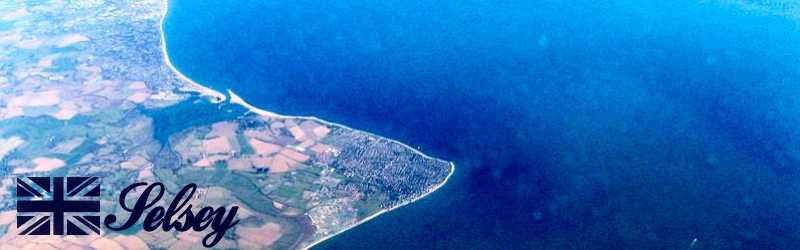
Selsey is a small
town that traditionally was engaged in
the fishing industry but which now
relies more on tourism for its
livelihood. Although it is still
renown for the quality of its
shellfish.
Selsey Bill refers to
the headland on which the town is
located that juts out into the English
Channel. There are good beaches all
around the town with the eastern beach
being the most popular. Swimming is
generally safe along the main beach
area but not around the headland where
there are strong currents. A lifeboat
station is located on the
headland. For more details about
the attractions click on to our Sussex
section
|
|
WORTHING
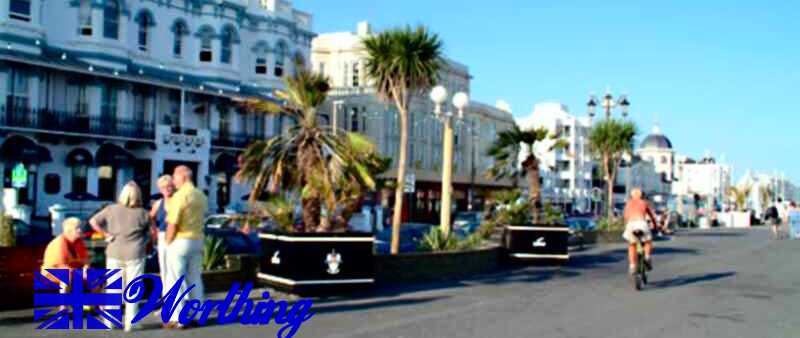
With a
population of around 100,000,
Worthing is the largest town in
West Sussex and a bustling
modern commercial centre . The
town lies on the coastal plain
bounded to the north by the
outstanding natural beauty of
the South Downs and to the south
by the English Channel.It is the
towns geographical situation ,
offering as it does the dual
attractions of beautiful
countryside and the sea , which
over the years has been the
primary reason for the town's
popularity and growth . Worthing
has all the amenities one would
expect in a town of its size. It
is the premier shopping centre
in West Sussex with an excellent
variety of specialist shops,
well-established family
businesses, department stores,
chain stores and supermarkets.
The modern town centre is
located just off the seafront
and is mainly pedestrianised.
Over the years Worthing has been
chosen by a number of national
and multi - national companies
for their headquarters and as
their main operating bases .
Today firms such as Norwich
Union and Glaxo Smithkline are
established within the the
town's boundaries. Entertainment
is an important part of the life
of any town and Worthing is no
exception. There are seven
multipurpose venues offering a
full range of first class
entertainment featuring some of
the top names of stage and TV
fame. There is also a lively
nightclub scene for younger
residents. In fact there is
something to suit everyone!There
are two leisure centres, and
together with other sports
venues, they provide a wide
range of sports and activities
from squash to weight training.
There are regular tuition
courses held to develop new
sports. Health and Fitness
Suites at Worthing Leisure
Centre and the Aquarena (the
indoor swimming complex) offer
individual monitoring with some
of the latest computerised
equipment. There are also
facilities to allow customers to
relax and unwind. From the five
miles of seashore other sports
can be enjoyed, such as
swimming, windsurfing, yachting
and fishing. There are also golf
courses, putting greens, tennis
facilities and bowling greens
(Worthing is known for its
national bowling championships).
For more details about the
attractions click on to our Sussex section
|
|
LITTLEHAMPTON
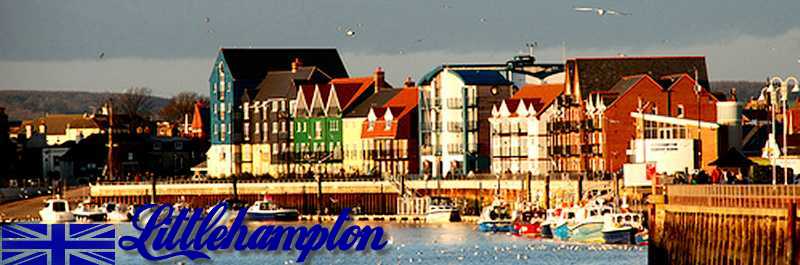
A Coastal Gem
Sheltered by the South Downs, at the
mouth of the River Arun . For family
fun and fantastic weather -
Littlehampton is hard to beat. A
European Blue Flag winning beach,
harbour and a stunning riverside
development make Littlehampton a
seaside town with space, style and
lots of sunshine. Littlehampton is
lucky to have two contrasting beaches
to offer visitors. The East Beach is
traditional sand and shingle and
perfect for families. Its European
Blue Flag and Seaside Award confirm it
is safe and clean. West Beach, on the
opposite side of the river, has
unspoilt sand dunes, rare plants and
wildlife protected as a Site of
Special Scientific
Interest. The riverside
walkway links the seafront with the
East Bank and the town centre. Head
for the Look & Sea! Visitor Centre
for a delightful café overlooking the
river, interactive maritime exhibition
displays, games and fantastic views
from the Tower across the River Arun,
out to sea and northwards to Arundel.
On the seafront is Harbour Park
amusement centre – an all-weather
adventure village offering family fun
for visitors of all ages. A Seafront
Promenade Train runs between
Coastguards Tower and Norfolk Gardens.
There is summer entertainment on the
promenade including Punch and Judy,
live music and magic shows.
Littlehampton Miniature Railway runs
between Mewsbrook Park and Norfolk
Gardens. For more details about the
attractions click on to our Sussex
section
|
|
SHOREHAM
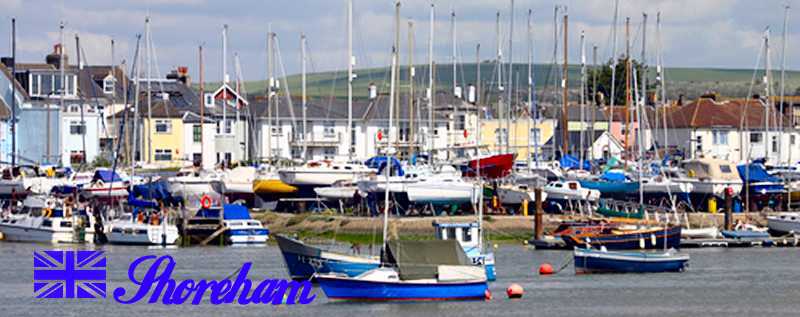
Shoreham-by-Sea
enjoys a unique location, bordered on
the north by the South Downs Area of
Outstanding Natural Beauty, on the
west by the open valley of the River
Adur and on the south by the river and
Shoreham Beach. Such close proximity
to the South Downs, river and coast
make Shoreham-by-Sea a very desirable
place to live.Shoreham-by-Sea is
situated on the South Coast of England
approximately 6 miles west of Brighton
and 5 miles east of WorthingThe town
and port of New Shoreham was
established by the Norman Conquerors
towards the end of the 11th century.
Shoreham’s strategic location and
proximity to Normandy made it a
logical place to improve facilities
for travel and trade. The magnificent
church of St Mary de Haura was built
in the decade following the Doomsday
Survey of 1086 and the town laid out
on a grid pattern. The 12th century
building in Shoreham High Street, the
Marlipins Museum, is one of the oldest
surviving secular buildings in the UK
and dates from this time. The rise of
Brighton and Worthing and the coming
of the railway in 1840 prepared the
way for Shoreham’s rise as a rapidly
growing Victorian sea port with
several shipyards and an active
coasting trade. Shoreham Beach to the
south of the town, is the shingle bank
thrown up over the centuries by the
sea. Converted railway carriages
became summer homes around the turn of
the century, and Bungalow Town, as it
was then known, became home for a
short time to a flourishing film
industry. It was cleared for defence
reasons during the second World War
and is now completely developed for
modern houses. However the Church of
the Good Shepherd, built in 1913,
still stands. For more details about
the attractions click on to our Sussex
section
|
|
Proposed
New Development of Hove
|
HOVE
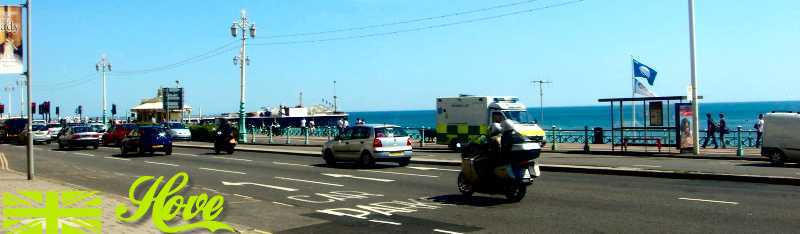
Hove is a town on the
south coast of England immediately to
the west of Brighton. The former towns
form a single conurbation together
with some smaller towns and villages
running along the coast. As part of
local government reform Brighton and
Hove were merged to form the borough
of Brighton and Hove in 1997. In 2000
the conjoined towns officially
attained city status.Hove is between
Brighton on the east and
Portslade-by-Sea on the west. The
pre-1997 borough of Hove, formed in
1974, included Portslade-by-Sea. For
more details about the attractions
click on to our Sussex
section
Church Road , Hove
, BN3 3BQ Tel:01273 292 589
|
|
BRIGHTON

Since Regency times,
Brighton has been a pleasure ground
for visitors, with a wealth of
attractions full of charm, style and
eccentricity. From the
unique Royal Pavilion to
the Victorian Brighton Pier, the Volks Railway to
Brighton & Hove Museums,
Brighton's attractions are a mix of
heritage, seaside fun and cultural
experiences. Whatever time of
year you visit there is sure to be
something that you want to see. Click here for
a downloadable guide to some of
Brighton's best attractions For more
details about the attractions click on
to our Sussex
section
Bartholomew Square , Brighton
, BN1 1JA Tel: 0906
7112255 (calls cost 50p per
minute)
email: brighton-tourism@brighton-hove.gov.uk.
|
|
SEAFORD
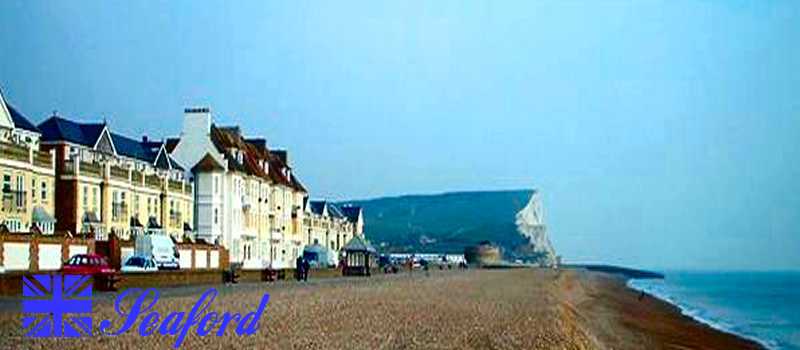
The town of Seaford
is a quiet seaside resort in East
Sussex, U.K. It is located on the foot
of the South Downs, a range of hills
stretching from Winchester to
Eastbourne. It is a great place to
have a break.
Things to do: For many, the main
attraction in Seaford is the beach.
This has an obvious attraction in the
summer, when the sea reaches
temperatures up to 20 degrees Celsius.
But the sea is equally attractive in
the winter. The town has a shopping
centre, with enough shops to spend a
good afternoon looking around. For the
out-and-abouts there is plenty of
hills to get on with, as we are
situated at the foot of a hill range
called the South Downs. The Seven
Sisters Country Park is just around
the corner, and so is the famous Long
Man of Wilmington, a massive feature
carved out in the rocks. For more
details about the attractions click on
to our Sussex
section
|
|
EASTBOURNE
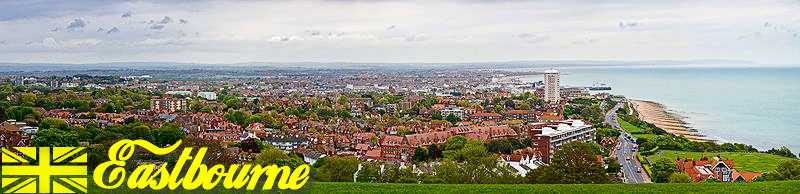
Boat trips to Beachy Head Lighthouse.
Dining ‘al fresco’ at the cosmopolitan
Marina. Having fun on the Victorian
Pier. Relaxing to music at the seafront
Bandstand. Messing about on the beach.
Exploring the picturesque South Downs
countryside. Watching fantastic air
displays or top class tennis at our
international events. Enjoying flumes
and waves at the Sovereign Centre
leisure complex. Taking a ride on the
seafront Dotto Train. Being entertained
in one of our four theatres. Shopping
for antiques, bargains or sticks of
rock. Browsing in our museums and art
galleries. Having a fish and chip
supper. Paddling in rock pools. Watching
the sun rise over the sea or just having
an ice-cream and watching the world go
by... Just some of the things that you
can enjoy in award-winning, sunny
Eastbourne! Why not come and experience
it for yourself? For more details about
the attractions click on to our Sussex
section
The Tourist
Information Centre, Cornfield Road,
Eastbourne BN21 4QL
(0)906 7112212 (premium
rate line charged at 50p local rate)
mailto:tic@eastbourne.gov.uk
EASTBOURNE CLICK
|
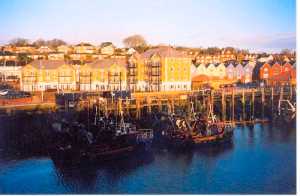
|
NEWHAVEN
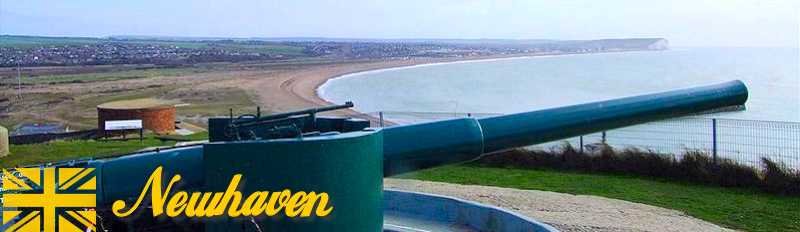
Newhaven is a
prosperous and unique town tucked away
from the main A259 East West Coast
route between Brighton and Eastbourne.
The town was originally called
Meeching but when the estuary of the
Sussex Ouse was diverted in the 1539
from nearby Seaford to near where it
is today the town became a ‘New
Haven’. The Marina is one of Sussex
coast's hidden gems. The town is
central to some of the most beautiful
countryside in the South East,
including the South Downs and the
Seven Sisters. It is linked to Lewes
and Brighton by rail; there are two
stations: Newhaven Town and Newhaven
Harbour. It is also a great launching
spot to France on the Transmanche
Ferries. The huge Fort built on Castle
Hill in the 1860s, the original site
dates from the Bronze Age. It offers a
wide variety of activities and is the
main Heritage Site in the area. There
is also the allure of the unique
shopping experience and the South's
leading gardening and horticultural
centre that is Paradise Park. The town
holds a few surprises, including one
of Sussex's rare sandy beaches and a
market day frequently attended by
French traders offering magnificent
cheeses, pastries, leather goods and
craft items, a must for those with an
eye for a bargain! For more details
about the attractions click on to our
Sussex
section
|
|
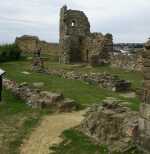
|
HASTINGS
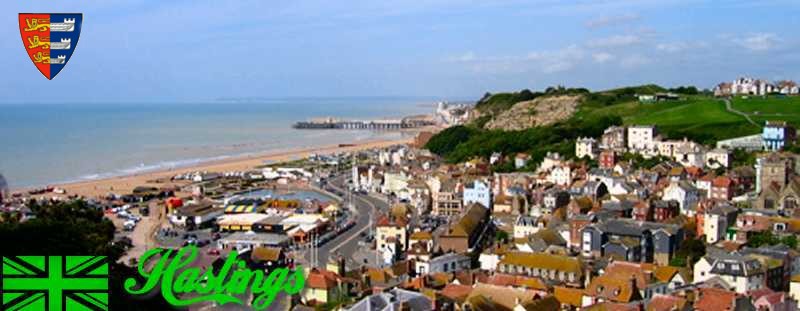
Hastings is a flourishing
seaside resort which is popular
with the French. This popularity
originated in 1066 when William
the Conqueror landed nearby and
got into a bit of a barney with
the locals. The legacy of that
invasion is still with us today in
the shape of - baguettes, au pairs
and Beaujolais. The successful
invasion of England by William the
Conqueror was probably the most
significant event in our
history. On October 14 1066
William landed at Pevensey with
around 700 ships and 7000 men.
they marched rapidly towards
Hastings to confront Harold the
English King. The battle actually
took place at the place now called
Battle in honour of the conflict.
Harold had an army of equal size,
around 7000 and two armies clashed
in bloody conflict that lasted
half a day. The turning point came
when William's men appeared to
retreat and the English army began
to pursue them. This action left a
gap in their line and the French
turned on them and broke their
lines. During this final phase
Harold was fatally wounded by an
arrow in his eye and died shortly
afterwards. William marched for
London and was crowned King in
December 1066. And so we all
became Normans!
For more details about the attractions
click on to our Sussex
section
The Stade , Old Town ,
Hastings , TN34 1EZ
Tel: 01424
781 111Fax: 01424 781186
Email: hic_info@hastings.gov.uk
Website: Visit Hastings
HASTINGS CLICK
|
|
BEXHILL-ON-SEA
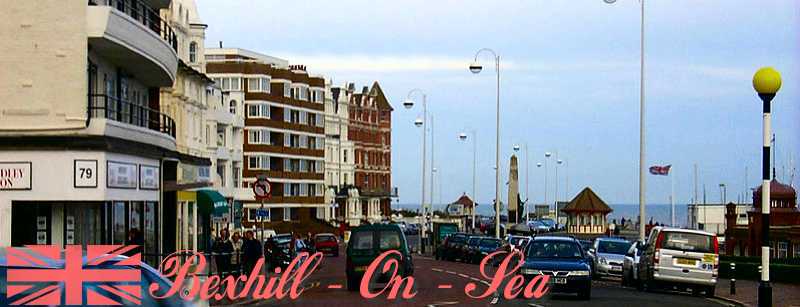
A
select seaside resort of
comparatively recent growth, 4
miles East of Hastings. At the
turn of the last century it was a
small village, but its development
has proceeded along well planned
under the guidance of the Earls of
De La Warr, Lord of the Manor. The
beaches are of firm sand providing
excellent bathing and a fine
playground for children. The sea
fishing is good (Plaice, codling,
whiting and huss).Of the old
village, there remains the manor
house dating in part from the
fourteenth century, which was once
owned by the Bishop of Chichester,
several period houses and a Norman
Church. Let into the wall of the
later, is a child's coffin,
curiously carved, which was found
during restoration work in 1878.
For more details about the attractions
click on to our Sussex
section
Bexhill-on-Sea
Tourist Information Centre
51 Marina ,
Bexhill-on-Sea , TN40 1BQ Tel:
+44 (0) 1424 732 208
http://www.1066country.com/getPage.aspx?pageTopId=12
|
|
HYTHE
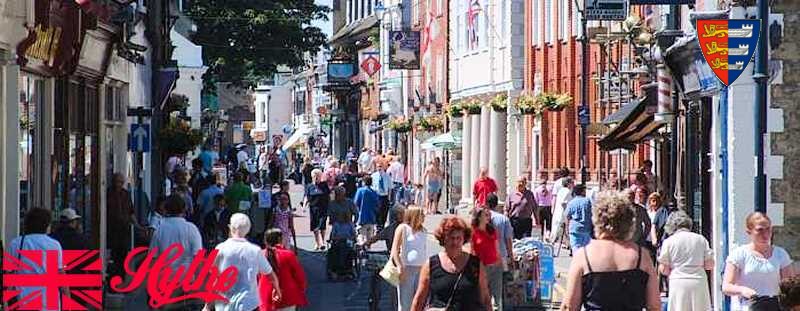
The small seaside resort
and town of Hythe, in
the District of Shepway,
(derived from sheep-way, since
shepherds drove their flocks
across Romney Marsh and the
Downs) is one of the five
original Cinque Ports on the
south coast of Kent, in England.
Although it is beside a broad
bay on the English Channel, four
miles to the west of Folkestone,
silting of the coast has removed
any sign of its port and
harbour.
For more details about the attractions
click on to our Kent section
Red Lion Square, Hythe,
Kent CT21 5AU - England, UK
Phone: +44 (0)1303 267799 - Fax:
+44 (0)1303 261161
HYTHE
CLICK
Discover more
about Hythe and the surrounding
area at Hythe Tourist Information
Centre, situated on the south east
coast of England close to
Folkestone, Kent. The information
centre is packed with lots of
useful travel and tourism
information to help you plan your
holiday. Whether you are looking
for help with ferry, bus or train
timetables, want to find and
reserve bed & breakfast or
hotel accommodation in Hythe, or
just want to know more about the
Hythe tourist attractions you can
visit, then call in and let us
offer you some advice.
|
|
FOLKESTONE
Folkestone operates as a
port rather than a resort but
however there are plenty of
attractions and beaches nearby.
There is a beach at the town and
this is reached by a lift that
takes you down the 200 foot cliff
face. Folkestone's beach doesn't
offer much in the way of charm. A
wide expanse of shingle is all
that greets you however there is
an large amusement park as well
which should keep the kids
happy. There are other
beaches to the west of the town
towards Dymchurch. Here you will
find St Mary's Bay which
stretches for several miles and
is a mix of sand and shingle.
There are a few facilities along
here such as cafes and shops and
a small fun fair.
For more details about the attractions
click on to our Kent section
Harbour
Street, Folkestone, Kent CT20
1QN - England, UK
Phone: +44 (0)1303 258594 - Fax:
+44 (0)1303 259754
Discover more about
Folkestone and the surrounding
area at Folkestone Tourist
Information Centre, situated
on the south coast of England
close to Dover and Hythe. Our
information centre is packed
with lots of useful travel
information to help you plan
your holiday. If you’d like
help with bus, train and ferry
timetables, are looking for
bed & breakfast and hotel
accommodation, or just want to
know what tourist attractions
you can visit, then call in
and let us offer you some
advice. The area has lots to
offer, including the Battle of
Britain museum and Rural
Heritage Centre.
|
White Cliffs of
Daver
St Margarets Bay
|
DOVER
Dover is probably the
UK's best known port and acts as
the gateway to England - or Europe
depending on which way your going!
As with many of the countries
major ports it has a long history
that is bound up with our maritime
past.
Dover's
history
goes back to Roman times and
beyond but it was the Normans
who built the towns most famous
landmark, Dover Castle. The
castle dominates the towns
landscape and is still in
remarkably good repair after
defending the town for 800
years. During the second World
War the castle was the base for
the planning of the evacuation
of British troops from Dunkirk.
There is a network of tunnels
under the castle which now house
a museum with exhibits from the
war time period. There are
beaches within the Dover area,
notably Kingsdown to the north
of Dover offers a natural
undeveloped shingle beach. there
are shops and cafes in the
village centre. The the
other outstanding landmark
of Dover, of course, is the
world famous white cliffs which
stretch for ten miles on either
side of Dover. The best place to
view these is from one of the
cross channel ferries and they
provide a spectacular view when
arriving in the country. There
are excellent walks along the
cliffs in both directions.
For more
details about the attractions click on
to our Kent
section
Townwall
Street,
Dover, Kent CT16 1JR - England, UK
Phone: +44 (0)1304 205108 Fax: 01304
255 409 Email: tic@doveruk.com
DOVER
TOURIST
INFORMATION CENTRE CLICK
At Dover Tourist Information Centre, we
are here to help you with a range of
tourism information on the port town of
Dover and other nearby places such as
Folkestone and Deal. We can help you
find hotel or bed & breakfast
accommodation in Dover, provide maps and
help with the ferry timetables and give
independent advice on the Dover visitor
attractions. Attractions in Dover
include Dover Castle, the Pines garden
and the famous White Cliffs of Dover
which is often the first view of England
that travellers from Europe have.
|
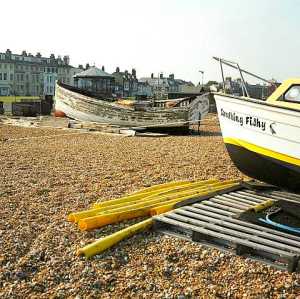
|
DEAL
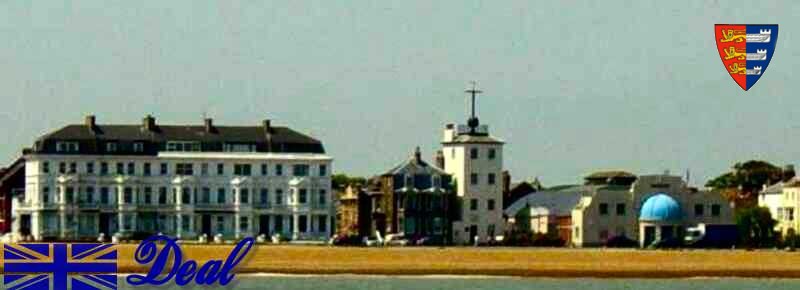
Deal
is
a thriving seaside town full of
historical places to visit and
things to see. Deal's past is filled
with fishing and smuggling and many
major historical events took place
here. Deals pier extends 1/4 mile
into the sea and gives excellent
views back across deal seafront. The
beach is shingle and is fairly long
there is adequate parking.
For more details about the attractions
click on to our Kent section
Town
Hall, High Street, Deal, Kent CT14
6BB - England, UK
Phone: +44 (0)1304 369576 - Fax: +44
(0)1304 380641 Email:
info@deal.gov.uk
Discover
more
about the Kent town of Deal and
nearby places at the Deal Tourist
Information Centre, situated on the
coast between Dover and Ramsgate.
Our centre is packed with lots of
useful tourist information ranging
from finding and booking
accommodation in Deal to finding
more information about the local
visitor attractions. There are a
number of attractions around Deal
including the Walmer Castle and East
Kent Railway.
|
|
SANDWICH
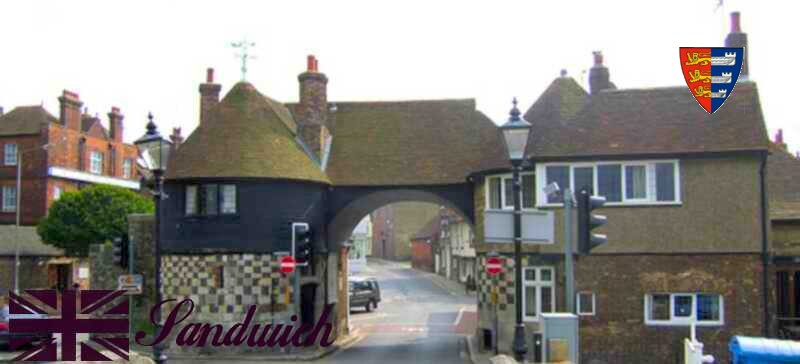
There are many historical
sites and places of interest in
the town of Sandwich as it's
history dates back to well before
medieval times.Sandwich itself,
has a population of around 4,500,
but it is surrounded by small
villages, such as Eastry, Ash,
Worth and Woodnesborough, which
have always been regarded as part
of the Sandwich area. It is a
walled town and although parts of
the town wall still remain, it is
now mainly replaced by the
footpaths, known as the Ropewalk,
Millwall, Bulwarks, and the Butts.
For more details
about the attractions click on to
our Kent
section
The
Guildhall,
Sandwich,
Kent CT13 9AH - England, UK
Phone: +44 (0)1304 613565
Alternate Tel: 01304 617 197 Fax:
01304 613 565 Email:
info@ticsandwich.wanadoo.co.uk
SANDWICH
CLICK
Discover more about
the small town of Sandwich and nearby
places at the Sandwich Tourist
Information Centre, situated close to
Ramsgate, Margate, Broadstairs and
Deal in South East Kent. The premises
are packed with lots of tourism
information to help you plan your
holiday or break in the area. If you’d
like help with transport timetables,
are looking for accommodation in and
around Sandwich, or just want to know
what tourist attractions you can
visit, then call in and let us offer
you some advice. The area has lots to
offer, including White Mill folk
museum, Sandwich Bay bird observatory,
Sandwich Bay Beach and the Richborough
Roman fort.
|
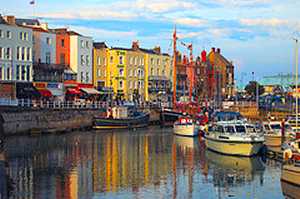
|
RAMSGATE
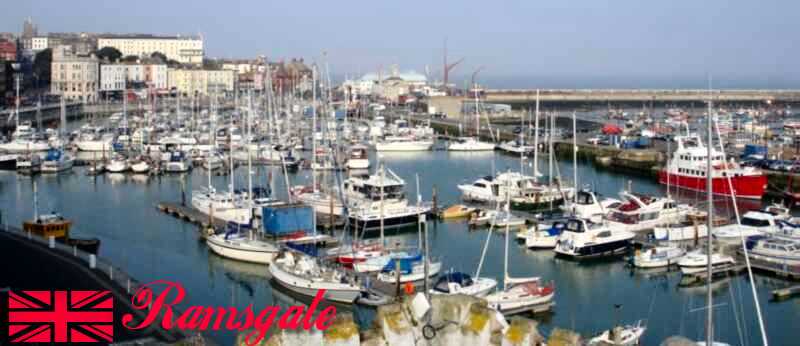
Ramsgate presents
an enticing mix of maritime history,
cosmopolitan pizzazz and traditional
seaside appeal. The town has a good
harbour and marina, sandy beaches and
stunning views from the nearby cliff
tops. Much of the town is Victorian or
Regency in origin and the town has had
some distinguished visitors. Ramsgate
was granted ‘royal’ status for its
harbour in 1821 in recognition of the
hospitality given to King George IV
when he sailed from Ramsgate with the
Royal Squadron on his way to Hanover.
For more details about the attractions
click on to our Kent section
19 - 21 Harbour
Street, Ramsgate, Kent CT11 8HA -
England, UK
Phone: +44 (0)1843 583333 - Fax:
+44 (0)1843 591086 Email:
tourism@thanet.gov.uk
RAMSGATE TOURIST OFFICE CLICK
At Ramsgate
Tourist Information Centre, we are
here to help you. We have
information on the seaside town of
Ramsgate on the north Kent coast
and other nearby places such as
Margate and Broadstairs. Find
accommodation in a hotel or bed
& breakfast or just get some
independent advice on some of the
best tourist attractions in the
area.
|
|
BROADSTAIRS
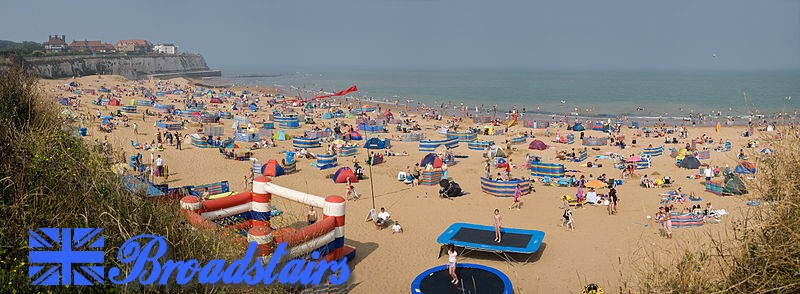
Broadstairs is
renown for two things - its seven
sandy beaches and for being the
location of Charles Dickens holiday
home, Bleak House which overlooks the
town. The main beach is Viking Bay,
which was given the name as it was the
landing place of these Norse invaders
many years ago. For more details
about the attractions click on to
our Kent
section
6B High Street,
Broadstairs, Kent CT10 1LH -
England, UK Phone: +44 (0)1843
862242 - Fax: +44 (0)1843 865650
Email: tourism@thanet.gov.uk
BROADSTAIRS
TOURIST
INFORMATION
CENTRE CLICK
Discover
more
about Broadstairs and the
surrounding Kent countryside at
Broadstairs Tourist Information
Centre, situated close to Ramsgate
and Margate in South East England.
Our information centre contains
lots of useful travel information
about Broadstairs and our helpful
staff can assist you with a
various services from transport
timetables to finding &
booking accommodation in
Broadstairs. We can also provide
information on tourist attractions
around Broadstairs and Kent such
as Salmestone Grange historic
house, Broadstairs Museum and
Crampton Tower.
|
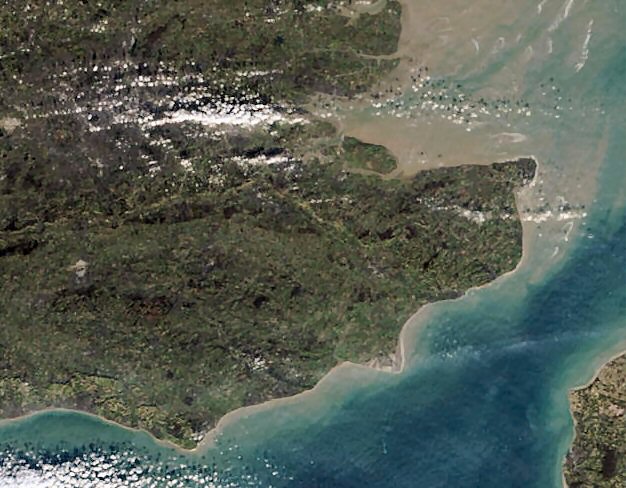
|
CLIFTONVILLE
Cliftonville is a coastal
area of the town of Margate,
situated to the east of the main
town. It also contains the area
known as Palm Bay. The original
Palm Bay estate was built in the
1930s as a number of large, wide
avenues with detached and
semi-detached houses with
driveways, garages and gardens.
This land was sold by Mr Sidney
Simon Van Den Bergh to the Palm
Bay Estate Co on 23 June 1924.
Such avenues include Gloucester
Avenue and Leicester Avenue.The
estate covers the eastern part of
Cliftonville and was fields when
the first was built. It extends
east beyond Northumberland Avenue
and has been developed in phases.
An earlier phase covered the
northern ends of Leicester and
Gloucester Avenues and the whole
of Clarence and Magnolia Avenues;
the later phase extending
eastwards of Princess Margaret
Avenue is a Wimpy style housing
estate with small houses largely
identical in appearance and of
less substantial build quality
than the original 1930s estate.The
eastward expansion of Cliftonville
has included much of the former
parish of Northdown including
Northdown Park and House.West
Cliftonville as originally
developed was largely small
private hotels and guest houses
which catered for the many
visitors to what was in the first
half of the twentieth century the
thriving holiday resort of Margate
but is now a less affluent area
with the hotels converted to flats
and bedsits. Thanet Council has
recognised this and is offering
grants to improve housing quality
(2006) and restricting planning
permission for one bedroom flats
(2007). The seafront area once
included many large hotels,
including at one time a large
Butlins complex.
For more details about the attractions
click on to our Kent section
|
|
MARGATE
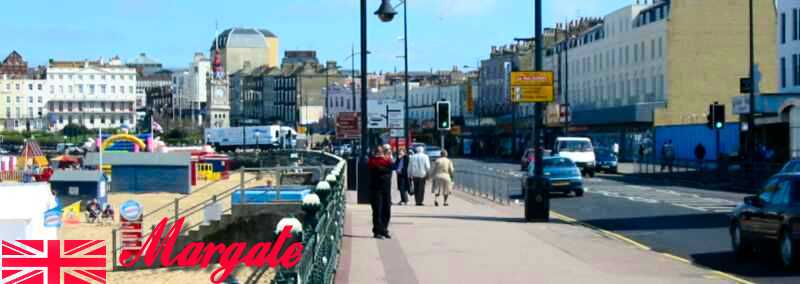
Margate
is
well known for its 9 miles of
sandy beaches and traditional
seaside pleasures such as
cockles and winkles, fish and
chips, amusements and
attractions. Indeed some of the
greatest seaside icons were
invented here. In 1736 John
Barber, a local glove maker
invented the first covered
bathing machine and Margate was
the first resort to have donkey
rides in 1790 and the first to
introduce deck chairs in 1898.
Now your more likely to find
kite surfing and sailing boats
as the town responds to the
changing tastes of its visitors.
For a
contrast to the traditional beach
entertainment, head for Margate
Old
Town where the harbour area
mixed 17th and 18th century buildings
with boutiques, cafes and bars. For
more details about the attractions
click on to our Kent section
22 High Street,
Margate, Kent CT9 1DS - England,
UK
Phone: +44 (0)1843 220241 - Fax:
+44 (0)1843 230099 Email:
tourism@thanet.gov.uk
MARGATE TOURIST INFORMATION
CENTRE CLICK
Margate Tourist
Information Centre is situated in
the coastal town of Margate, close
to Ramsgate and Broadstairs on the
North Kent coast. Nearby tourist
attractions include Salmestone
Grange historic house, Theatre
Royal and The Margate Winter
Gardens. Call in and we can give
you more information on these and
other visitor attractions. We can
also help you choose from the
great selection of hotels and bed
& breakfast accommodation in
Margate.
|
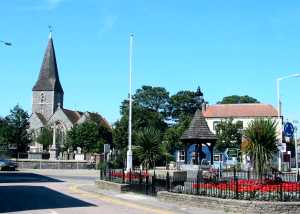
|
BIRCHINGTON
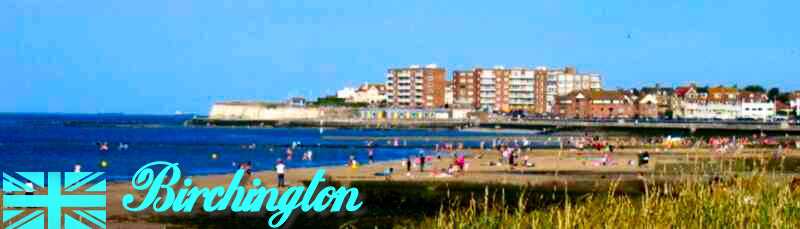
Birchington, Kent`s
largest village, is situated on the
Isle of Thanet
in the North East of the county
within easy reach from the
M2. There have been settlements
in and around Birchington
since pre-historic times. The
present-day community of around 14,000
people is centred on the square and
its parish church, with its origins in
the 12th century, together with
the neighbouring welcoming public
houses. The sea shore includes
sandy bays, rock pools and
paddling pools and forms part of the Thanet
Coast project. Dante
Gabriel Rosetti, painter and
poet, is buried in the churchyard. For
more details about the attractions
click on to our Kent section
BIRCHINGTON
CLICK
|
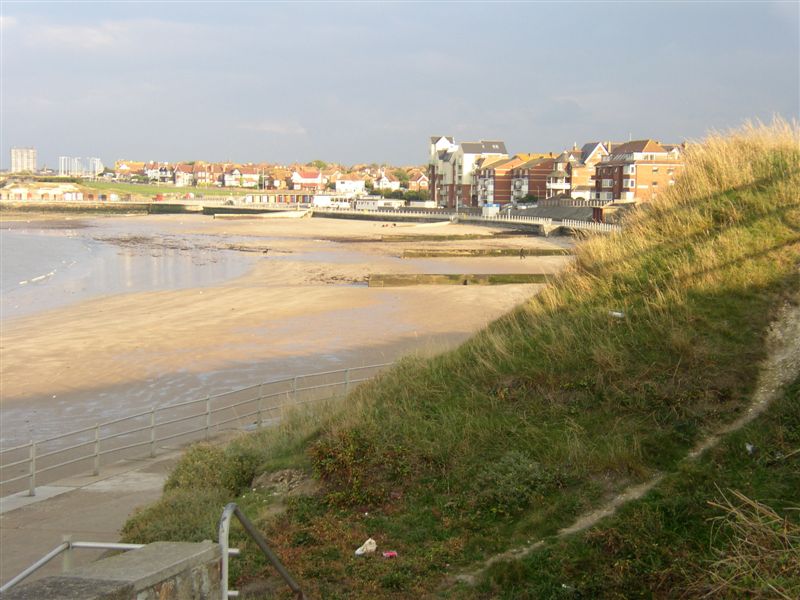 |
WESTGATE
ON SEA
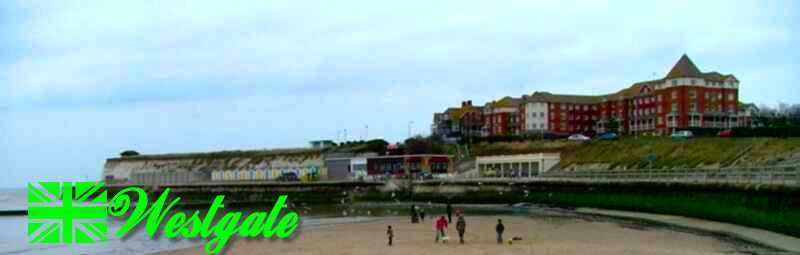
Beautiful Beaches
including Westgate Bay and St.
Mildreds. The Quieter part
of Margate- Marvellous for younger
children and older visitors.
For more details
about the attractions click on to
our Kent
section
|
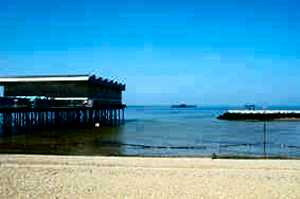
|
HERNE BAY
Herne Bay, north of
Canterbury, has attractive seafront
gardens with a distinctive clock tower
and bandstand, home to free concerts.
The town's story, including the fate
of its famous pier, is told at the
local museum. Built as a resort by the
Victorians, Herne Bay still offers the
same pleasure to visitors. A long open
beach with a promenade and bracing sea
air to dispel the smoke and fumes of
the city. A popular destination
for day trips. For more details about
the attractions click on to our Kent section
12 William Street,
Herne Bay, Kent CT6 5EJ - England,
UK
Phone: +44 (0)1227 361911 - Fax: +44
(0)1227 361911 Email:
hernebayinformation@canterbury.gov.uk
HERNE
BAY
TOURIST
INFORMATION CENTRE CLICK
Herne Bay Tourist Information Centre
is situated in Herne Bay, close to
Whitstable and Canterbury. Call in and
we can give you more information or
assist you with finding a place to
stay. There is a great selection of
hotels, bed & breakfast and
self-catering accommodation locally
|
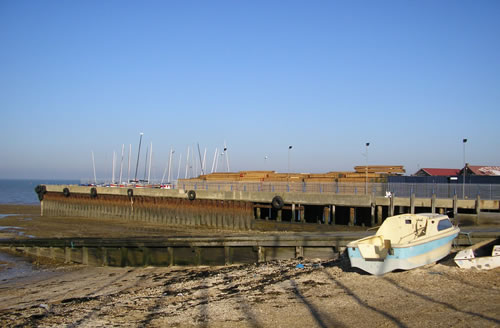
|
WHITSTABLE
Whitstable is known
world-wide for its Oysters but this is
only part of the town's maritime story
which stretches back from Roman times
upto the present day. There is still a
thriving fishing industry at this
small Kent town and it has plenty of
seafood restaurants in which to try
the recent catch.There is a nice
shingle beach at the town which is
part owned by the local oyster
company. Look out for The
Neptune pub which is right on the
beach so you can watch the kids make
sandcastles while you enjoy a pint!
For more details about the attractions
click on to our Kent section
7 Oxford Street,
Whitstable, Kent CT5 1DB -
England, UK
Phone: +44 (0)1227 275482 - Fax:
+44 (0)1227 275482 Email:
whitstableinformation@canterbury.gov.uk
Whitstable
Tourist Information Centre is
situated in Whitstable on the
North Kent coastline near to Herne
Bay and Canterbury. Call in and we
can give you more information or
assist you with finding a place to
stay from a great selection of
hotels, bed & breakfast and
self-catering accommodation in
Whitstable.
|
Select Your Mercian Resort Below
Resort
|

 EXTERNAL
LINKS
TO WESSEX BEACHES
EXTERNAL
LINKS
TO WESSEX BEACHES
Beaches Of Cornwall
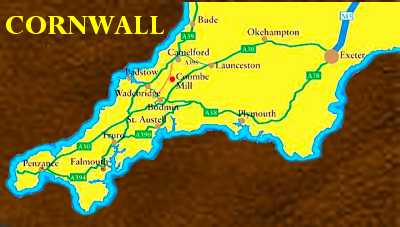
Beaches of
Devon
Beaches of
Dorset

Beaches
of Hampshire
Beaches
of Kent
Beaches
of
Somerset
|
|
The unique rock
structure makes this beach
interesting for fossils and
crystalsThe fossil bearing Jurassic
limestone on this beach contains an
abundance of pink crystals, which
are striking in appearance. Access
to the beach is good, but the rocky
terrain makes walking difficult. For
more
information on Blue Anchor Beach,
click here
|
|
|
A seven mile stretch
of sand Berrow beach forms part of a
seven mile stretch of sand running
from Burnham-on-Sea to Brean Down.
With the second highest tidal range
in the world, there are extensive
flats, perfect for walking and beach
sports.For
more
information on Berrow Beach, click
here
|
|
|
Seven mile stretch
of sand with considerable tidal
range and mud flats This beach is
part of a seven mile stretch of sand
from Burnham-on-Sea to Brean Down. A
considerable tidal range, leaving
mud flats at low tide. The esplanade
runs along the length of the beach,
facing the hotels and private
houses.
For
more
information on Burnham-on-Sea Beach,
click here |
|
|
Traditional sandy
beach resortA traditional sandy
resort beach with excellent
facilities for the family day out.
Attractions include historic pier,
miniature railway, sea-life centre,
amusement arcades, land train and
the famous Weston Donkeys.
For
more
information on Weston-Super-Mare
Beach, click here |
|
|
For
more
information on Minehead Beach, click
here |
|
|
Part of a seven
mile stretch of sand.Brean sands
lies below the National Trust
headland of Brean Down and forms
the northern most part of a
seven-mile stretch of sands. It
has extensive flats at low tide
and it ideal for walking and beach
sports.
For
more information on Brean Beach,
click here |
|
|
|
|
|
A pebbly four mile
long beach of archaeological and
geographical significance.Popular
for swimming, fishing, surfing and
sailing - although care needs to
be taken when swimming, and
surfing should only be undertaken
by experienced surfers.
For
more information on Porlock Weir
Beach, click here |
|
|
Large, spacious
beaches, big enough to drive your
car onto! Large sand and shingle
beaches which you can drive your
car onto. Safe for children. There
is also a large picnic area.
|
Beaches
of East Sussex
 Beaches Of
West Sussex
Beaches Of
West Sussex

South West
|
South
|
| Barnstaple |
Saunton
Sands,
Braunton Burrows |
Barton
On
Sea Hants
|
|
| Bridport,
Dorset |
Cogden
Beach |
Brighton,East
Sussex
|
|
| Bude |
Flexbury
Beach |
Christchurch,
Dorset
|
|
| Budleigh
Salterton |
Budleigh
Salterton
(West End) - OFFICIAL BEACH |
Fawley
Hants
|
|
| Combe
Martin |
Wild
Pear
Bay |
Gosport
|
|
| Fowey |
Gribbin
Head,
Nr. Menabilly |
Gosport,
Hants
|
|
| Lynmouth |
Sillery
Sands |
Dover,
Kent
|
|
| Mevagissey |
Porthluney
Cove,
Nr. Portholland |
|
|
| Mevagissey |
Vault
Beach,
Gorran Haven |
Hastings,
East
Sussex |
|
| Mullion,
Near
Helston, Cornwall |
Gunwalloe
Cove |
Isle
of
Sheppey, Kent
|
|
| Near
Swanage,
Dorset |
Studland
Bay
- OFFICIAL BEACH |
Isle
of
Wight |
|
| Perranporth |
Perran
Beach |
Little
Atherfield,
Isle of Wight |
|
| Sidmouth |
Weston
Mouth |
Lymington |
|
| Slapton,
Near
Dartmouth |
Slapton
Sands |
Lymington |
|
| St
Austell,
Cornwall |
Polgaver
Beach,
Carlyon Bay |
Nr
Fawley,
Hants |
Lepe
Beach |
| Torquay |
Petitor |
Nr
Lee-on-Solent,
Hants |
Meon
Shore |
| Zennor,
St
Ives |
Porthmeor |
Portsmouth,
Hants |
Eastney Beach -
OFFICIALBEACH |
| Zennor,
St
Ives |
Porthzennor
Cove |
Sandown,
Isle
of Wight |
Culver
Beach |

if you are looking for a bit
of Free Fishing
in the UK Click on Picture
above


|
SURFING
CLUBS IN THE UK
The BRITISH SURFING ASSOCIATION (BSA)
was founded in 1966 to promote
the sport of surfing and
represent the interests of all
surfers in Great Britain and
the Channel Islands. The BSA
is recognised by the
Government as the National
Governing Body (NGB) for
surfing and is a member of the
International Surfing
Association (ISA).
The British Surfing
Association, International Surfing
Centre, Fistral Beach,
Newquay, Cornwall TR7
1HY.
Tel: 01637
876474 Fax:
01637 878608
E-mail
:
info@britsurf.co.uk
Click
on
club of your choice for
further details
|
|
Offshore
Power
Boat Racing
|
Thundercat
Racing
VOLLEY
BALL
IN WESSEX
Beach
volleyball, or sand volleyball, is an
Olympic team sport played on sand.
Like other variations of volleyball,
two teams, separated by a high net,
try to score points against the other
by grounding a ball on the other
team's court. Competitive beach
volleyball teams usually consist of
two players, though recreational
variations can contain up to six
players. Originating in Southern
California, beach volleyball now
receives worldwide popularity, even in
countries without traditional beaches,
like Switzerland.
Volleyball
England is the branded image for the English Volleyball Association
(EVA). Volleyball England is the
recognised National Governing Body for
Volleyball in all its forms, including
Volleyball, Beach Volleyball and
Sitting Volleyball in England.
English
Volleyball Association Ltd ,
SportPark , 3 Oakwood Drive ,
Loughborough LE11 3QF Tel:
01509 227722 Fax:
01509 227733
info@volleyballengland.org
South West Area
|
|
|
|