WESSEX
HAS IT ALL - COME & GET IT
THIS IS THE CHARD EXPERIENCE
I
find that the name Wessex is getting
taken up
everywhere
and it would be a pity for us to
lose the right to it for lack of
asserting
it. - Thomas Hardy
The
Wessaxens came here for a visit
1513 years ago and liked it so
much
they have stayed.
Welcome to Wessex .
Press Control+B to Bookmark this
site
for later reference.
To
Chard, where the Duke of
Monmouth
was
crowned "King" in 1685
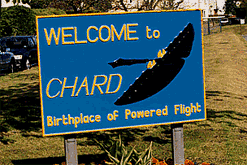
& The Birthplace of Powered
Flight in 1848
This
site
is now 9 years old &
there have been over
217 million
page
visits
to our sites.
Since January 2008 we are
now combined into the larger
www.www.wessextouristboard.org.uk
site
(
over
2 million in 2006 , over 2.6
million in 2007
& 30
million in 2008 and over
79 million in 2009 &
2010)
Chard
is an
epicentre
for Somerset, Devon, Dorset and Wessex.
Tourists, Visitors and
Business
People are most welcome in Chard. This page is
a little about
Chard
and Wessex
KING
CROWNED IN CHARD
www.wessextouristboard.org.uk
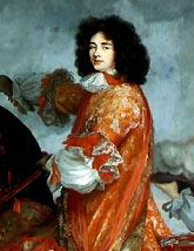
"I am James Scott,
First Duke of
Monmouth and the son of
His Royal Majesty Charles
II.
All those who join me in
my quest against the
Catholic Usurper, James
Duke of York,
my father's brother and
his
murderer, will gain Royal
favour when I take my
rightful place as England’s
Ruler."
Duke of
Monmouth Crowned King
in Chard1685
In
Memory
of
the People of
Chard executed
for following
me:Simon
Cross, William
Davy, James
Dennett,Henry
Earterbrook,Edward
Foote, William
Godfrey,Humphrey
Hitchcock,
John
Jervis,John
Knight,
Abraham
Pill,Edward
Warren &
William
Williams.
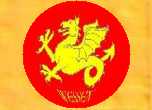
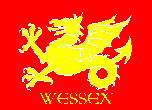
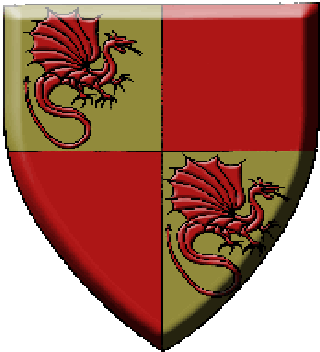
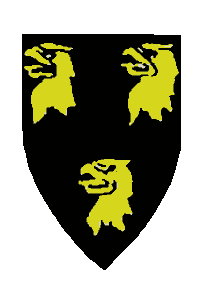
The Wyvern,
the mythical symbol of the
ancient kingdom
of
Wessex appears on
many county crests in the
region today and in
1066
was carried at the Battle
of Hastings. Chard was
named in the Doomsday
Book
as Cerdre - the royal
house of Cerdic. It was
the original capital of
Wessex.
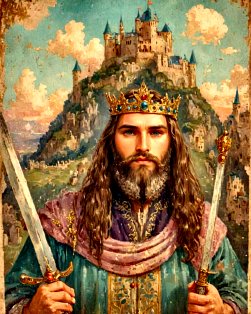
There has been a theory
put forward that Cerdic,
the first king of
Wessex
was King Arthur of
Camelot. This is a
compendium of the leading
websites
in Chard &
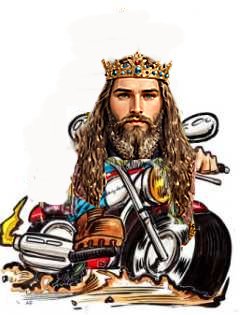
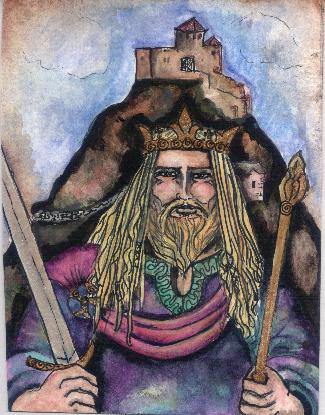
Wessex. Dont forget to
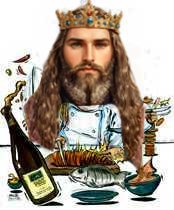
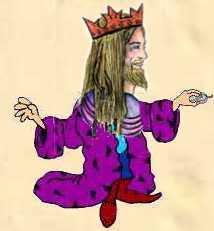
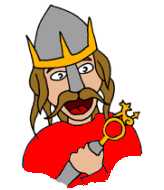
read Cerdic's newspage by
clicking
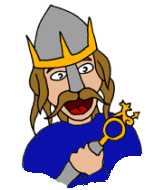
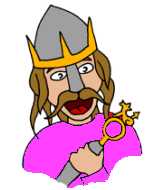
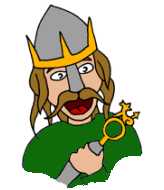
on his picture above which
was drawn by Juliet Davey
& is her
copywrite.
For permission email:julietdavey@yahoo.co.uk
WESSEX
Chard:
The Ancient Capital
The
Compleat Website
web site:
www.wessextouristboard.org.uk
(formerly www.chardnet.co.uk) Welcome toWessex Tourist
Board
Press
Control+B to Bookmark this site for
later reference. In conjunction
with the
Chard
Trade Association An
Informed
Investor Publication www.ukinformedinvestor.co.uk
Open May
to late October 10.30am- 4.30pm Monday
to Friday
10am
- 12.30pm Saturday 11am-3pm Sunday in
July & August Telephone
: 01460
65091 further details
click here
A
Leisurely
Walk around Chard taking in the Historic
Sites is Recommended. Follow
the
Blue Plaques.
For Details
Click Here
South
Somerset District Council
Somerset County Council
Local
Member
of Parliament
The Chard
Lace
Riot Audio Walk
Area
West
OfficesHolyrood Lace Mill, Holyrood
Street
TA20 2YA Wessex
It's
a
Riot
- In 1842 Chard was the Scene of the
Famous Chard Lace Riot. Now YOU
can
join the rioters on The Chard Lace
Riot Audio Walk. Simply go to the
Tourist Office (Next to the Guildhall)
and get the audio machine. Then
you walk the three quarters of a mile
round the 7 sites of the riots.
(There is a resting bench at each
site). Listen to A crowd of starving
angry workers demanding their rights
Civic Leaders in Panic..Tension
Mounting ..... Call in The Cavalry.
History re-enacted & brought
vividly to life.
Wessex.me.uk
are
happy to introduce
their chatroom for
the locals in
Chard
&
Taunton. Just click
on the picture
of Cerdic to the
left to enter
the
room. Obviously this
site is for locals
with similar
interests to
chat
to each other. In
order for the room
to be a success it
is necessary
for
you to tell your
friends about the
room so you can chat
to each other..
It is hoped that it
will become the
networking centre
for the locals of
Taunton
& Chard.
The
Library
Holyrood Lace Mill Holyrood
Street
Chard Somerset TA20 2YA
Computers
- More than 10 - DVDs
- Fax
Machine - Music
CDs - Newspapers
& Magazines - Photocopier
- Black & White - Talking
Books
The
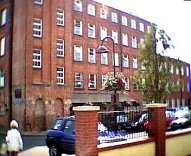
library shares an old lace mill
with
District Council offices. The
building has been sympathetically
redeveloped. Accessibility
.Automatic
Doors.Wheelchair
Access to Building-Wheelchair
Access
to Public Areas -
A
lift to the
upper floor is available.
Monday:
09:00 - 17:00
Tuesday:
09:00
-
17:00
Wednesday:
Closed
Thursday:
09:00 - 18:30
Friday:
09:00
-
17:00
Saturday:
09:30
-
13:00
Sunday:
Closed
General
information
on Wessex
THE WESSEX
SOCIETY is
dedicated to preserving and developing the
cultural and linguistic
heritage
of Wessex. For more information please
contact : WESSEX SOCIETY, 121
Worthing
Road, Patchway, BRISTOL
WESSEX, BS34 5HU telephone 0117 969
4947 email wessexsociety@zyworld.com
THE
WESSEX
REGIONALIST
PARTY/WESTSEAXE LANDRICESTAEFA is
dedicated to the
setting
up of self government for WESSEX. For
membership information or general
enquiries
please contact :
James Gunter, Secretary-General, WESSEX
REGIONALISTS, 5 Rickyard
Cottages,
Broad Hinton, Swindon,
Wiltshire, Wessex ,SN4 9PStel 01793 731974 email
wessexregionalists@regionalist.net
THE
WESSEX
CONSTITUTIONAL
CONVENTION is an all party group
that is forwarding
the
exciting plans of all the people of WESSEX
to have their own
parliament,
with powers equal to those of Scotland.
For more information please
contact : WESSEX CONSTITUTIONAL
CONVENTION, 1/2 Atlantic Road South
WESTON-SUPER-MARE, Somerset, WESSEX
tel 01934 641334 email
wessexconvention@regionalist.net
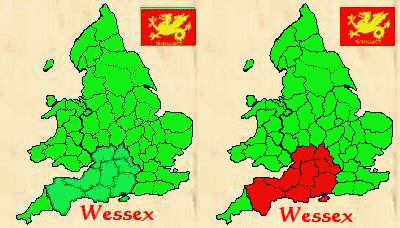
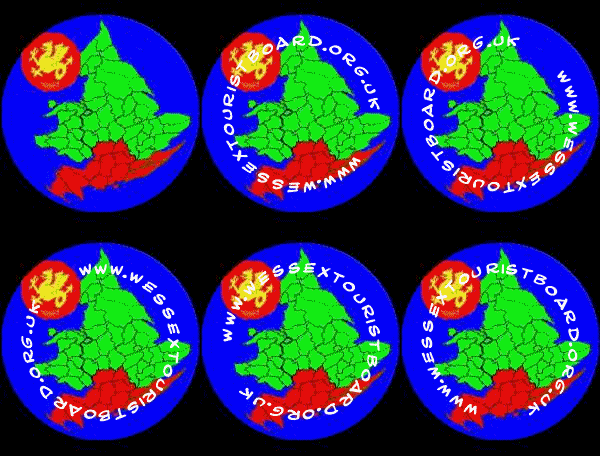
Until borders are
agreed with all the
various
regionalist groups in England WESSEX for
our purposes consists of the
counties
of Somerset, Wiltshire, Dorset, Devon,
Hampshire, Berkshire, Oxfordshire
Berry's
Buses run from Ilminster to London and
back daily
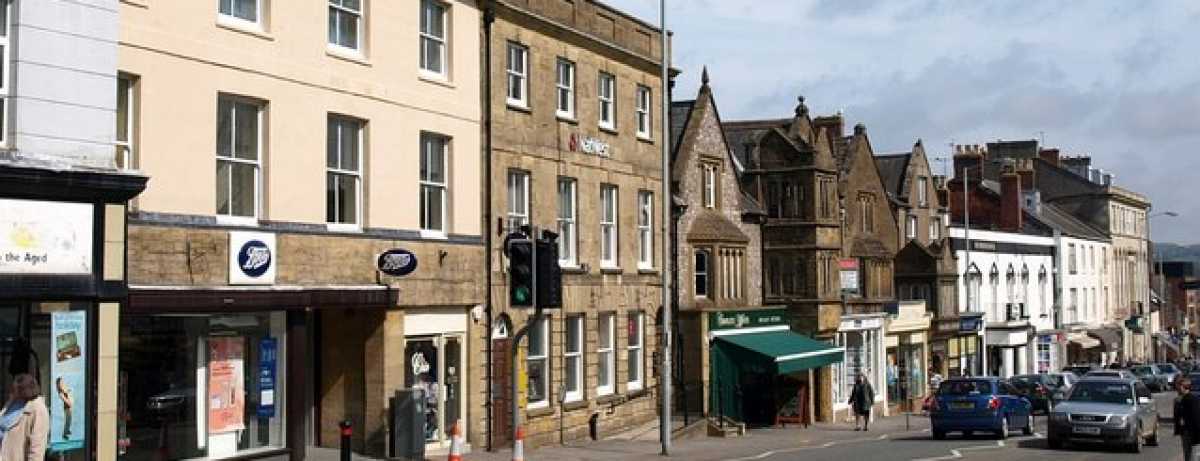
Chard is an historic Market Town
on
the Southern tip of
Somerset.
Within easy access to both the M5 and
A303. The A353 links Chard to the
M5.
Just 13 miles from the coast at Lyme Regis
and the County
Town of Taunton. 150 miles from
London.
Nearest
airports :
Bristol & Exeter
Nearest
Railway
Stations : Crewkerne & Taunton
Nearest
London Coach
: Ilminster
Nearest
Ferry :
Weymouth LOCAL
BUS
SERVICES TO & FROM CHARD.
Bold
destinations offer access to express
coach or train services.Click on a
place name for details of how to get
there by local bus:
Royal
Blue
Coaches celebrating their 100th
anniversary in Chard - Sunday 26th
June
2005
Known as
the gateway to the South it has been
both a lace
&
wool town. Originally an iron age
settlement it was also on the famous
Roman
Fosseway. As an ancient borough it
dates from the 13th century. Chard
is
an ideal place to locate a business
and a treat for tourists. With a
population
of 12,000 it is an ideal place to
savour en route to the resorts of
Devon,
Dorset & Cornwall.
A VERY ROYAL
& BRIEF HISTORY OF WESSEX & CHARD
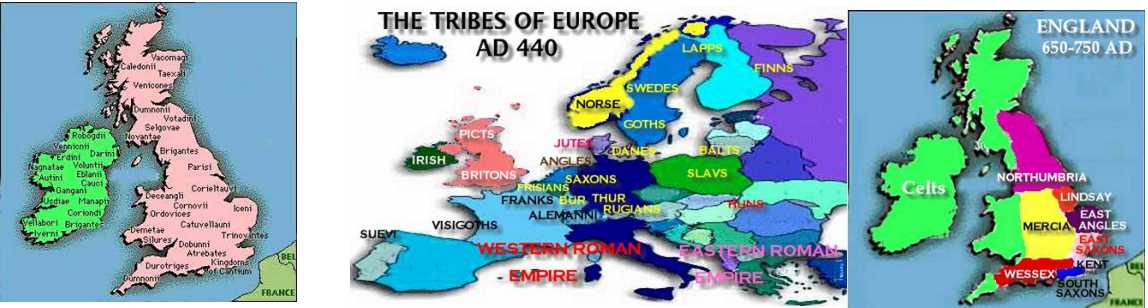
What
we know today as the
West
Country
- Cornwall,
Devon, Somerset and Dorset -
was once covered by a
vast
sub-Roman kingdom called Dumnonia.
The name derives from the
Celtic
Iron Age & Roman-British
tribe of the Dumnonii who
lived in the two
latter
counties and the western
part of Somerset. The name
is retained today
in Devon, the Saxon
modern version derived from
Defnas
(the men of Devon) via the
late-Celtic form, Dyfneint.
However, it is
Cornwall,
in
the far west, which is
usually thought of as
the heartland of Celtic
survival in this region.
It appears to have been
an area of
semi-independence at
times and, in later
centuries, was certainly
the
last remnant of Dumnonia
to be overrun by Saxon
invaders. It is
interesting to speculate
about the name itself.
Cornwall may derive
from the Celtic tribe of
the Cornovii. A
people of this name are
known, from Roman
sources, to have lived
in the Outer Powys to
Shropshire
area of the later Wales
and England. John Morris
suggests a contingent
was
sent to the West Country
in order to rule the
land there and keep out
the
invading A similar
situation
occurred
in North Wales. However,
there is no evidence for
this move west, and
Cornish
placenames of a similar
age indicate that there
was an independent
tribe
of Cornovii in the West
Country. Corn is
a common element in
British
place-name etymology,
literally meaning Horn,
but in this
context
a horn-shaped
peninsula. It is
the ideal description
for
Cornwall.
The original name was Cerniw.
The suffix is the same
as the
Saxon
word Welsh,
meaning foreign.
The Kings
of
Dumnonia,
like their Saxon successors,
were, no doubt, constantly
on the move.
One of their main
Royal residences, perhaps a
"Capital"
of sorts,Cadbury
Castle in Somerset,
Somerset,
probably named after the
sixth century King
Cado.
Other important centres
included Dunster and
Tintagel. The status of
these
places may have changed over
time. The latter, for
instance, being very
exposed,
was probably a Summer
residence only, perhaps
sometimes left in the
care
of governors or duces like
the legendary, Gorlois.
At other times, it may have
been the capital of the
sub-kingdom of
Cornwall.
There
were a
number of other such
kingdoms
extant at various times
in Dumnonia, though
details are often
obscure.
Sub-division
of the Kingdom followed
the traditional split
between sons. This was
certainly the case with
Cornwall and, possibly,
the legendary Lyonesse,
centred on the Scilly
Isles. Other regions
were taken over by
exiled
Royalty from elsewhere,
seeking a new
power-base, forcibly or
otherwise A little
known
kingdom,
centred on the Hayle
estuary, on the Penwith
peninsula thus came
under
the
control of King Tewdwr
Mawr of Brittany; whilst
a dynasty from
Staffordshire
established the
sub-Kingdom of
Glastening around
Glastonbury in
Somerset.
Other regions on the
eastern borders may have
been completely
independent
of Dumnonia. Like the
Kings of Caer-Baddan
(Bath), the last of whom
fell
at the Battle of Dyrham
in AD 577, or the
otherwise unknown lords
who
have left ogham
inscribed memorials at
Wareham in Dorset.
The
Wessaxens came here for a visit
1513 years ago and liked it so
much
they have stayed.
The
Kings of Wessex
Wessex is the
name
of the former kingdom which
originated in south-central England
and
expanded
to cover the whole of the south
west. The Encyclopaedia Britannica
lists
Hampshire, Wiltshire, Somerset and
Dorset as the "permanent nucleus" of
Wessex.
Wessex began with the landing of
Cerdic Von Wessex in Southampton
Water
in
495AD.
*Some experts believe that Cerdic
was another name for King Arthur and
that
Camelot was in the area. Don't let it be forgot,That once
there was a spot,
For one brief, shining moment that was
known as Camelot
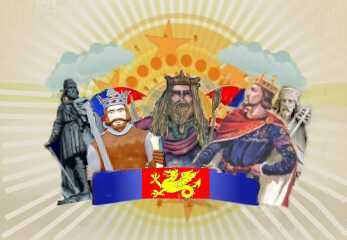
THE KINGS
of WESSEX
Wessex Rule
Cerdic
519-534
Cynric (son of
Cerdic)
534-560
Ceawlin
(son of Cynric)
560-591
Ceol
(son of Cutha)
591-97
Ceolwulf
(son of Cutha)
597-611
Cynegils
(son of Ceol)
611-643
Cenwalh
(son of Cynegils)
643-645
Under Mercian
Rule 645-648
Cenwalh
(again)
648-672
Seaxburh
(Queen of Cenwalh)
672-674
Cenfus(line
of Ceolwulf)
674
Aescwine
(son of Cenfus)
674-676
Centwine
(son of Cynegils)
676-685
Caedwalla
(line of Ceawlin)
685-688
Ine
(line of Ceawlin)
688-726
Aethelheard
(brother-in-law of Ine)
726-740
Cuthred
(kinsman of Aethelheard)
740-756
Sigeberht
756-757
Cynewulf
757-786
Beorhtric
786-802
Wessex
Rule claimants to
the
title,
'King of the
English'
Egbert
802-839
Aethelwulf
839-858
Aethelbald
858-860
Aethelbert
860-865
Aethelred
I
865-871
Alfred the
Great
871-884
CERDIC VON WESSEX (d. 534),
At the end of
Roman Times ,
there
were lots of Saxon Mercenaries (
hired soldiers) living in Britain.
The
Roman
government had paid them to
protect many of the towns.
Archaeologists
have dug up many graves from this
time. Some
of
the skeletons were wearing special
belts and carrying spears. They are
thought
to be Saxon Mercenaries because
similar objects have been found in
Saxon
graves in Europe.
We
know of some Saxons who had British
names, The most
famous
was Cerdic, the first King of
Wessex. In Brythonic ( the British
Language) his name is Ceredig.
Old
documents say that, like other
Saxons, he came to
Britain
from Germany or Denmark. However,
Cerdic
was
probably born in Britain. His father
was probably a Saxon Mercenary
in
Winchester ( in Hampshire) and his
mother was a local Briton. When
the Roman Army left Britain, Cerdic
would have been a
respected
officer in the mercenary army. He
would have easily been able to make
himself
into a local ruler or King. He
probably called for his Saxon
friends
and
relatives from Germany and Denmark
to join him
. They
set up the Saxon Kingdom of
Wessex
and made Chard their capital. Cerdic
is described as an ealdorman who
in 495 landed with his son Cynric in
Hampshire, where he was attacked
at once by the Britons. Nothing more
is heard of him until 508, when he
defeated the Britons with great
slaughter.
Strengthened by fresh arrivals of
Saxons,
he gained another victory in 519 at
Certicesford, a spot which has been
identified
with the modern Charford, and in
this year took the title of
king. Turning
westward,
Cerdic
appears to have been defeated by the
Britons in 520 at Badbury
or
Mount Badon, in Dorset, and in 527
yet another fight with the Britons
is recorded. His last work was the
conquest of the Isle of Wight,
probably in the interest of some
Jutish allies.
"ALFRED
THE GREAT
(848?-899).
The course of English
history would
have
been very different had it not been
for King Alfred. He won renown both
as
a statesman and as a warrior and is
justly called "the Great."
The England of Alfred's time was a
country of
four
small Saxon kingdoms. The strongest
was Wessex, in the south. Born in
about
848, Alfred was the youngest son of
Ethelwulf, king of WessexEach
of
Alfred's
three older brothers, in turn, ruled
the kingdom. Alfred was by
temperament
a scholar, and his health was never
robust. Nevertheless
in his early youth he fought with
his brother
Ethelred
against Danish invaders. Alfred was
23 when Ethelred died, but he had
already
won the confidence of the army and
was at once acclaimed king in 871.
By
this time the Danes, or Vikings, had
penetrated to all parts of the
island. Three of the Saxon Kingdoms:
(Northumbria, Mercia, and East
Anglia) had one after another fallen
to the Danish invaders.
Under Alfred's leadership, the
Saxons again
found
courage. The worst crisis came in
the winter of 877, when the Danish
king,
Guthrum, invaded Wessex with his
army. In 878 Alfred was defeated at
Chippenham,
where he was celebrating Christmas,
and was forced to go into
hiding.
A few months later he forced Guthrum
to
surrender
at Chippenham. The Danes agreed to
make the Thames River and the old
Roman
road called Watling Street the
boundary between Alfred's kingdom
and
the
Danish lands to the north. The
treaty, however, did not assure
permanent peace. The Danes assaulted
London and the coast towns
repeatedly. In about 896 they
finally admitted defeat and ceased
their
struggle for a foothold in southern
England.
Alfred was much more than the
defender of his
country.
He took a keen interest in law and
order and was concerned with the
improvement
of the cultural standards of his
people. He encouraged industries of
all
kinds and rebuilt London, which had
been partly destroyed by the Danes.
He collected and revised the old
laws of the kingdom. He invited
learned men
from other countries to instruct the
people because even the clergy of
Wessex
no longer knew Latin, the
international language of the
church. He
established
a school similar to the Palace
School of Charlemagne.
The
"books most necessary for all men to
know" were
translated
from Latin into English so that the
people might read them. Alfred
himself
took a part in preparing the
translations. The 'Anglo-Saxon
Chronicle'
was
probably begun under his
direction.
Alfred died at the age of about 51
in 899. He
was
in no sense a true king of England,
for he ruled less than half of the
island.
All the sovereigns of
England, except
Canute,
Hardicanute, the two Harolds and
William the Conqueror, are said to
be
descended
from Cerdic.
The Anglo-Saxon Chronicle
states that
the
kingdom expanded from south to
north . In the
9th Century, Wessex rose to become
the dominant power
in
a newly united England, which led to
its distinctive identity being
subsumed
into the larger kingdom.
However, when Canute
became king in
1016,
he revived the names of the former
English kingdoms and applied them to
the
newly created office of Earl. Canute
originally kept the Earldom of
Wessex
for himself, but later awarded it to
Godwin, who became the most
powerful
private citizen in England as a
result. He was succeeded by his son,
Harold
Godwinson, later to become king
Harold II of England.
When the Normans invaded
in 1066, one
of
their first acts was to abolish the
Earldoms in favour of the more
manageable
shires as the largest units of
sub-national government, fearful of
the
threat
that powerful regional government
posed to their centralising
authority.
The
office of Earl of Wessex remained
dormant
until our own time, when Prince
Edward, the third son of Queen
Elisabeth
II, became the 3rd Earl upon
the occasion of his marriage to
Sophie
Rhys -Jones.
Therefore
once more bonding the Royal
connection to Wessex.
We
congratulate them on the recent
birth of their daughter Louise.
By
1066, Harold Godwinson's earldom
of Wessex had expanded
to
include all the above counties,
plus Cornwall, Sussex and his
original
territory
of Herefordshire. The
Wyvern, the mythical symbol of the
ancient
kingdom
of Wessex still appears on many
county crests in the region today.
The
Wyvern
emblem was carried at the Battle
of Hastings in 1066 .
Chard (Cerdre,
Cherdre, Cherde) was
commercial in origin, being a trade
centre
near
the Roman road to the west. There are
two Roman villas in the parish.
There
was a British camp at Neroche in the
neighbourhood. Chard is situated
on
the highest ground between the Bristol
and English Channels, on the
border
of Devonshire, and was anciently spelt
Cerde, or Cherde. - the royal
house
of Cerdic.
Because
of it's position being the highest
ground it was
strategically
in the best position to defend and
is more obviously "Camelot" than
other
such claimants. In the Doomsday
Survey it is called Cerdre, at which
time
the
manor belonged to the Bishop of
Wells.
The
bishop of Bath held Chard in
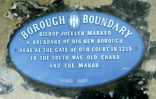
1086. Bishop Jocelyn,
of
Bath and Wells, incorporated this
borough 1234, and gave the land from
his
manor of Chard for the building of
the town, previous to which it is
supposed
to have constituted what is now
known as the old town.
He
made
Chard a free borough, each burgage
paying a rent of f 2d. Trade in
hides
was forbidden to
non-burgesses.
This
charter was confirmed in 1253, 1280
and 1285. Chard is
said
to have been incorporated by
Elizabeth, as the corporation seal
dates
from
1570, but no Elizabethan charter can
be found. It was incorporated by
grant
of Charles I. in 1642, and Charles
II. gave a charter in 1683.
Chard
was a mesne borough, the first
overlord being Bishop
Joceline,
whose successors held it (with a
brief interval from 1545 to 1552)
until
1601, when it was sold to Earl
Poulett. Parliamentary
representation began in 1312, and
was lost in
1328
by the neglect of the freemen. A
market on Monday and fair on the
25th of July were granted
in
1253, and confirmed in 1642 and
1683, when two more fair days were
added
(November 2 and May 3), the market
being changed to Tuesday. The market
day
is now Saturday, fairs being held on
the first Wednesday in May, August
and November, for corn and cattle
only, their medieval importance as
centres
of the cloth trade having departed.
Chard
was therefore a town of great
significance in the
past.
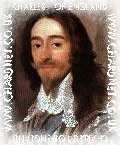
In
Stuart times it was from Chard that
Charles I of England
tried
to sue for peace with Oliver
Cromwell. It was refused and Charles
was
soon
defeated and ultimately beheaded.
"I
am James Scott, First Duke of
Monmouth and the son of His Royal
Majesty
Charles II.
All those who join me in my quest
against the Catholic Usurper, James
Duke of York,
my father's brother and his
murderer, will gain Royal favour
when I take my rightful place as England’s
Ruler."
Duke of
Monmouth
Crowned King in Chard1685
Then in the reign of
James II it was
at
the epicentre of the uprising
against the King. The final
major
turmoil
for 17th-century Chard came in
1685 when the Duke of Monmouth
landed at
Lyme
Regis on June 11 and recruited
3,000 volunteers as part of his
famous
rebellion.
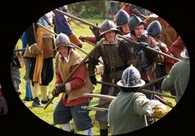
He marched into Somerset, was
crowned
king in Chard and was the
subject of more coronations in
Taunton
and
Bridgwater, where more local
rebels swelled his army to 7,000
men.After
a
series of skirmishes near Bristol
and Bath, the rebels returned to
Bridgwater from where Monmouth led
them into the famous Battle of
Sedgemoor against
James II's Royalist army, which
was encamped at Westonzoyland.
It
was
the
last land battle on English soil
and it ended in defeat for
Monmouth
who
was later beheaded at the Tower of
London. The locals who had
joined
the uprising were severely dealt
with by the infamous "hanging"
Judge
Jeffries
at both Dorchester and Taunton
Assizes.* See
list of
those
executed below
The
town was also very much at the
centre of the industrial
revolution.
One of Judge Jeffries' victims
kept in the stocks for 320 years!
In 1843,
some 50+ years before the
Wright
brothers, the first powered flight
aeroplane was made and took to the
air
in Chard. The inventor was John
Stringfellow. It was also the place
where
the first artificial limbs were made.
Full descriptions and models can
be
viewed at the Chard Museum.
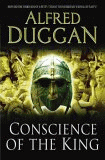
Conscience of the King
by Alfred Duggan
A thoroughly entertaining and convincing
new take on the last days of
the
Roman Empire in Britain.
"Cerdic
Elesing,
King of Wessex and ancestor of all
subsequent British
monarchs,
narrates in this fictional biography
how he murdered, cheated, looted
and
lied his way to the great position
he ultimately held -- and in the
process
served with the great Roman leader
Ambrosius and the Saxon warlord
Aella,
and was the foe Arthur defeated at
Mount Badon." £7.99
Paperback
240 pages 198 x 129
mm ISBN:
0304366463 Publication:
July
2005 Orion
Publishing Group, Orion House, 5
Upper St Martin's Lane, London, WC2H
9EA
tel: 020 7240 3444 www.orionbooks.co.ukemail
contacts :enquiries@hookedonbooks.co.ukor
available from
Hooked
On Books in Holyrood Street,Chard,
PEOPLE
OF
CHARD
EXECUTED AFTER THE MONMOUTH
REBELLION
CROSS, SIMON
EASTERBROOK, HENRY
HITCHCOCK, HUMPHREY
PILL,
ABRAHAM
DAVY,
WILLIAM
FOOTE, EDWARD
JERVIS, JOHN
WARREN, EDWARD
DENNETT, JAMES
GODFREY, WILLIAM
KNIGHT, JOHN
WILLIAMS, WILLIAM
Only
three
years
later the Protestant William of Orange
landed in Brixham, Devon &
became
King of England
More film &
Television information
available
from South West Tourism www.westcountrynow.com
There
are
many places of interest both in
Chard itself and in the surrounding
area:
These include The Chard Reservoir
Nature Reserve, The Wildlife Park at
Cricket
St. Thomas, Cricket House (famous
for the TV series "To The
Manor Born),
Forde Abbey & Gardens (Used in
the film "Restoration") , The Devon
County
Showground, The
County Cricket Ground at Taunton,
The Bath & West Showground, The
Fleet Air Arm Museum, The Cheddar
Caves
& Gorge, Wookey Hole Caves,
Perry's Cider Mills and the
Glastonbury
Music
Festival.
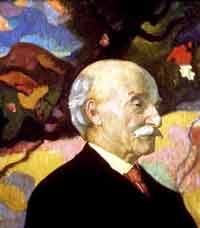
This is the area made famous by such
great authors as Jane Austen and
Thomas
Hardy. It's beauty has been the
backdrop for such films as "The
French
Lieutenant's Woman" ( Lyme
Regis), "Goodbye Mr Chips" (
Sherbourne),
"Sleuth" & " Dr Who
& The Seals of Doom" (
Athelhampton
House), " Sense &
Sensibility" ( Montacute
House), "Emma"
(East Coker) and
Channel Four's "Return
to
River
Cottage".
It's a
Riot
- In 1842 Chard was the Scene of the
Famous Chard Lace Riot. Now YOU
can
join the rioters on The Chard Lace
Riot Audio Walk. Simply go to the
Tourist Office (Next to the
Guildhall) and get the audio
machine. Then
you walk the three quarters of a
mile round the 7 sites of the riots.
(There is a resting bench at each
site). Listen to A crowd of starving
angry workers demanding their rights
........Civic Leaders in
Panic.......Tension
Mounting......... Call in The
Cavalry. History
re-enacted
& brought vividly to life.
Telephone
:
01460 260051
email:
chardtic@chard.gov.uk
Monday to Friday 10-4 and
Saturdays 10-1 all year round.
Thomas Hardy's Wessex
I find that the
name Wessex is getting taken up
everywhere
and it would be a pity for us to lose
the right to it for lack of
asserting
it
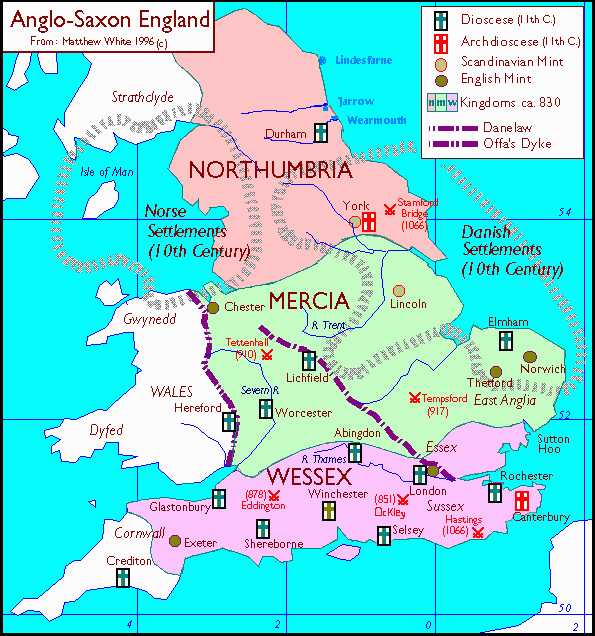
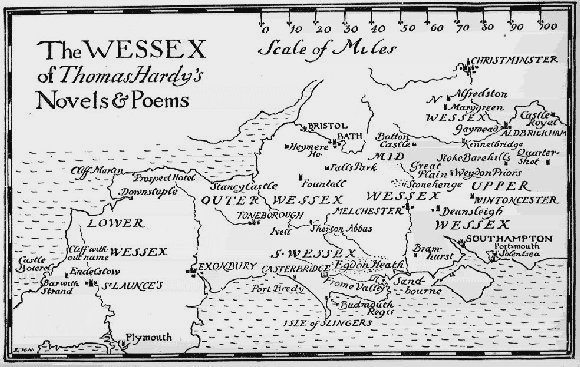
The Windle map of Hardy's
Wessex, 1906. Bertram Windle published a
topographical
guide titled The Wessex of
Thomas Hardy. (This map, courtesy of The
Thomas
Hardy
Association, has been chosen for its
relative clarity.)
Thomas Hardy
first used the term
"Wessex"
in his 1874 novel, Far
From the Madding Crowd.
In reprinting
this story for a new
edition
I am reminded that it
was in the chapters of
"Far From the Madding
Crowd,"
as they appearedmonth by
month
in a popular magazine,
that I first ventured to
adopt the word "Wessex"
from
the pages of early
English history, and
give it a fictitious
significance
as the existing name of
the district once included in
that extinct kingdom.
The series of novels I
projected
being mainly of the kind
called local, they
seemed to require a
territorial
definition of some sort
to lend unity to their
scene. --- from Hardy's
Preface to the novel,
1895-1902
The extinct
kingdom to which Hardy
refers,
of course, is that ancient
kingdom of the West Saxons
known as Wessex.
From
the sixth to the tenth
centuries the boundaries
of Wessex expanded and
contracted
as wars went favorably or
otherwise, but theheart of
the kingdom, with
its
capitals first in Chard
and then at Winchester,
always lay in southwest
England,and in
large part approximated
the area indicated by
the map displayed above. King Alfred the
Great of Wessex, who
styled himself King of
the
English, ruled from
871-899, and did much to
consolidate the kingdom
and
advance the development of
what was to become the
English
monarchy.
It was
during the reign of King
Athelstan
(925-939), however, that
the royal house of Wessex
reached a peak of
splendor
and success, and the
Wessex king could proudly
lay claim to the title
"King
of all Britain".
The Battle of
Hastings in 1066 sounded
the
death knell of the Saxon
monarchy. When William the
Conqueror claimed
the
English throne he quickly
put down all resistance,
and the Saxon
nobility
were largely destroyed and
almost entirely
dispossessed.
The bones of
many of the kings of
Wessex
repose in mortuary chests
within Winchester
Cathedral. That city was
the
royal and ecclesiastical
centre of Wessex, and the
site of a minster
church since the year 648.
Hardy's concept
of Wessex, as we know
it
today, did not spring
full-blown from his mind
at an early stage.
Rather,
it evolved over the years
in both size and
exactitude as his
imagination
formulated a unifying
geographic canvas for his
novels and poems.
It was not until
about 1884, when he
began
to write The Mayor of
Casterbridge , that
"... Hardy achieved a
full
realization of the Wessex
concept, a realization
which depended on the
establishment
of Casterbridge itself...
as the central point, the
economic, administrative, and
social
capital, of a whole
region" (from Michael
Millgate's Thomas
Hardy:
His
Career
as a Novelist, which
devotes a chapter to "The
Evolution of
Wessex").
In 1895-96,
Hardy painstakingly
revised his novels for the
Osgood,
McIlvaine collected
editions soon to be
published. He
systematically
changed
place names and topography
to conform consistently
with the fictitious
Wessex
he had formulated.
For example,
actual place names were
used
in The Trumpet-Major
when originally published
in 1880; now
Dorchester
became Casterbridge,
Weymouth became Budmouth,
and so on. In other
cases
distances and directions
were changed to conform to
the actual
landscape
of the region. In Far
From the Madding Crowd,
for example, when
driving
the funeral cart from
Casterbridge to
Weatherbury, Joseph
Poorgrass
originally
went up a hill, looked
left to the sea, and saw
high hills; this was
modified to down a
hill, looked right
to the sea, and
saw long ridges.
The new wording
more accurately
describes
what one would actually
experience in traveling
that route from west to
east.
Further revisions were
made in later years for
later editions, until
finally
Hardy's vast works
conformed to the region
that he envisioned and
called
Wessex. But as Thomas
Hardy himself always
maintained, "This is an
imaginative Wessex only".
CARNIVALS AND
EVENTS
2005
CHARD MAIN CARNIVAL 2011
is on
OCTOBER 8th.
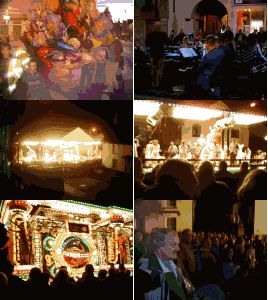
Chard holds two
magnificent carnivals
each
year. People flock to Chard for
these carnivals. Somerset Carnivals have
been in existence for over 400
years
& are considered as some of the
finest in the world. See our
tourist
page for dates of other Wessex
carnivals.
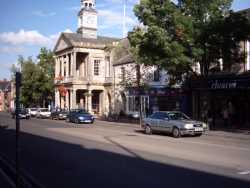
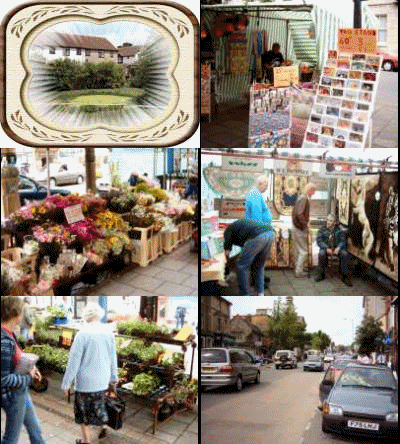
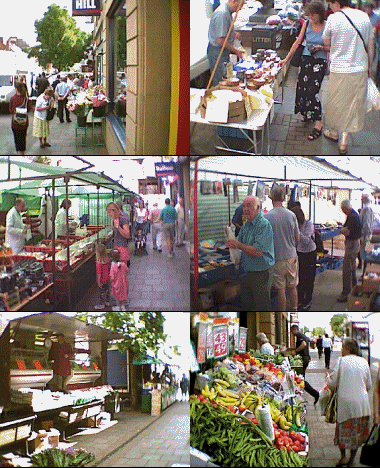
Chard Market is open every
Saturday. It is centred round the
newly
renovated
magnificent Guildhall.
People come in
from all over the area to buy local
produce.
Mouth-watering fresh local food can be
bought including Bread, Cheeses,
Fish,
Fruit, Meat and Vegetables.
Bargains in
clothes, flowers, shoes, hardware,
plants,
videos,
tapes, electrical goods and animal
foods are also available. Get there
early
to get the bargains.
There are also
large multiple outlets of Tesco,
Lidl,
Focus, Co-Operative, and
Somerfield open all hours here
as well
as
many interesting shops to browse
around. These are listed in
Chardnet's
directory of businesses and trades.
Every Thursday there is an Antiques
Fair.
Chard
Market
on a Saturday
Read
King Cerdic's Page. And buy Cerdic
Merchandise for your friends. Be
King
of Wessex for a Day
Chard's
economy is very
diversified.
Many leading companies are based here.
These include Oscar Meyer Ltd.,
Numatic
International Ltd., St.Ivel, Allied
Signal's Honeywell
Normalair-Garrett
Ltd., Colin Mear Engineering Ltd.,
Adwest Western Controls Thompson
Ltd., Edward Pearson Ltd., Actionaid and
Swiss Net UK Plc.
Local Member of
Parliament
David Laws
is
the Local Member of Parliament and a
Liberal Democrat. He holds regular
surgeries
in Yeovil, Chard, Crewkerne, Ilminster
and South Petherton - where he
can
be seen in person. You can write to
either : David Laws MP, 94 Middle
Street,
Yeovil, BA20 1LT or David Laws MP,
House of Commons, London, SW1A
0AA.
You can call his offices on 01935
423284. Visit
his website www.davidlaws.org.uk
or email
:lawsd@parliament.uk
Member
of European Parliament
Graham
Watson
MP - Liberal Democrat 10
Belvedere Road Taunton TA1
1BW
Somerset County
Council Chard's Councillors
Name:
BUCHANAN,
Paul
Eugene
Party: Liberal
Democrat
Address: The Coach
House, Crickleaze, Somerset. TA20
3DR
Division: Chard
North
Telephone: (01460)
234168
E-Mail:
pebuchanan@somerset.gov.uk
Name:
SHORTLAND,
Jill
Christine (Mrs)
Party: Liberal
Democrat (Deputy
Leader)
Address: East Hill, 35
Crewkerne Road, Chard,
Somerset,
TA20 1HA
Division: Chard
South
Telephone: (01460)
67357
E-Mail:
jcshortland@somerset.gov.uk
TWIN
TOWNS
Chard
has two twin towns. Helmstedt
& Morangis.
Helmstedt
in Germany is near Brunswick
in Lower Saxony. It has a
population of 30,000. Website
: www.helmstedt.de
Morangis
is in France in the department
of Essone It has a population of
10,000. Website : www.morangis91.com
Media
Connections
Media and
Communications are well catered for in
Chard
with
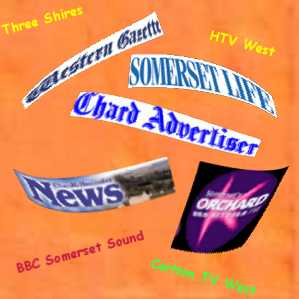
several local Newspapers: These
include the Chard & Ilminster
News,
Chard
Advertiser,Western Gazette, and
Somerset Life. Listen in to Heart
Radio,
Ivel FM or BBC Somerset Sound or watch
BBC West,HTV West or Carlton TV
West
on Television.
www.wessex.me.uk
is prepared by The
UK Informed
Investor (now in its 36th
year) Contact
Us by clicking here If your business
is not listed call
0845 868 2810 to give
details. This web site
may be reproduced
in
part or in whole. We would
appreciate a reference to
our site if you do
utilise
this site.
Chard
Information 24 hour
Hotline +44(0)845 868 2810
We have been
requested to point out
that this is not
an
official council
publication. We feel that
it is obvious that this
site
has
been prepared by The
Informed Investor, on
behalf of the Chard
Trade Association, free of
charge for the inhabitants
of Chard and for
potential
visitors in order to
assist and help them.There
is an admirable
official
site for those who wish to
visit it on
We include
sections of interest to
the
community
in our Notices
, Local
News , Tourism
and our Heart
rendering columns.
Thank you
for reading
our site and please feel
free to comment on any
part which you feel
about.
We hope in our small way
to make Chard a better
place to live and work
in.
Services
provided Free by Wessex
Tourist Board
Connect
now by clicking on
images below
Search for lost friends
Search on the
World Wide Web
Your own free email address
Your own Chat Room
Search for Other
Towns in the U.K
UK People
Finder Service you can freely
access
phone numbers and addresses
Search Web: results may
contain objectionable material not
endorsed by Wessex.Me.
promotes
Chard to the outside world and makes
trading facilities
in Chard more accessible. This
association ONLY deals in matters of
trade
and not in town politics. Although
shopkeepers are most welcome this
Association is mainly aimed at
manufacturers and providers of
services. We are
happy to have arranged for two new
companies to come to Chard this
month.
They
are Aircom Ltd- who make and sell
air
condioner units and Music Acting
Dance (MAD) Ltd. MAD run eight
Saturday
morning schools for children to
learn and enjoy the perfoming arts.
Wessex Me
are
pleased to assist charities and
especially the Heritage foundation.
For
details
of the functions in 2003 which are
being held to celebrate those
pictured
above click on our "heart
" page. Over
the past two years The Heritage
Foundation has
supported
the following charities: The Royal
Marsden, Childline, The Grand Order
of the Water Rats, The Oasis Trust,
The Foundation for The Study Of
Infant Deaths,
The Variety Club of Great Britain
Children's Charity, and The Bobby
Moore
Fund for Imperial Cancer Relief.
ROUND
THE HORNE
This is Alan Horne.
A very special man
in
Chard. He is the road sweeper
par excellance. Firstly he is
a very
diligent
roadsweeper. Secondly visitors
to Chard will hear the music
of Elvis,
Bill
Haley, Fats Domino and all the
greats of the Rock & Roll
era
eminating
from his dustcart-
embellishing the sound of the
town. But even more
important
he can be found collecting
money for worthwhile charities
in Chard and
is
now planing to sky dive to
raise money for charity. An "
unsung" hero
of
Wessex. If you see him in town
do give generously.
<
And
a touch of the blarney - watch out
for lepricorns
 WESSEX
TOURIST ATTRACTIONS
& EVENTS (click below)
WESSEX
TOURIST ATTRACTIONS
& EVENTS (click below)